
Feet made for hopping!

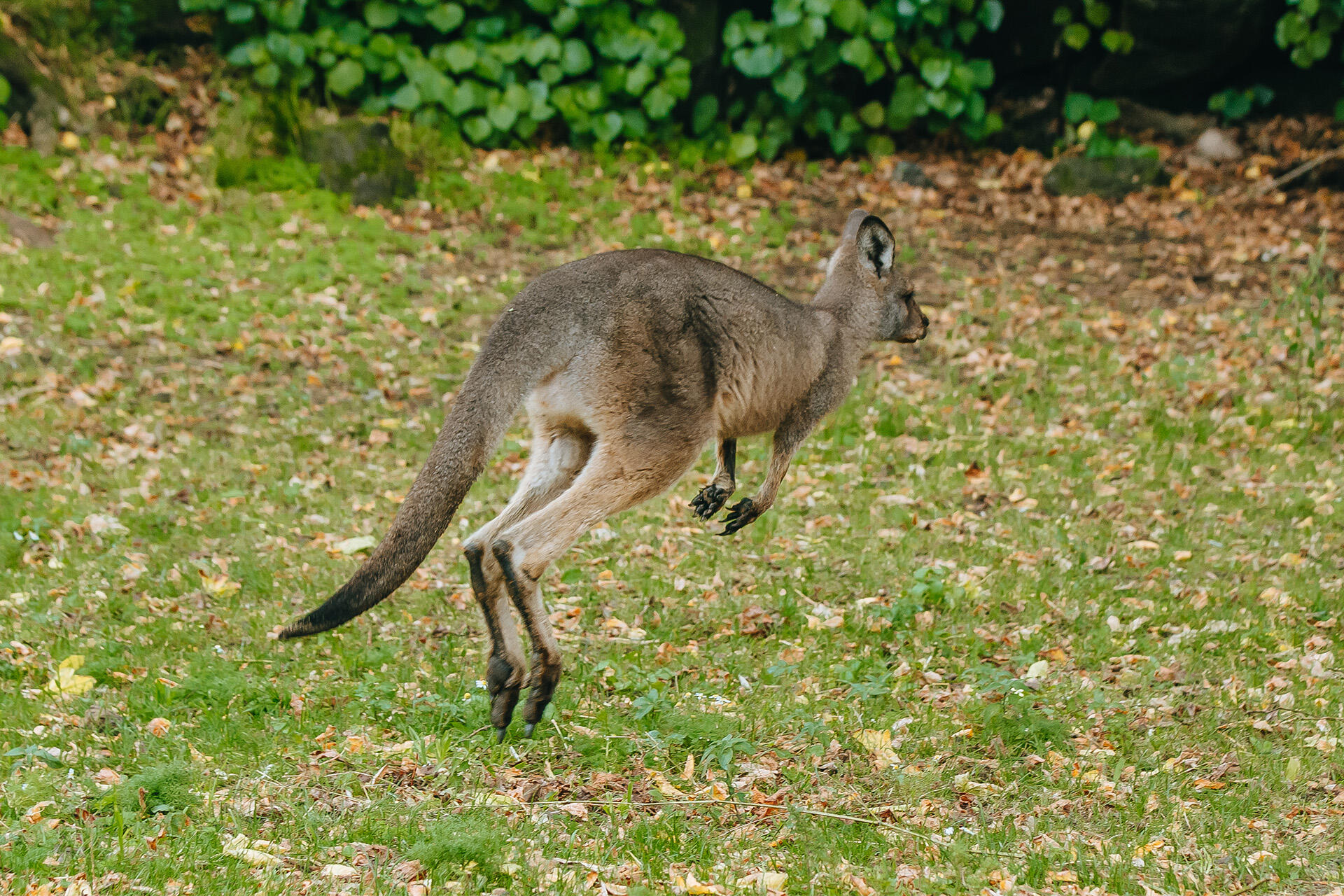
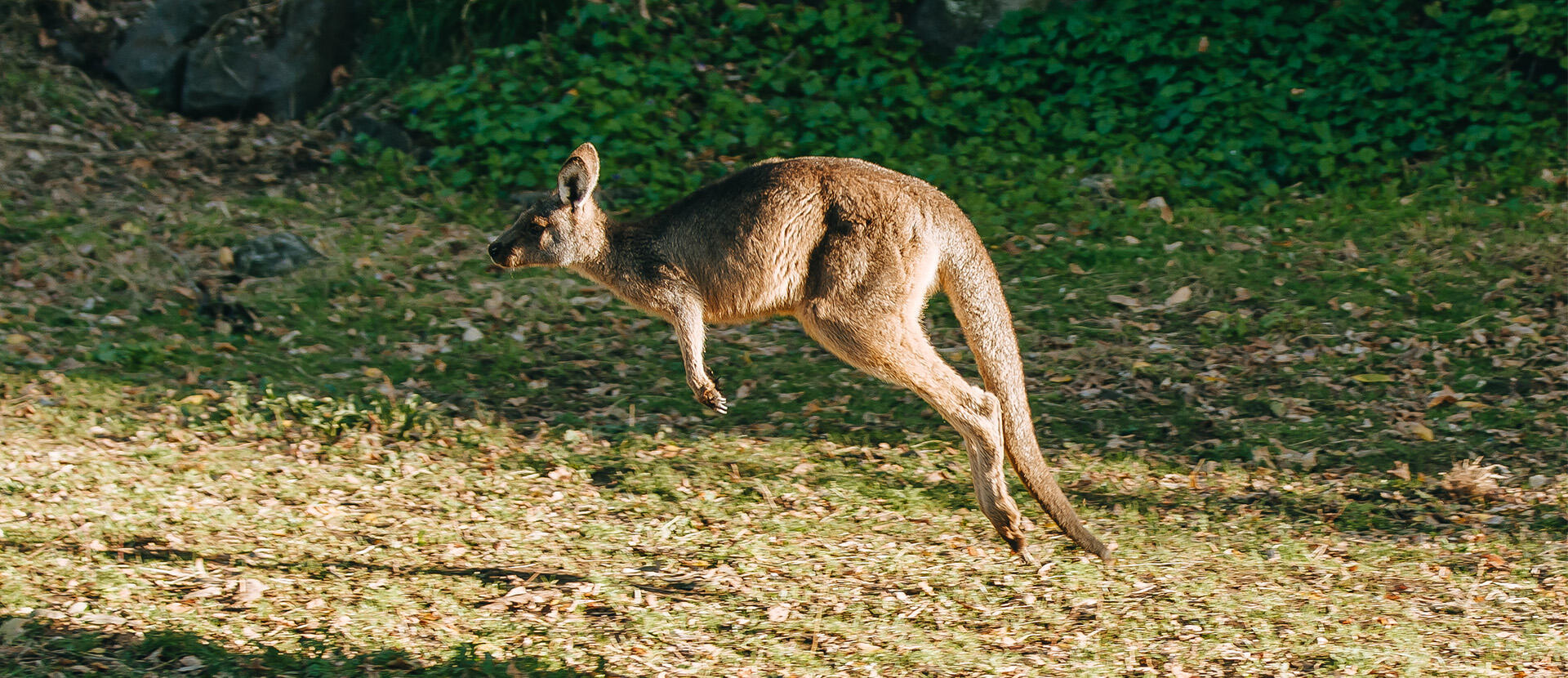
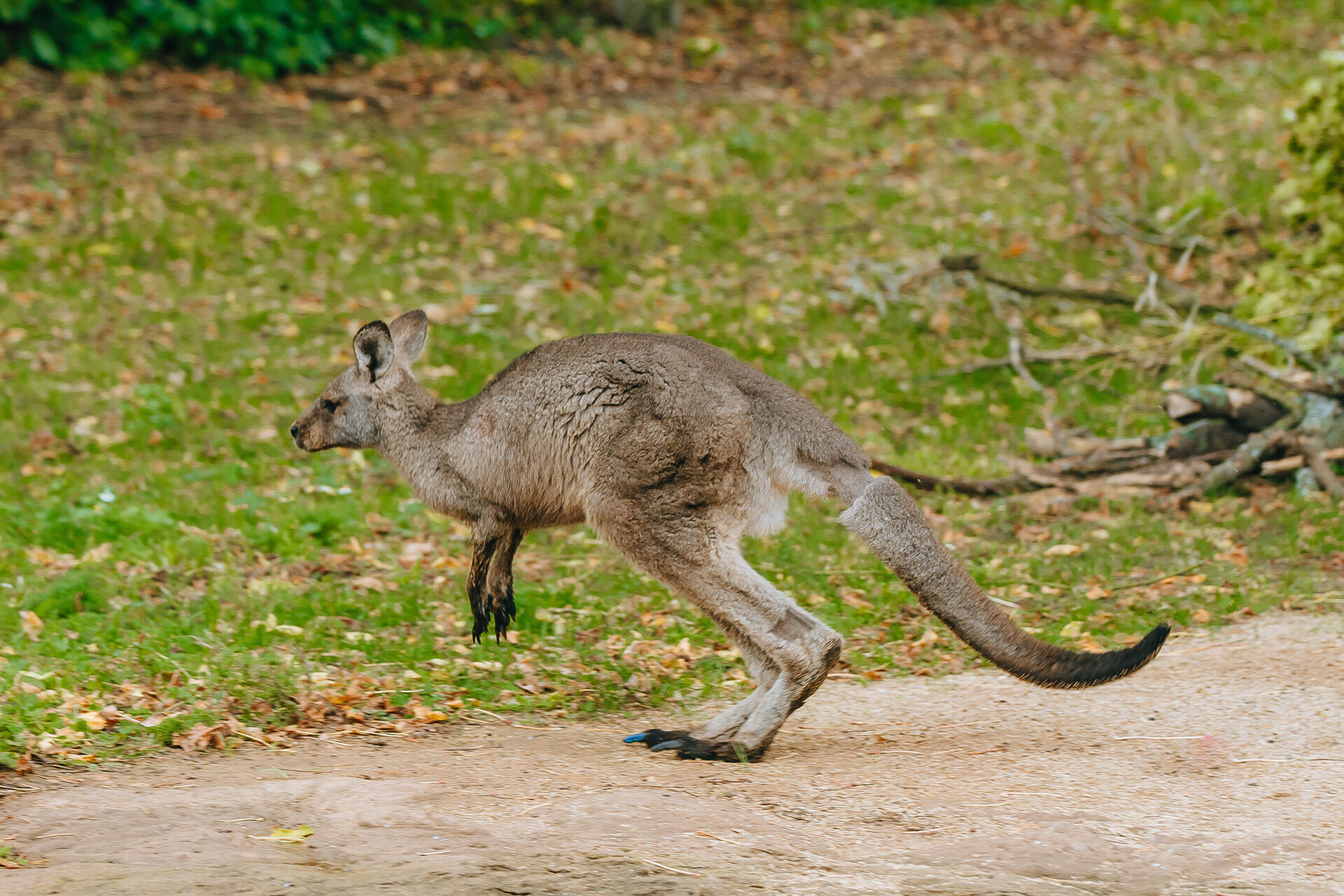
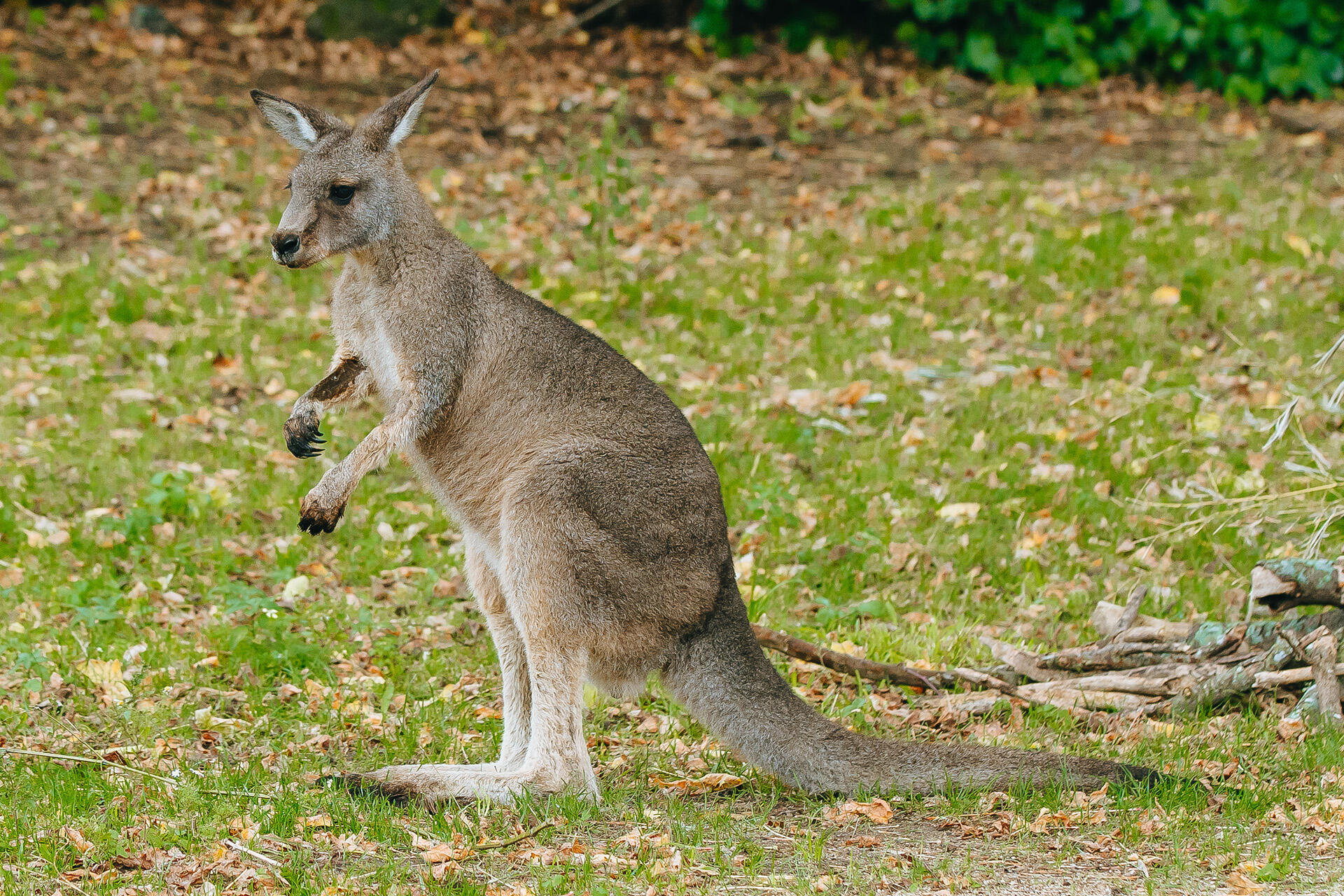
Kangaroos are famous for hopping on their two hind legs. But do you know how they hop so fast? It’s all in their legs and feet. Powerful muscles in their lower legs lift the kangaroo off the ground, while muscles and tendons in their long feet contract to propel them forward. It’s a unique and energy-efficient form of long-distance locomotion, and it’s thanks to this adaptation that kangaroos can hop at speeds of 15-20 km/h for extended periods with relative ease - and even faster if they need to escape a predator.

Tassie grazers

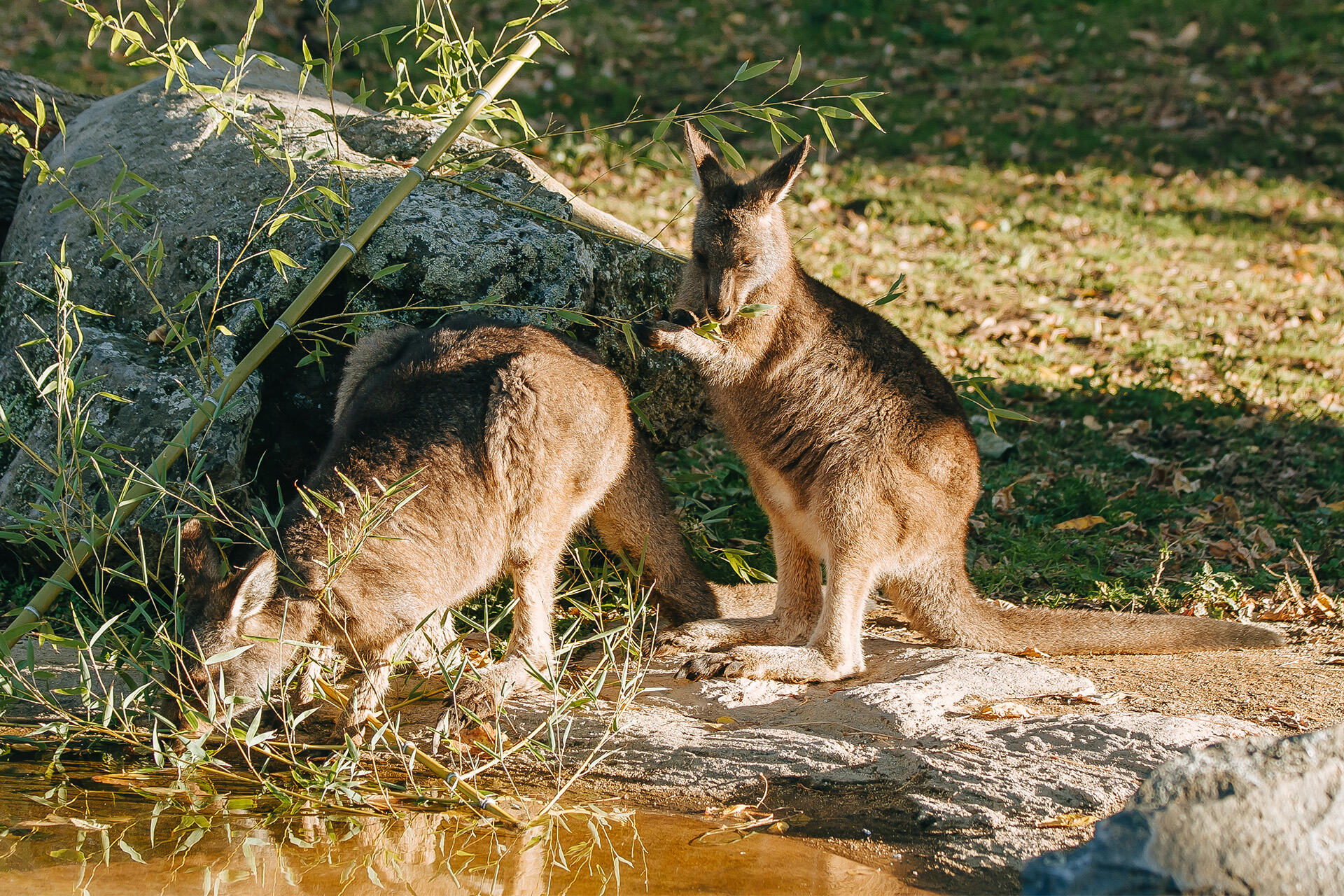
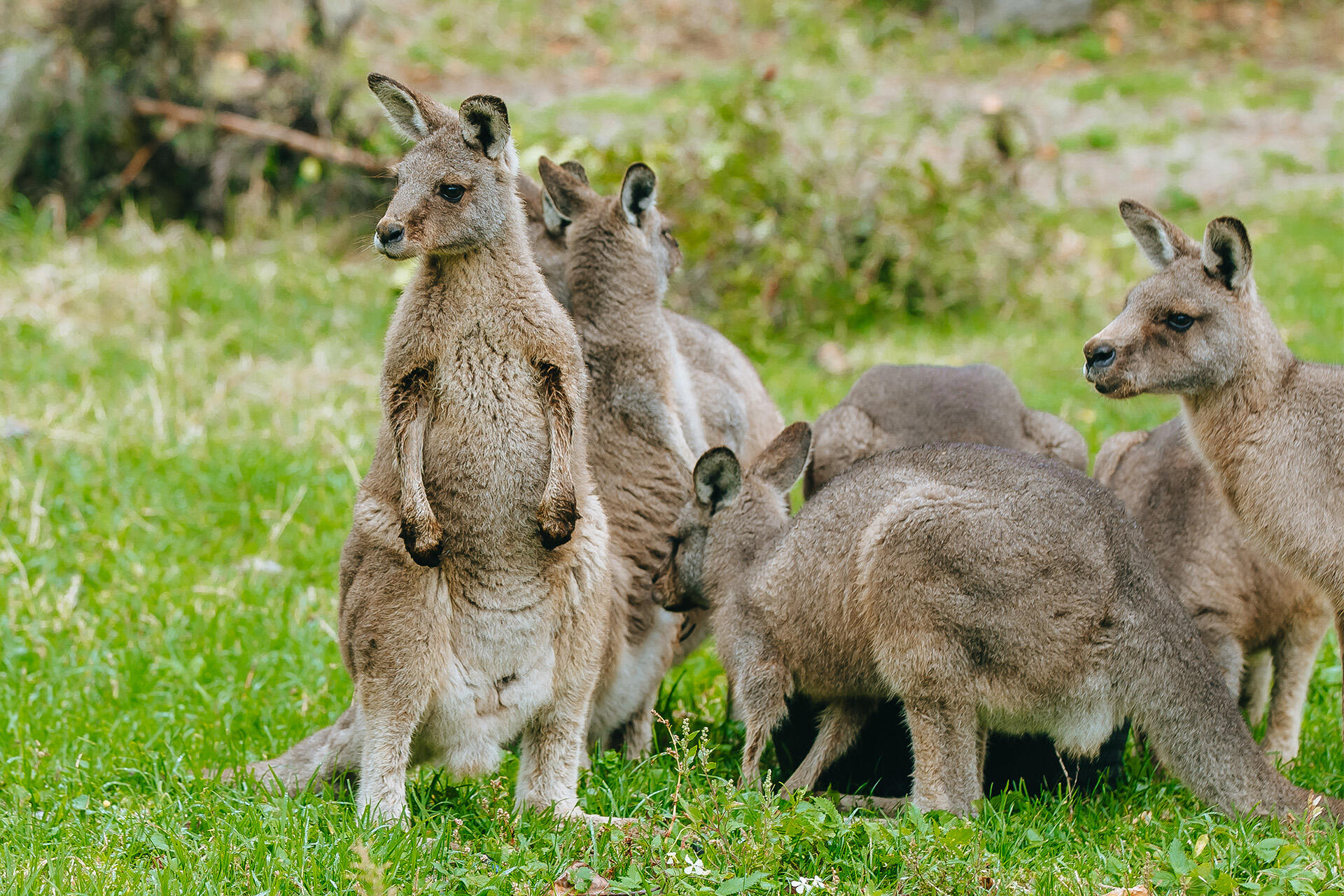
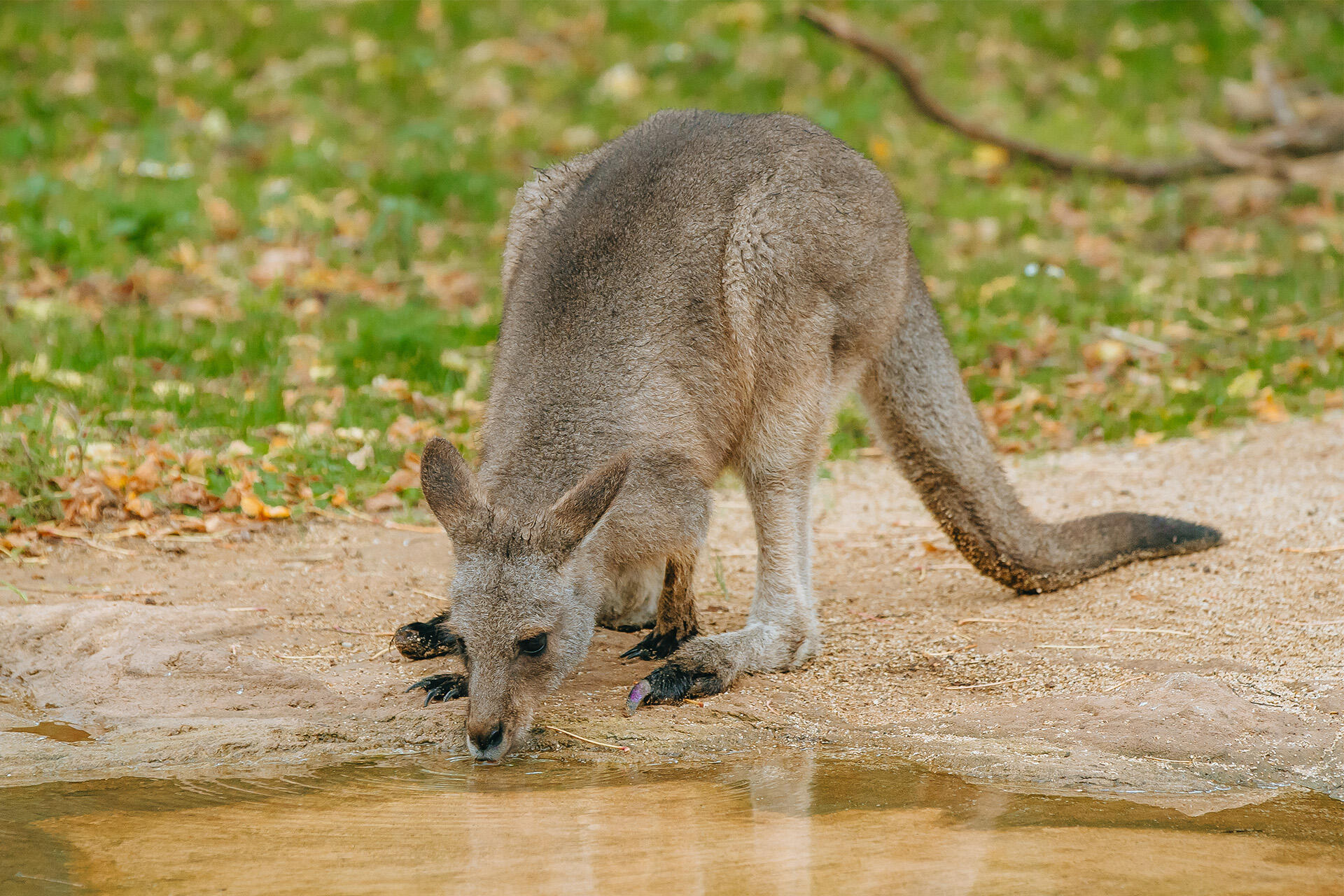
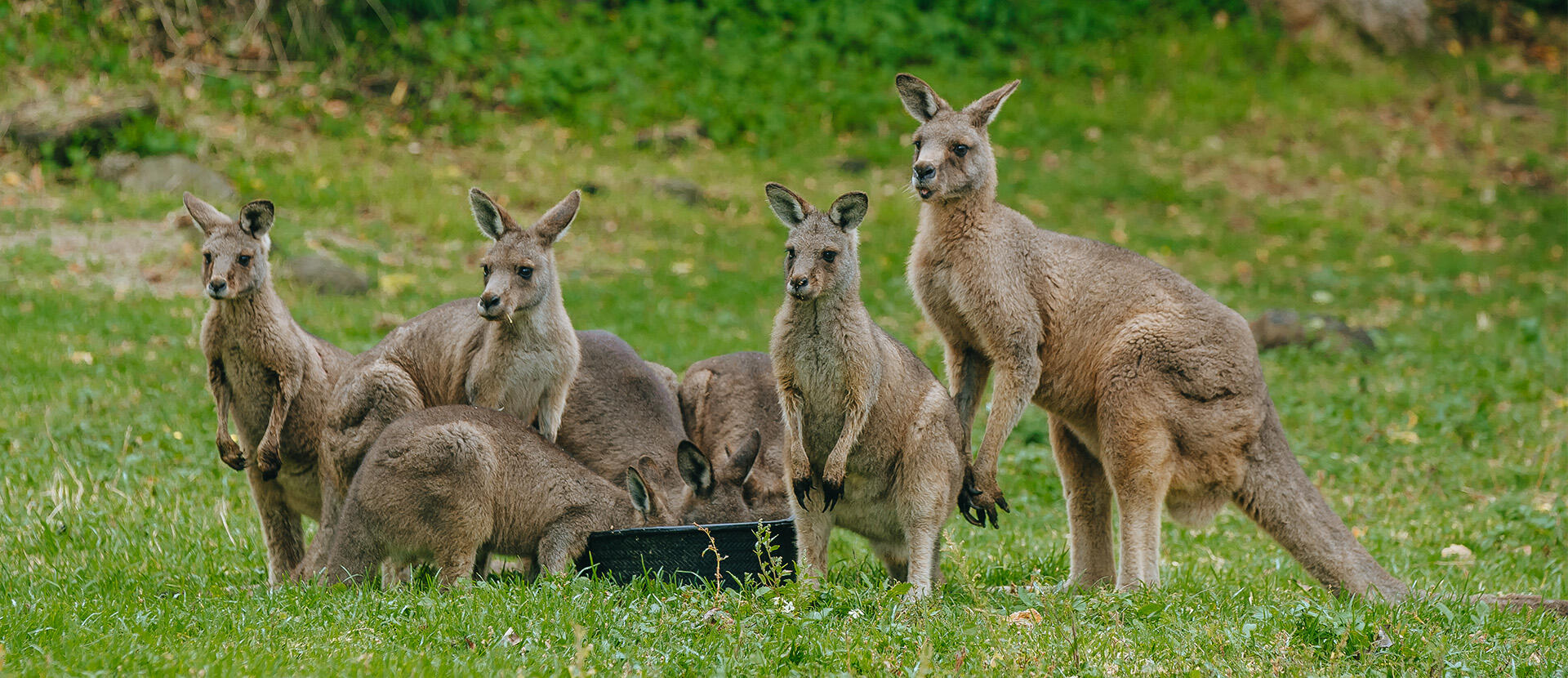
Forester kangaroos (a subspecies of eastern grey kangaroos) eat grass, shrubs, leaves and herbs. These marsupials are not true ruminants (as they have a different digestive process) but they will occasionally regurgitate their food and chew the cud. This process is called merycism and while kangaroos don’t need to do this for digestion to occur, experts think it helps them to break down difficult plant matter.

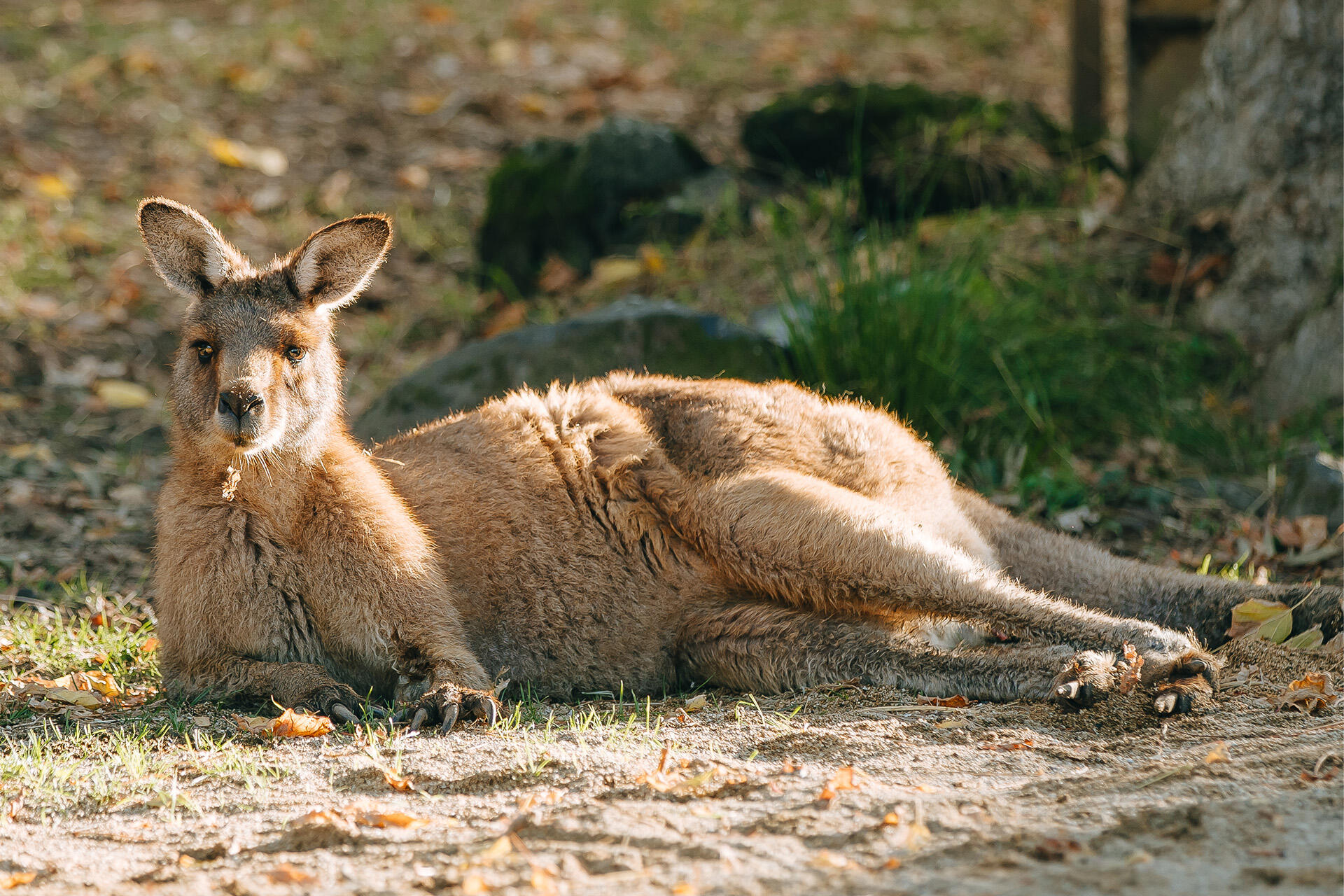
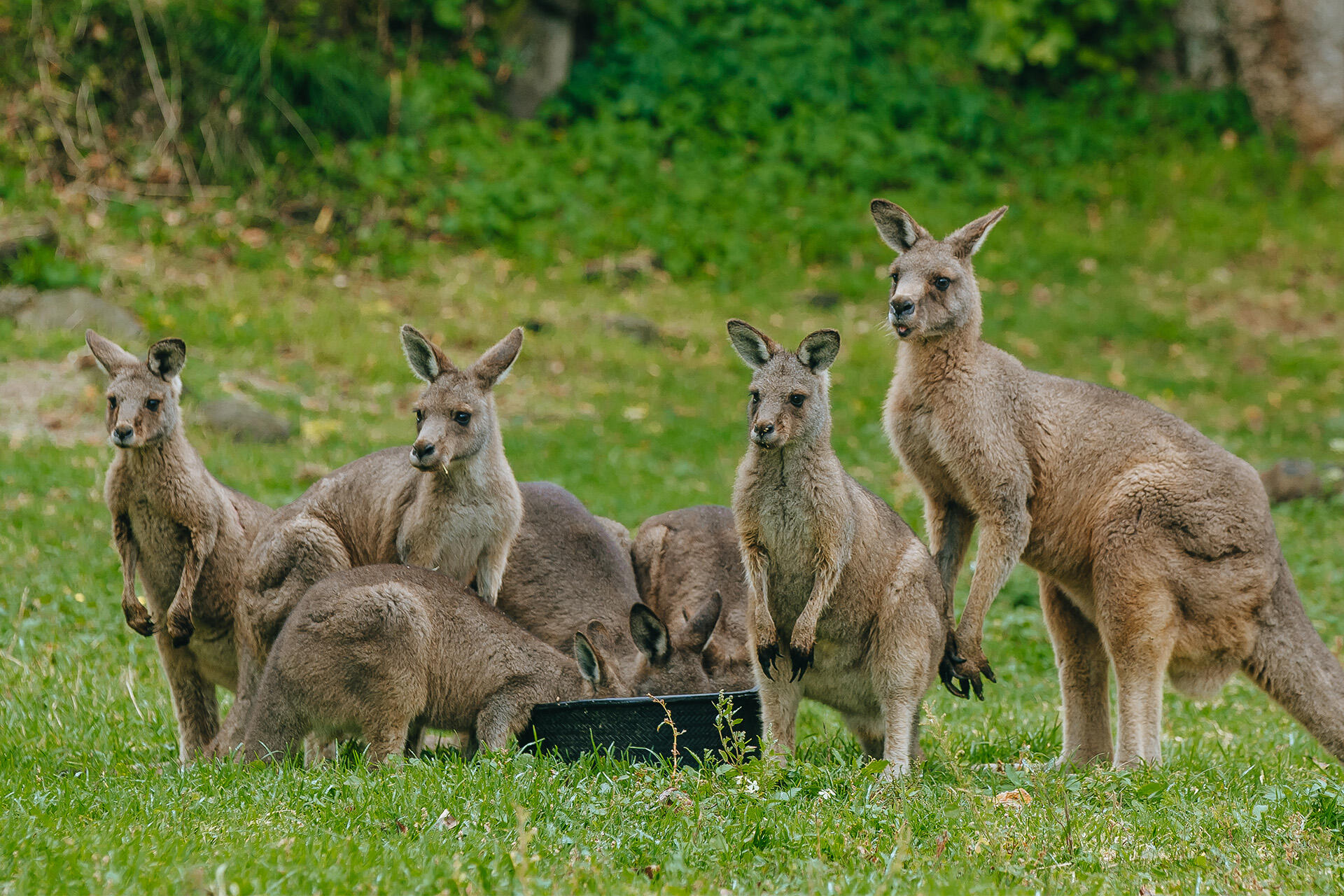
Kangaroos are crepuscular, so they prefer to do their grazing in the early mornings and evenings. They graze in mobs of three or more, taking turns to keep watch for predators. When not eating, they avoid the daytime heat by resting in large groups under shade-providing trees.

Hard-working mothers

Female kangaroos are expert multi-taskers. Despite giving birth to only one joey at a time, they’re able to look after three at once. If they have access to enough water and food, they can be pregnant with a joey, have a newborn joey in their pouch, and an older joey who leaves the pouch to feed. But that’s not all. The teats in a kangaroo’s pouch are able to produce different kinds of milk. This means newborn joeys and their older siblings can drink milk suited to their different needs.
At the Zoo

Meet the forester kangaroo mob:

You can find the forester kangaroo mob sharing the Australian Walkabout with emu where they have grass to graze and trees to rest under during the day. We add variety to their diet with kawakawa, bottlebrush, bamboo, and coprosma leaves as well as a proprietary pelleted diet.

In the wild

Origin: Tasmania, Australia

Habitat: Kangaroos prefer open grassy forests and woodlands with plenty of space for grazing.

Conservation status: IUCN – Least Concern

Unlike many of Australia’s other indigenous species, kangaroos have benefited somewhat from the arrival of Europeans. Colonists converted large tracts of forest to grassy farmland and built artificial water reservoirs. While kangaroos benefit from increased access to grass and water, it also puts them into conflict with farmers.

How you can help

As a not-for-profit, we rely on our amazing supporters like you to be able to continue our conservation Wild Work for the world’s most vulnerable and at-risk animal species. Help our wildlife in need by making a donation.

Other Australian Species