
From the brink and back again!

In the early 1900s, the southern white rhinoceros species was reduced to less than 100 individuals due to widespread hunting and habitat loss. Thanks to decades of coordinated conservation action, including protected reserves, monitoring, and anti-poaching efforts, the population has steadily recovered. Today, more than 17,000 southern white rhinoceros live in the wild, making them one of conservation’s cautious success stories.

A powerhouse with surprising senses

Despite their size, southern white rhinos rely on finely tuned senses to navigate their environment. Their sense of smell is their primary tool for finding food, locating mates, and detecting danger. They also communicate using a combination of scent marking and vocalisations, including grunts, snorts, bellows, and whistles. These help them to stay connected across wide open landscapes!

Not all horns are created equal

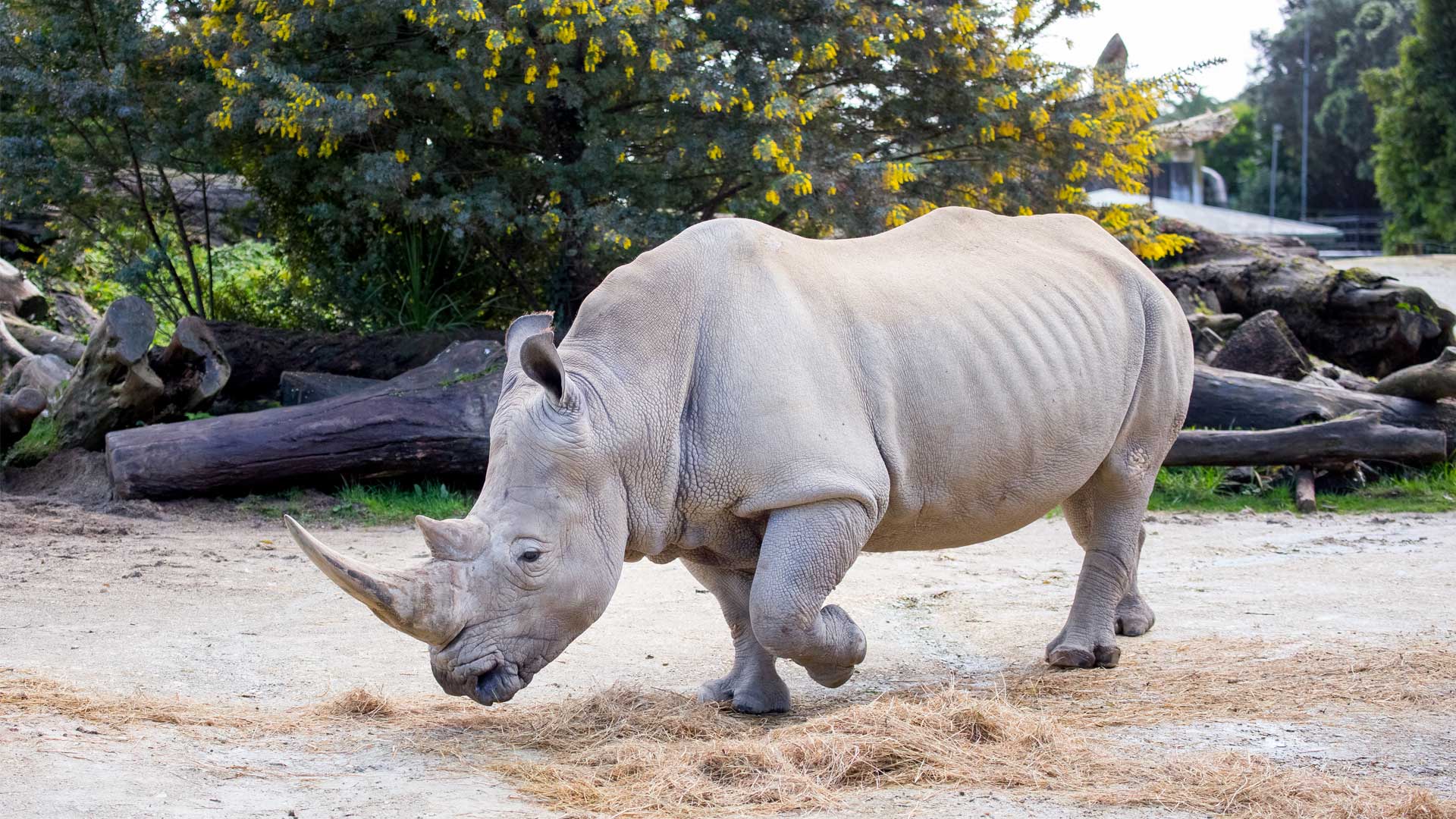
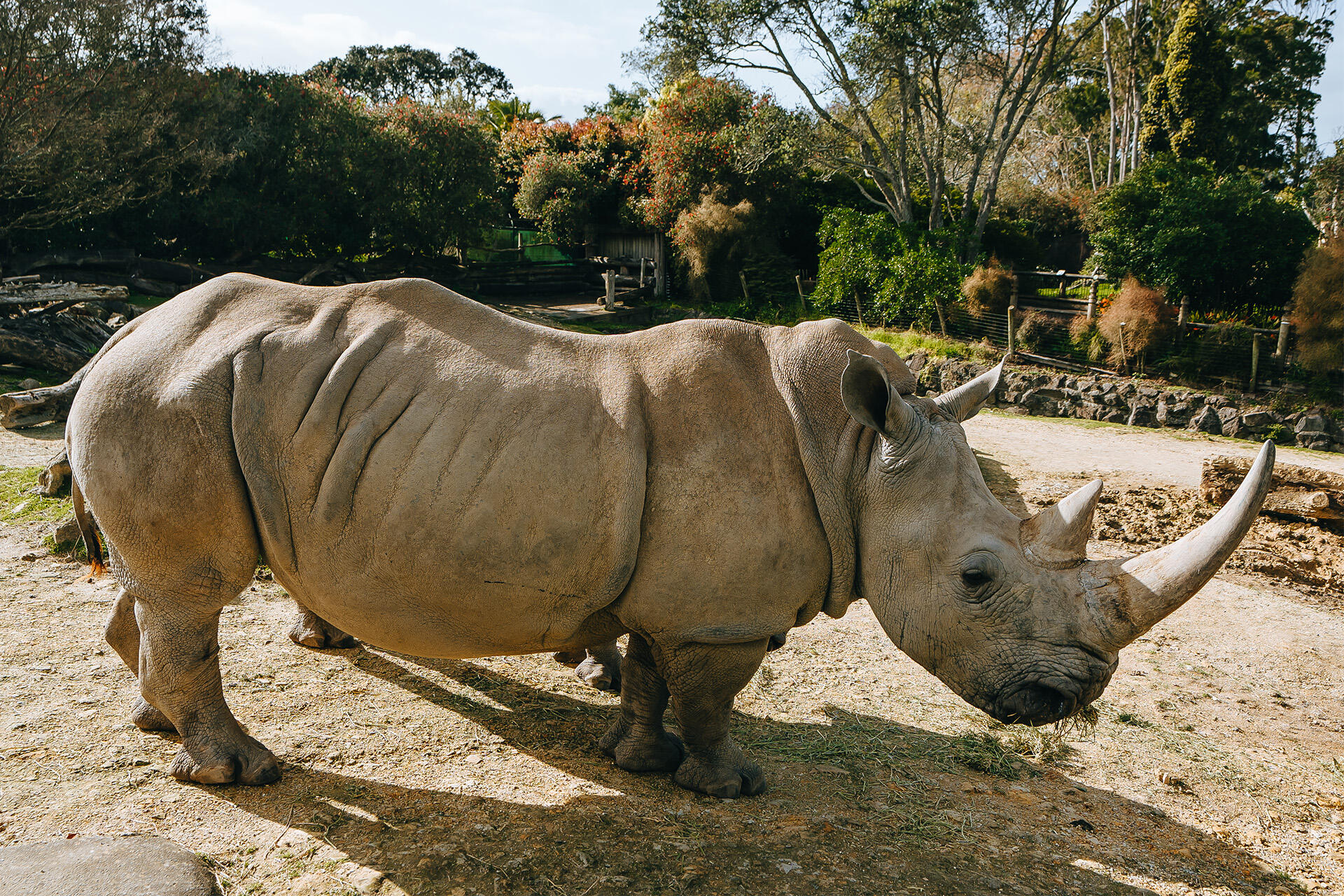
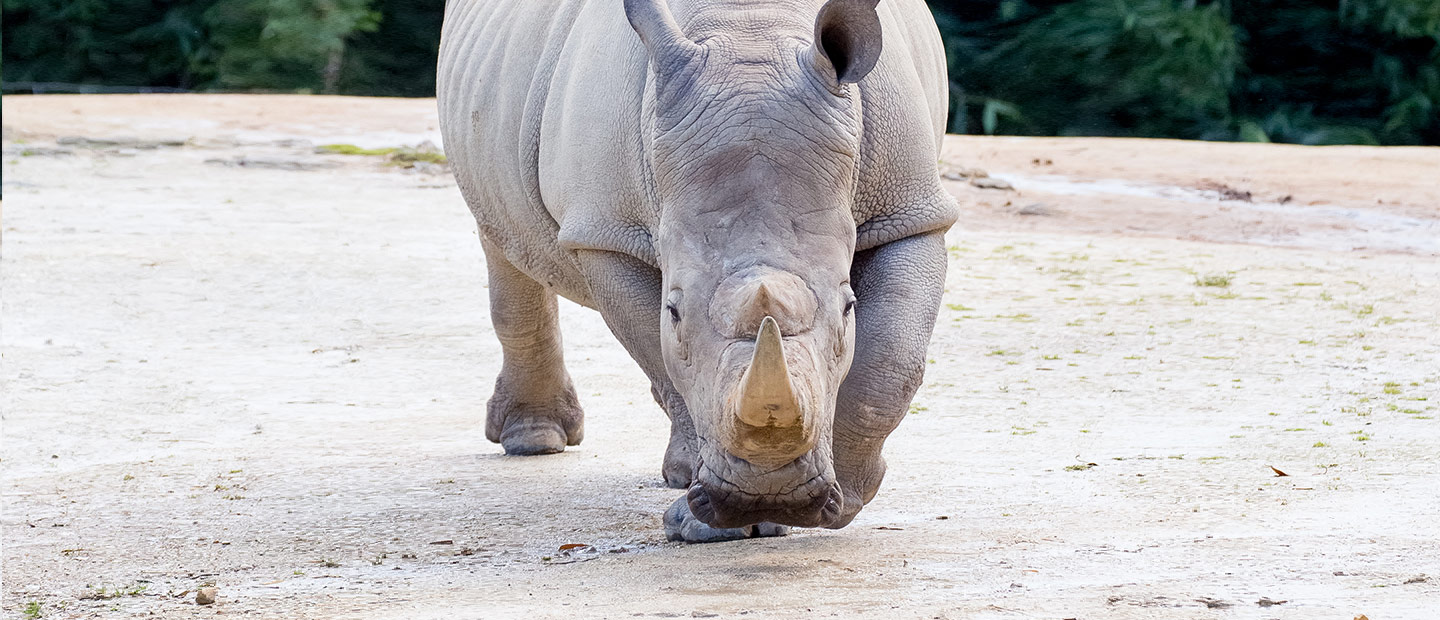
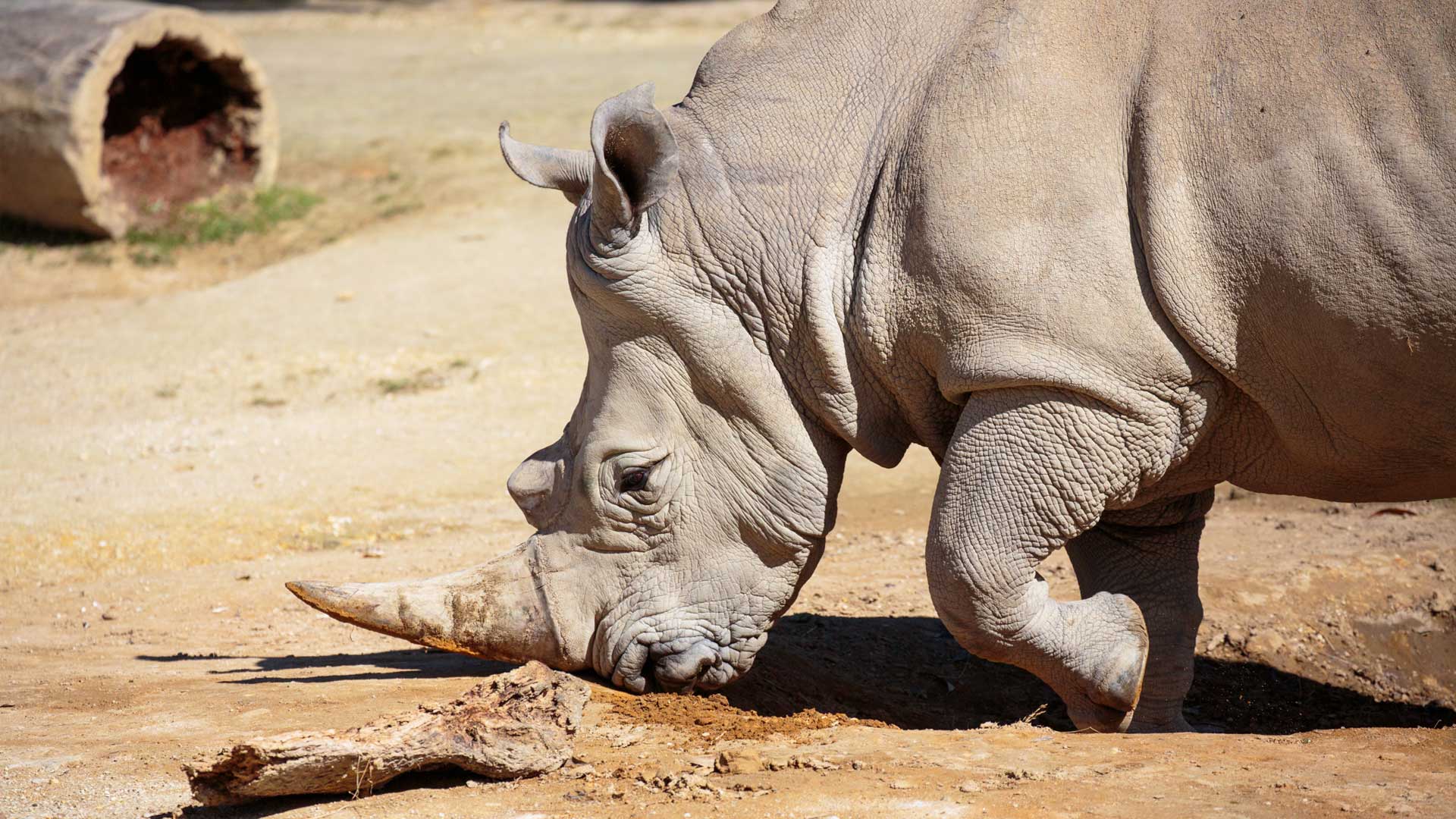
Unlike elephant tusks which are considered to be part of the skull, a rhino’s horn is made from tightly packed strands of keratin. This is the same material found in your hair and nails! Southern white rhinos have two horns, the rear measures up to 55cm long, and the larger front horn measures around 90cm.

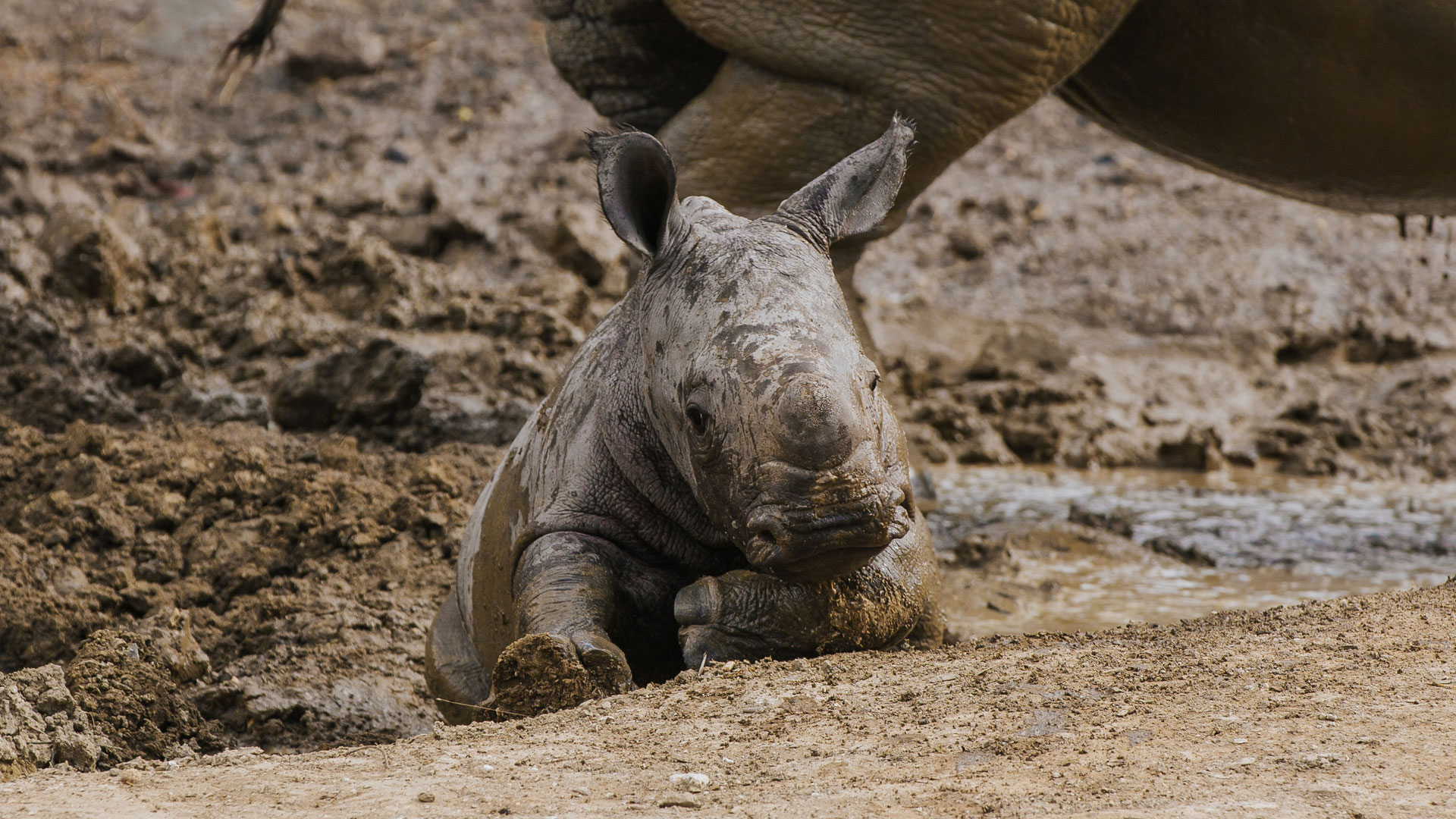
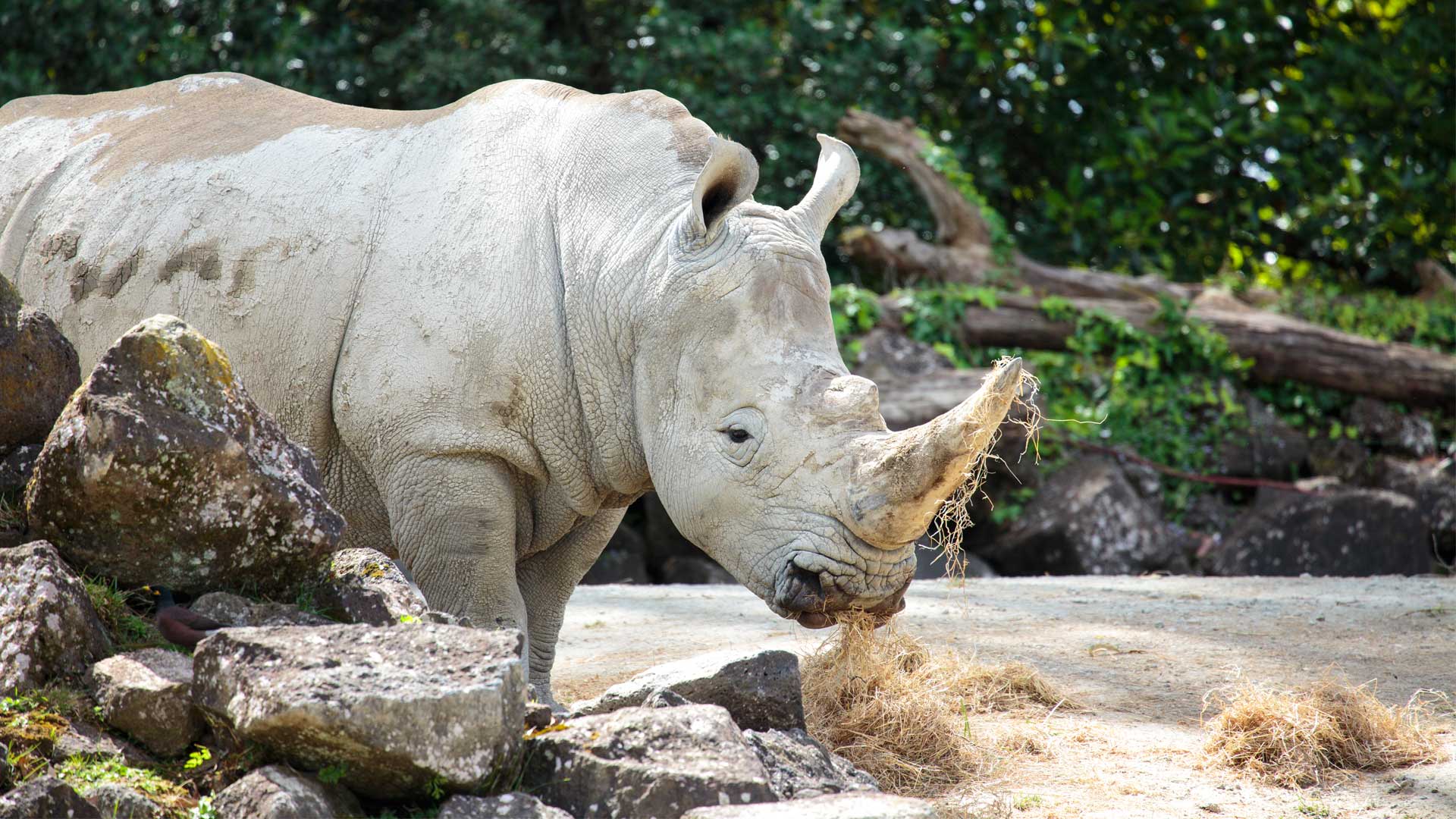
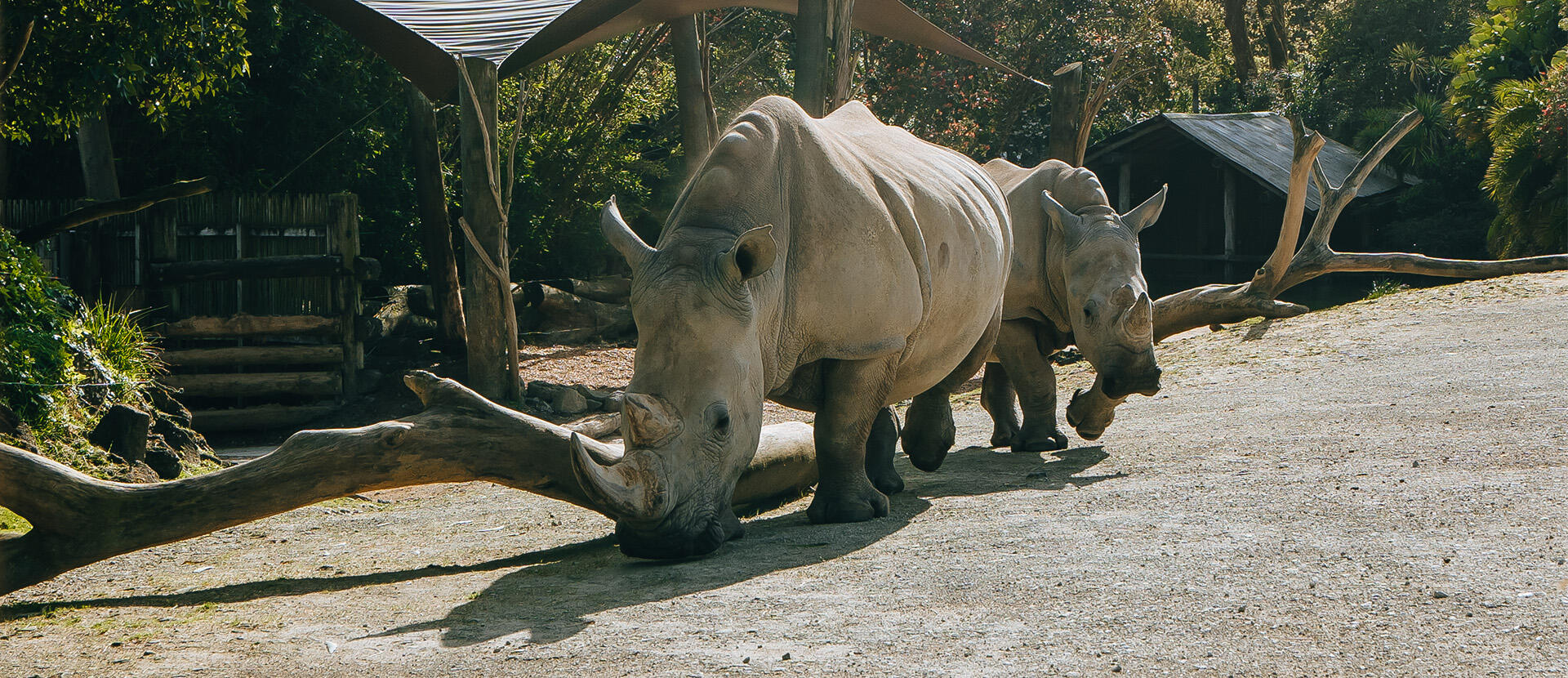
When rhino rub their horn against logs or rocks, this creates friction, allowing them to sharpen the horn. Rhinos use their horns for various purposes: to protect themselves from predators, establish dominance, and guide their young until they can navigate life on their own. They also use their horns to reshape and dig into wallows before entering. Rhinos enjoy wallowing to cool down, and they might test the mud's thickness with their horns before settling in.

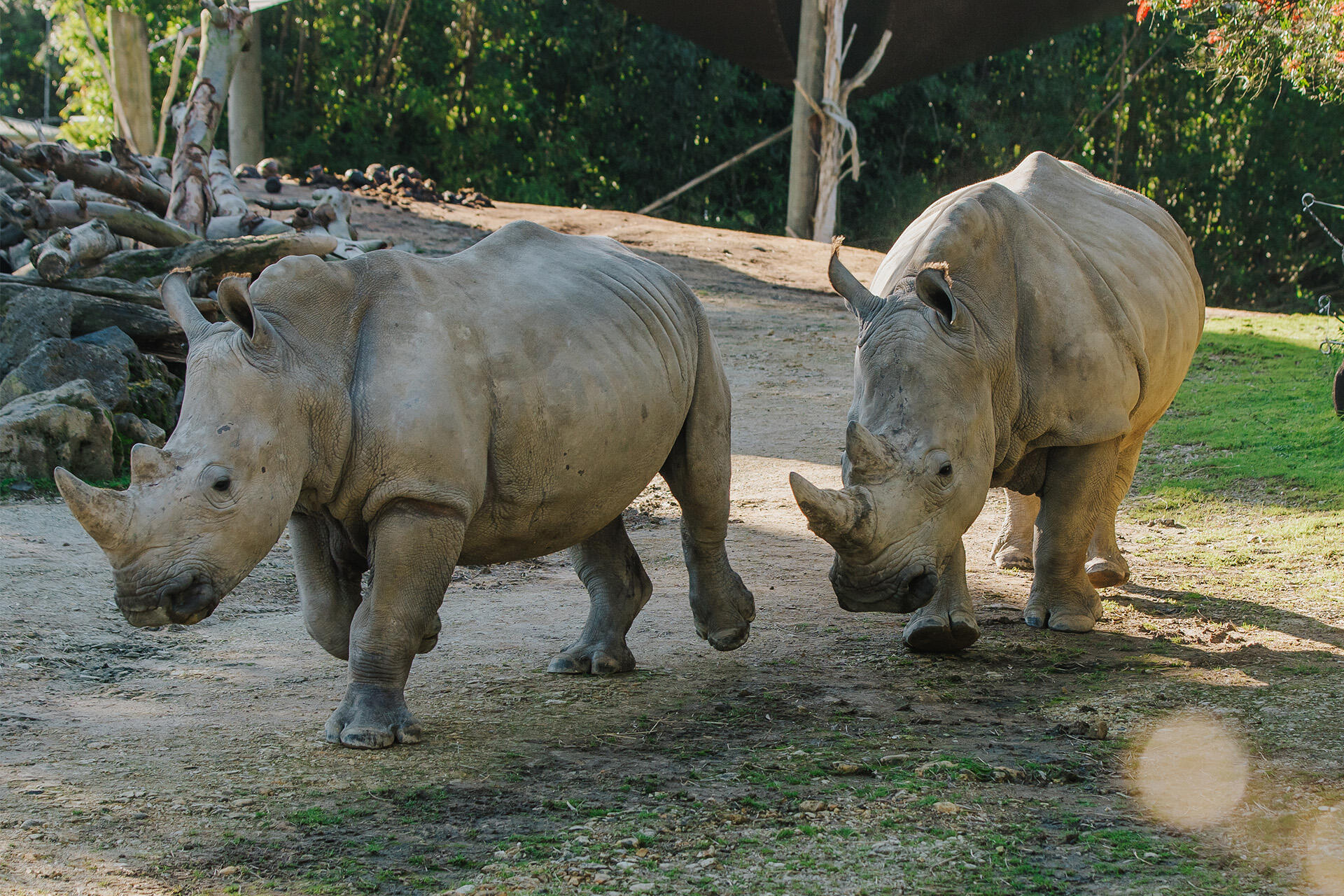
At the Zoo, each of the rhino here sharpens their horn differently, giving them a unique shape.

A heavyweight of the savannah

Standing up to 1.8 metres tall and weighing as much as 2.5 tonnes, the southern white rhinoceros is the largest of the world’s five rhino species and one of the biggest land animals on Earth. Built for grazing, this gentle giant spends much of its day slowly moving through grasslands, using its broad mouth which is adapted for feeding on grasses close to the ground.
At the Zoo

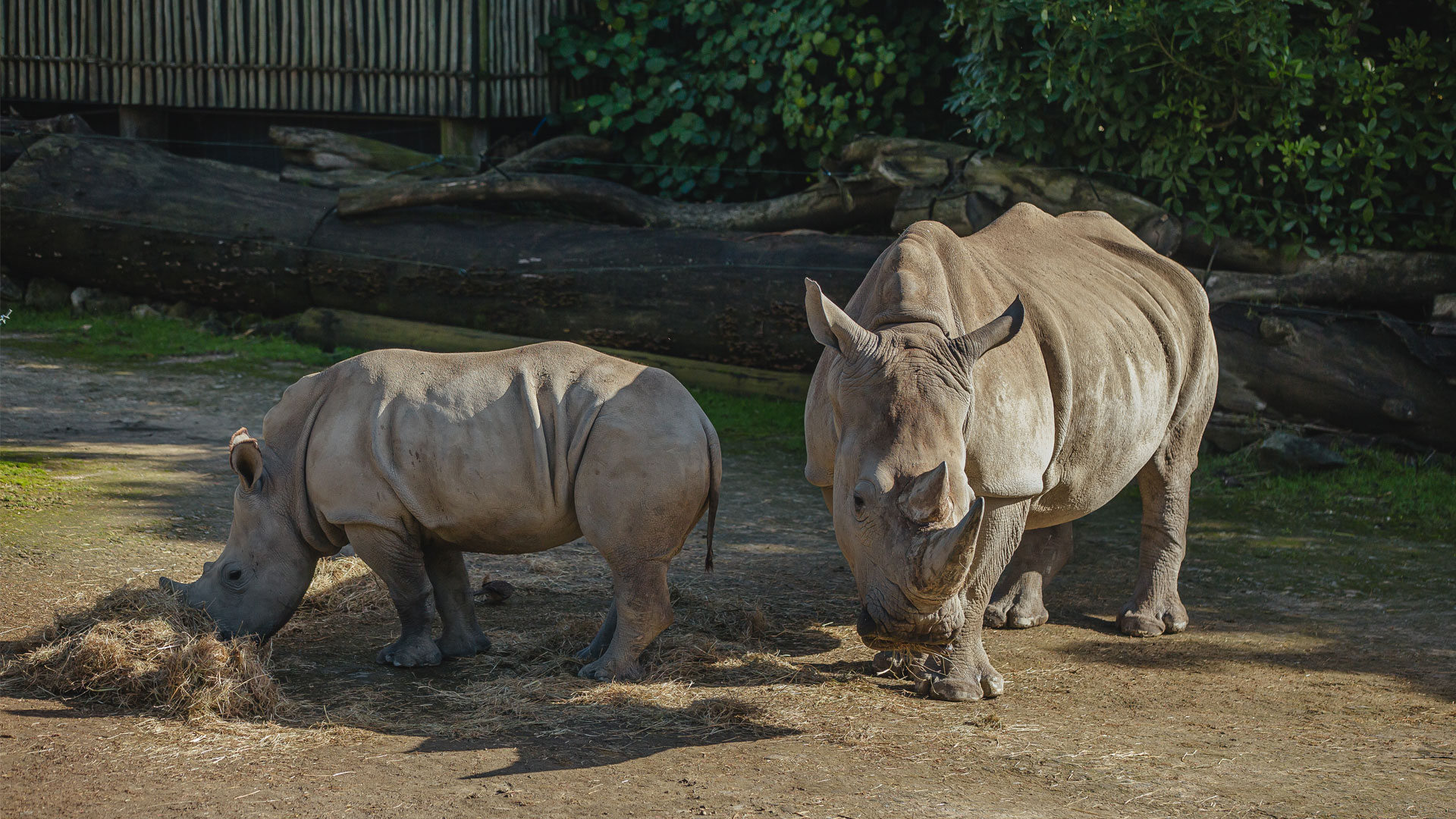
Meet the crash

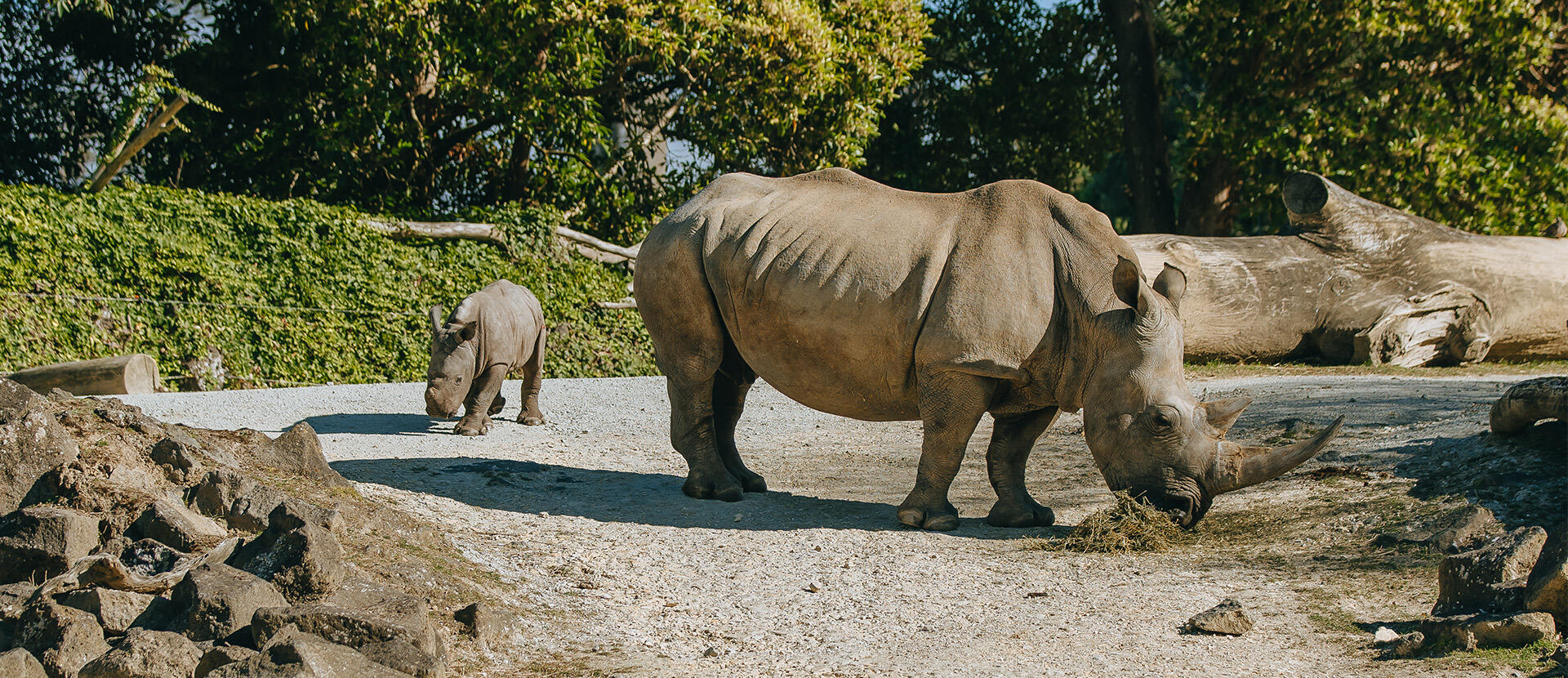
  • Jamila was born in March 2012 and came to us from Hamilton Zoo as part of the regional zoos breeding and advocacy programme. Since then, she has gone on to have three healthy calves with father Zambezi – females Nyah and Amali and male Zuka.
  • Nyah (Swahili for ‘goal’ or ‘purpose’) was born on the 14 August 2020. She was the first rhino birth at Auckland Zoo in 20 years.
  • Amali (meaning ‘hope’ in Swahili) was born on the 24 September 2022 at Auckland Zoo.
  • Zuka (Zulu for ‘comes with the dawn/the morning’) was born on the 13 December 2024 at Auckland Zoo.

Training through the use of positive reinforcement is an important part of how we care for the rhinoceros at Auckland Zoo.

As part of the rhinos’ day-to-day care, our ungulates team perform regular checks on each individual to ensure they’re in tip-top health. So that they can check parts of the body that would be otherwise difficult to access, they will ask for a range of voluntary behaviours – and the rhino have the choice whether or not they’d like to participate.

Some of these behaviours include standing on the scales for weekly weigh ins, asking for a foot to be raised so our team can check the underside of their feet, or asking for their mouth to be opened so their teeth and general mouth health can be analysed. The team also does some more advanced training to be able to draw bloods for our veterinary team and do ultrasounds (when a rhino is pregnant).

Video

How do you safely health check a rhinoceros calf?

Ungulates keepers Georgie and Jessie demonstrate how important positive-reinforcement training is in how we care for the Southern white rhinoceros herd

In the Wild

Origin: 12 African countries, with most found in South Africa, Namibia, Kenya, Botswana and Zimbabwe.

Habitat: Savanna, shrubland, grassland.

Conservation status: IUCN – Near Threatened

Southern white rhino are one of five rhinoceros species globally and are currently found in 12 African countries but the majority (99%) of all wild Southern white rhino occur in South Africa, Namibia, Kenya, Botswana and Zimbabwe.

Sadly, rhinos are still under threat with habitat loss and poaching being the biggest threats. Rhino horn is still illegally sought after for use in herbal medicines despite it having no effect, and the threat of extinction for the species remains great. The dire effects of wildlife poaching were realised in 2018 with the death of the last male Northern white rhino, making this species functionally extinct.

Video

Rhino Jamila delivers her third calf in record time!

Ungulates keepers detail how the healthy male calf Zuka was born (in a record three minutes!) on 13 December 2024

How we’re helping

Auckland Zoo is a strategic partner of the Sumatran Rhino Survival Alliance, who are taking a ground-breaking approach to save this Critically Endangered species.

The wild Sumatran rhinoceros’ population is estimated to be no more than 80 individuals, with poaching and habitat loss for palm oil and paper pulp resulting in fragmented pockets of rhino in Sumatra and Borneo. Separated by remote and mountainous terrain, it is increasingly difficult for Sumatran rhinos to find each other and mate, necessitating this conservation intervention.

In 2017, rhinoceros’ experts around the world determined that a dedicated conservation breeding programme for Sumatran rhinos was the only viable option to save the species from extinction and boost their struggling population.

As a strategic partner of the Sumatran Rhino Rescue Alliance – an alliance between the Indonesian government and leading conservation organisations around the world – Auckland Zoo helps to fund this breeding centre as well as two others that are currently under construction, and has committed $100,000 to the programme over five years. This funding also includes important research into understanding more about the range and distribution of the Sumatran rhino population.

From 2013 – 2022, Auckland Zoo partnered with the Lowveld Rhino Trust in Zimbabwe (home to 90% of the worlds black and white rhino). The Lowveld Rhino Trust track and monitor rhino in the wild to confirm their on-going health, treat rhino injured by snares and bullets, and assist authorities in prosecuting poachers.

Video

Introducing Southern white rhino calf Amali!

Watch Amali’s exciting journey into the world! Amali (meaning ‘Hope’) was born in the early hours of 24 September 2022