A tail of a time

You may think of skinks as being shy, but the moko skink is surprisingly bold. Like other skink species, they have the ability to drop their tail from their body when they are threatened. This is a great way to distract or trick a predator when they need to make a quick exit. The tail will regenerate over time, although the regenerated tail does not return exactly as it was originally.

Identifying moko skinks from other New Zealand lizards

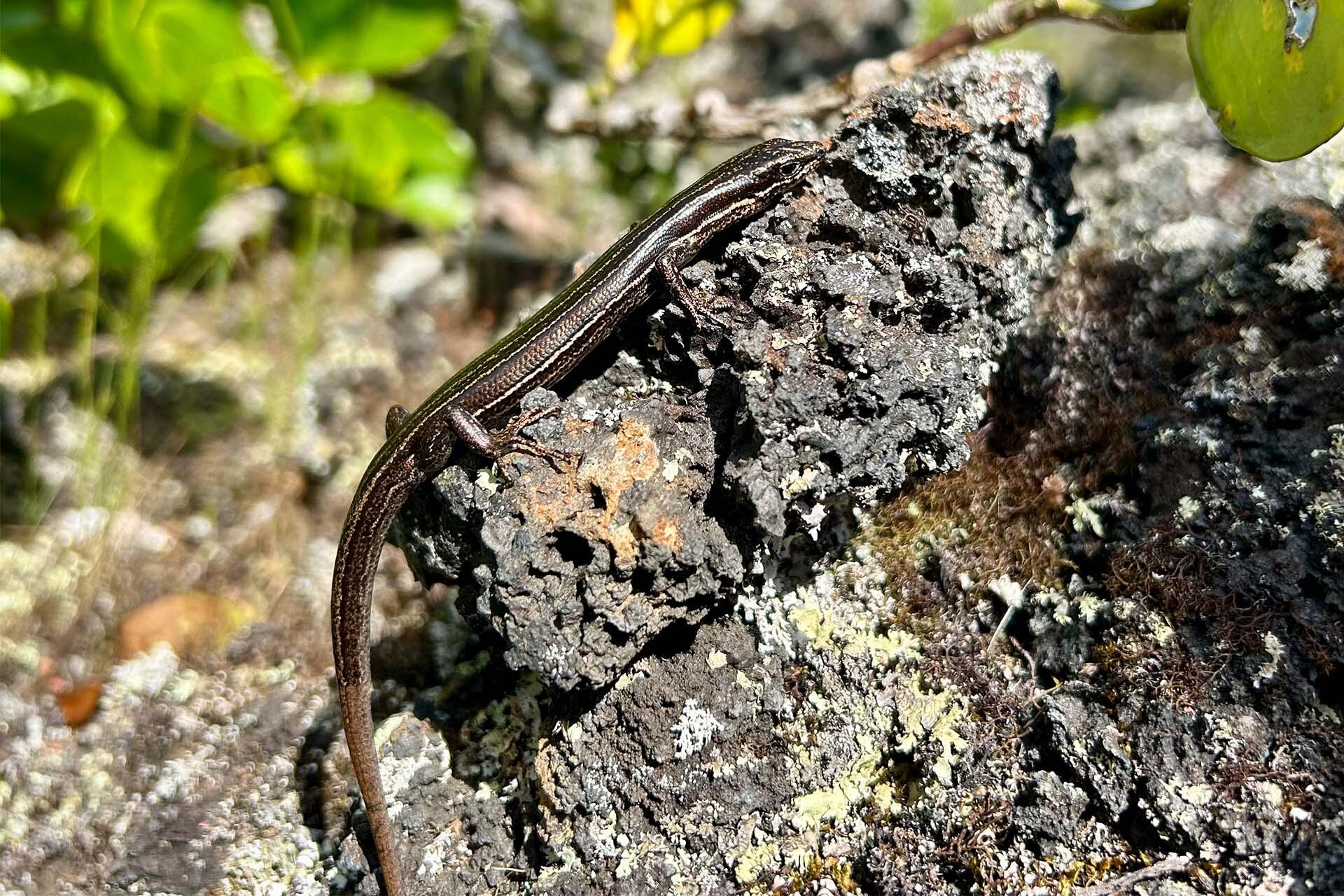
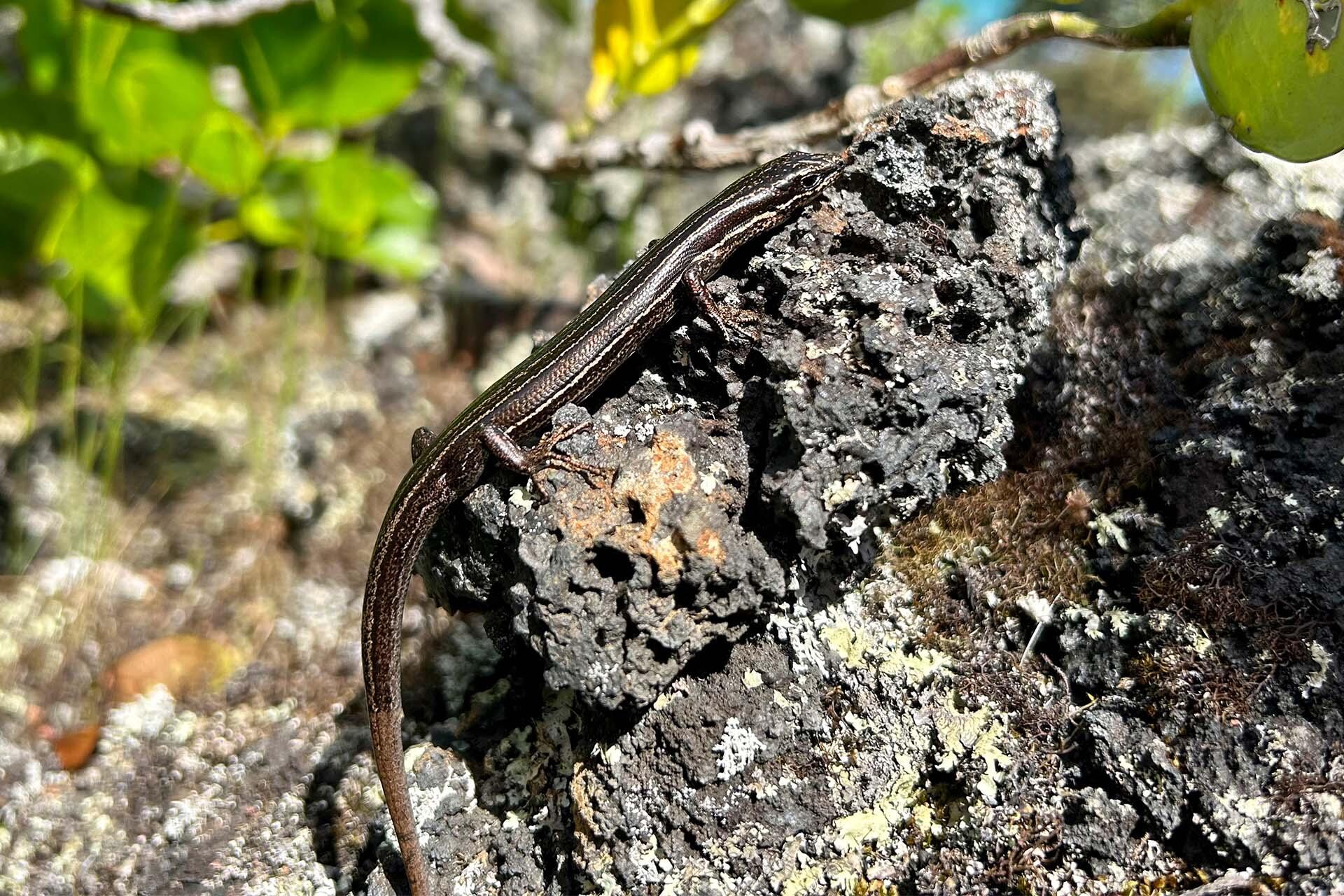
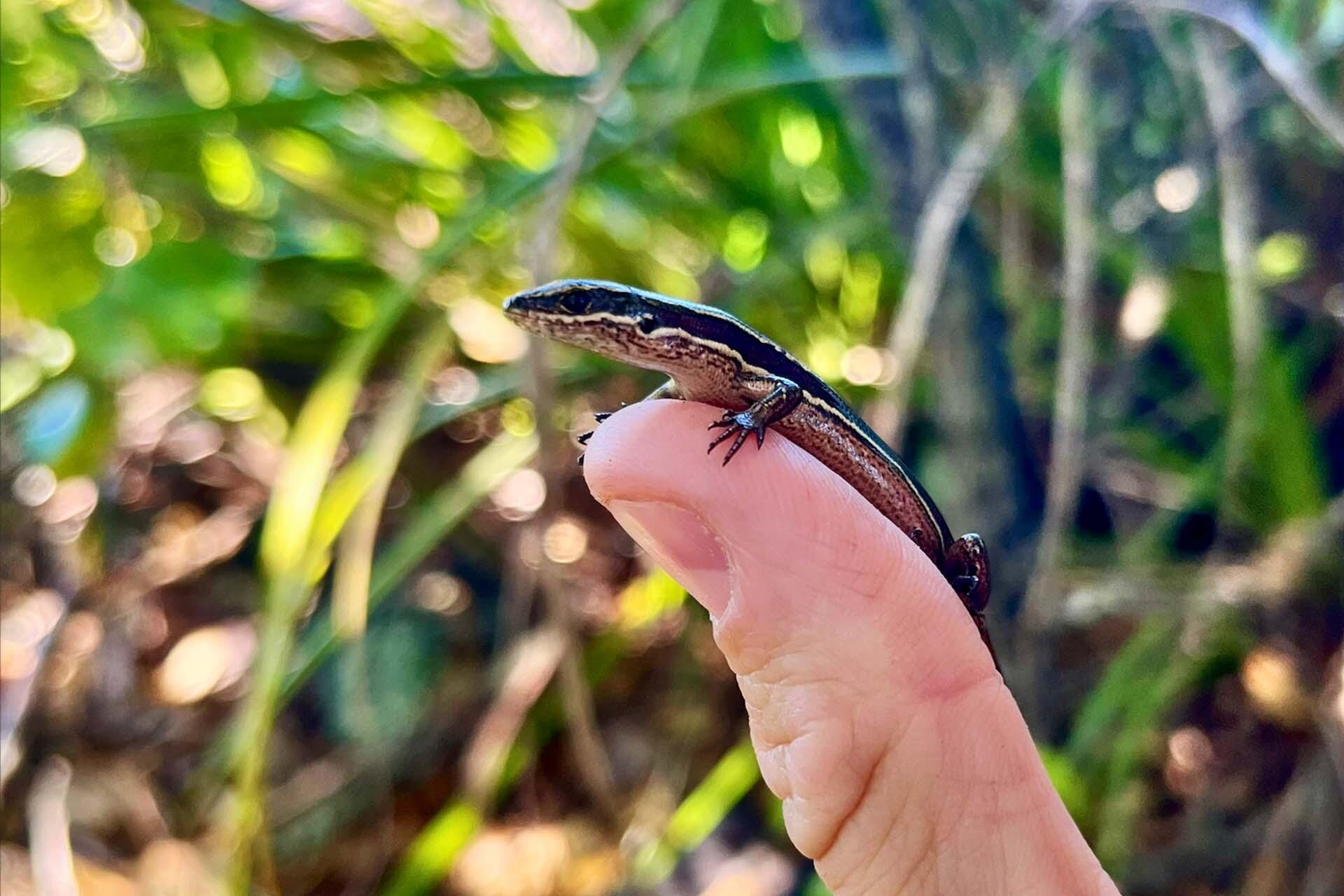
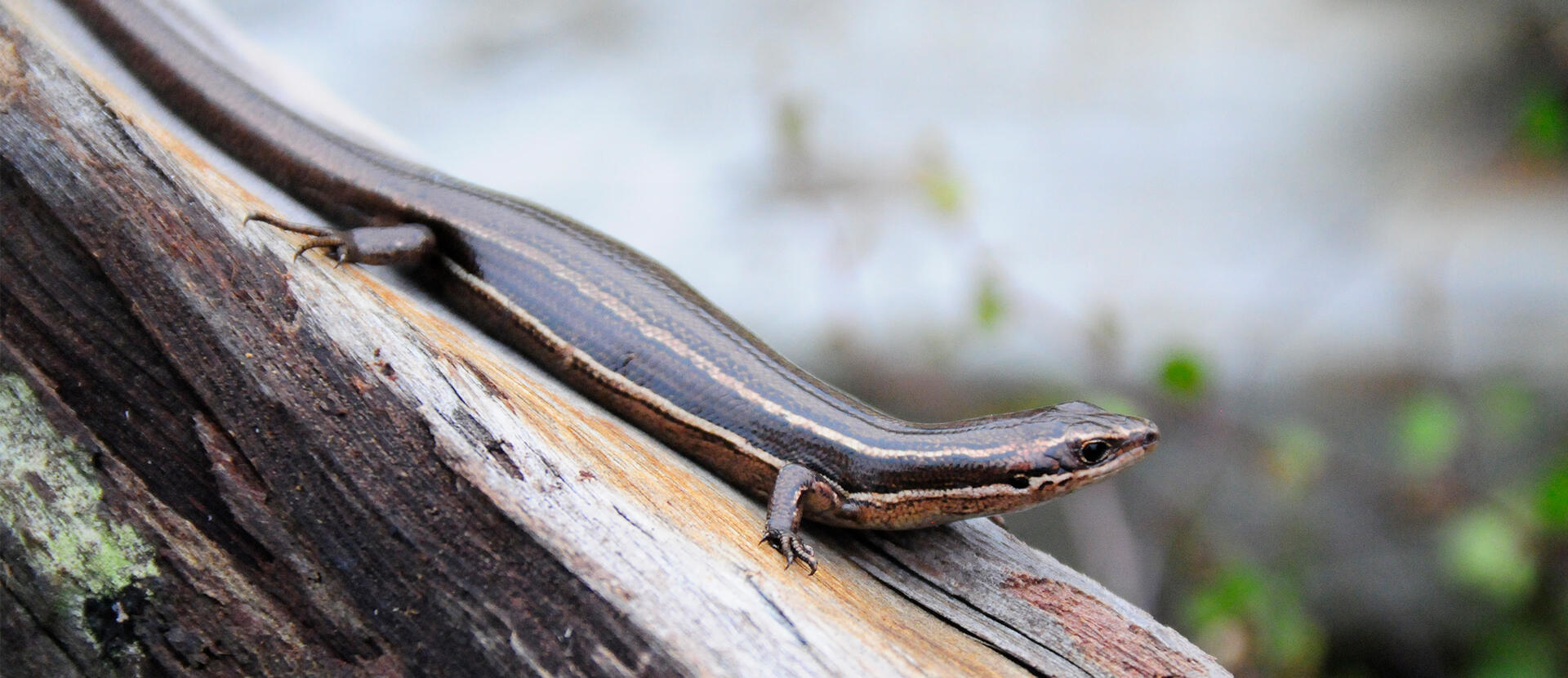
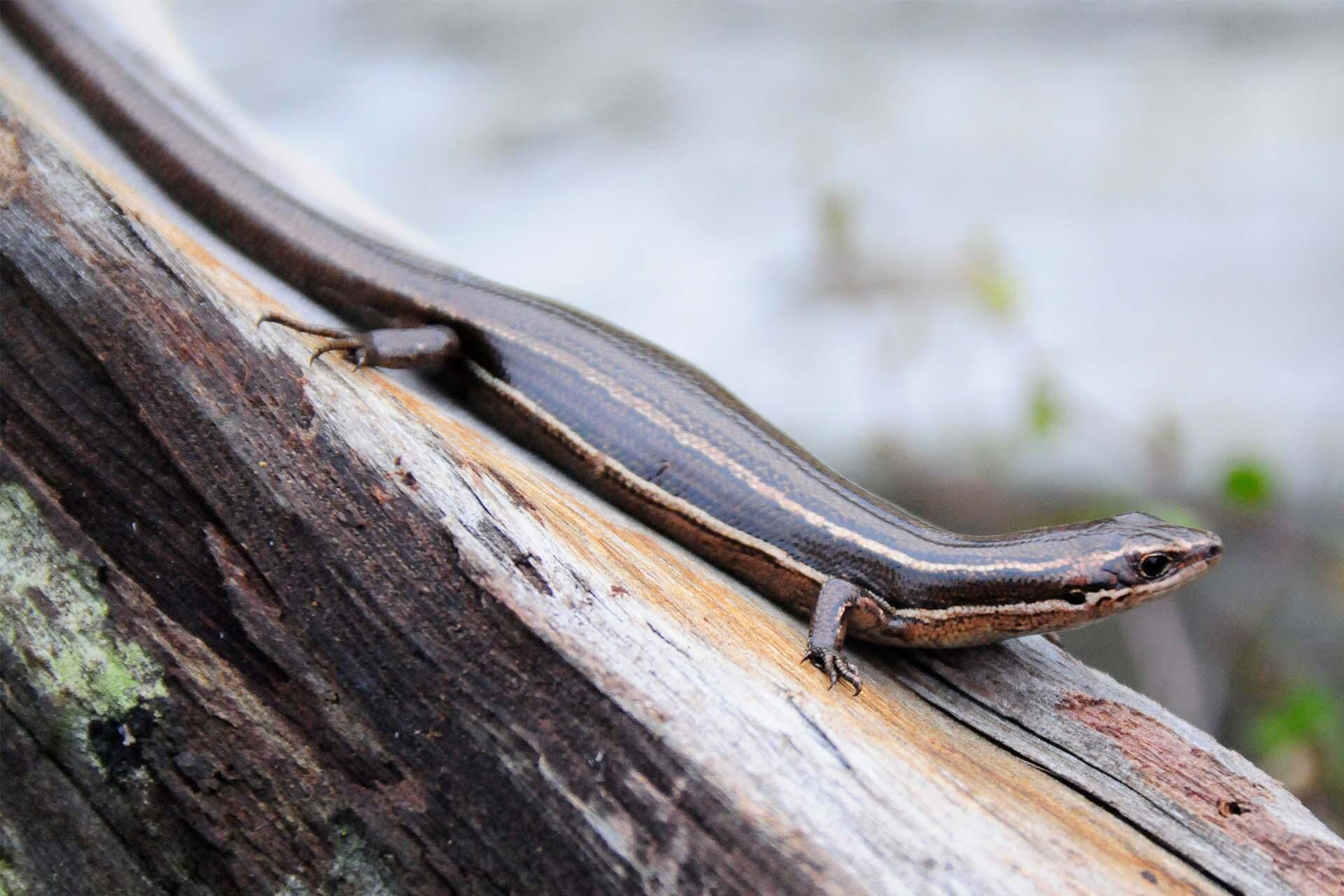
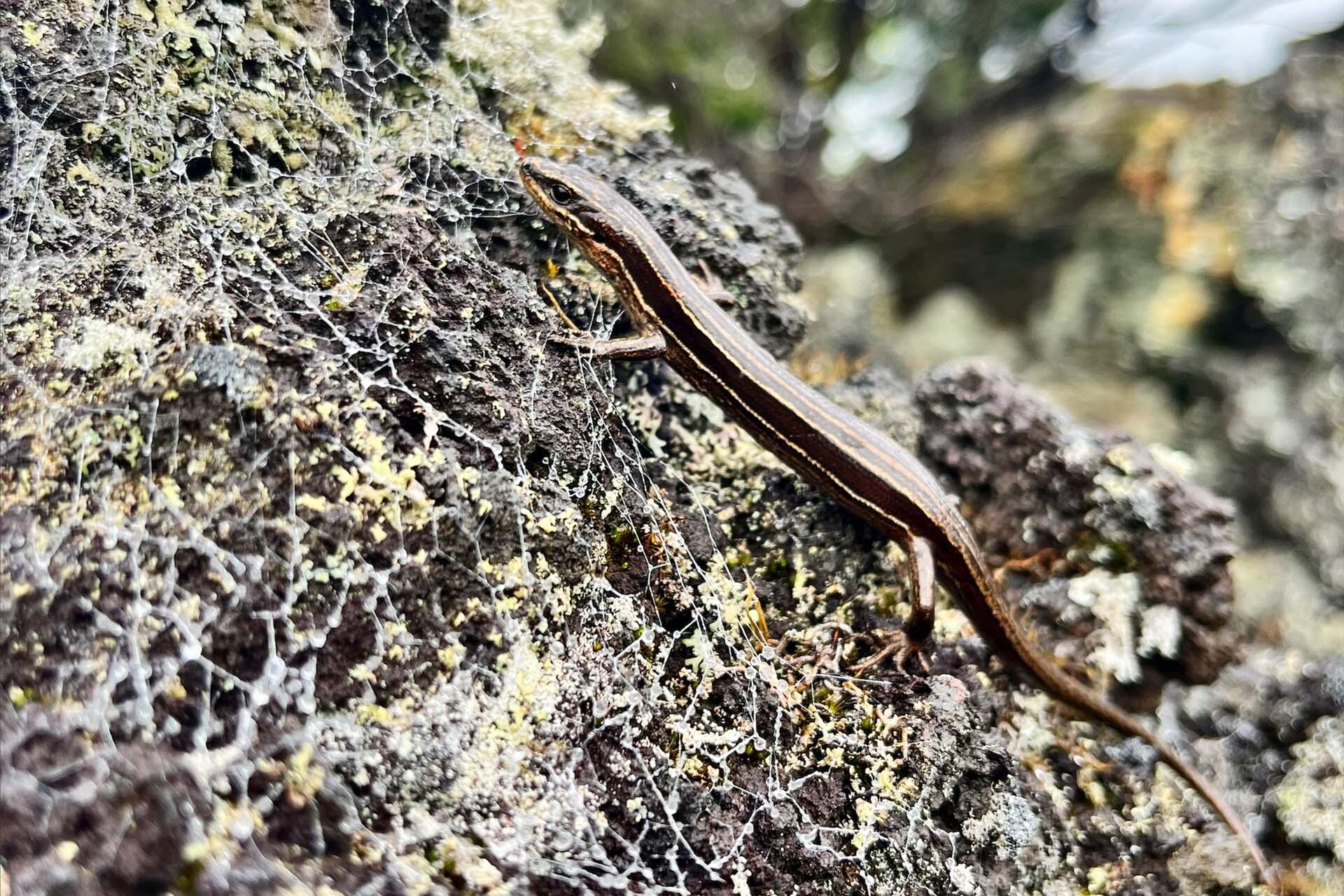
Moko skinks are relatively small, weighing up to around 8 grams. They have large, dark eyes. Generally, the species is brown to copper-brown in colour, with cream or light-tan stripes, and a darker dorsolateral stripe running along their bodies. They reach approximately 81 mm from the nose to the base of the tail, a measurement known as snout-to-vent length. Their tails are much longer than their bodies and can be more than 1.5 times the body length!

Moko skink habitat in New Zealand

In Aotearoa New Zealand’s ngahere/forest, moko skinks could be seen basking in the sun on the edges of walking tracks, open areas, or forest clearings. They mostly dwell on the ground in areas of coastal forest, scrub, and grassland. When they’re not active, they’ll often be hiding under rocks and logs, or in dense grass, flax, or vines. After sunbathing, they can become quite fast and active.

These skinks are solitary animals, but often can be seen in numbers in predator-free areas. Some scientists believe that skinks have been present since New Zealand broke away from Gondwana, while others think they arrived around 30 million years ago.
Moko skink diet in the wild and in human care

These skinks are omnivorous, feeding on both the fruits or berries of native plants such as kawakawa, Coprosma and Muehlenbeckia. They will also feed on a wide range of small invertebrates, including small insects and spiders. They have also been seen catching and eating rainbow skinks, which are an introduced and invasive species from Australia. Moko skinks are also one of the favourite foods of the native weka bird.

Although mainly ground-dwelling, they are good climbers and will scramble through low vegetation and into trees while searching for food.

At Auckland Zoo, we aim to replicate the wide variety of their wild diet by offering a range of invertebrates, berries, and flowers. Keepers collect native berries and flowers, while Auckland Zoo’s invertebrate breeding programme provides a healthy variety and quantity of insects to the moko skinks diet. This allows us to provide these lizards with a diet they would enjoy in the wild, as well as opportunities for natural foraging behaviours.

Caring for moko skinks at Auckland Zoo

Most skinks native to New Zealand give birth to live young, instead of laying eggs. This is thought to be an adaptation to living in Aotearoa New Zealand’s cooler climate, where life is difficult for cold-blooded reptiles. Female moko skinks breed every year, producing litters of one to six live young from February to March. Juveniles are independent from their mother as soon as they are born.

At Auckland Zoo, we have successfully bred moko skinks, allowing keepers to gain hands-on knowledge of their behaviour, diet, breeding, and general husbandry. The habitats we design reflect the natural environment of moko skinks. We have planted native species and crafted a complex habitat with areas to forage, climb, and shelter. This includes cooler, dry refuges, as well as wetter and more humid areas, giving the skinks the choice to move between different conditions. We also use a timed irrigation system that we program to create changes within the environment through misting and watering, rather than keeping the habitat completely static. Specialised lighting provides UV and heat to replicate features of sunlight, while timed fans provide airflow and ventilation, and can also help mimic the natural movement of breezes through the air.

Conservation efforts for moko skinks

Moko skinks are classified in New Zealand as ‘At Risk’ and are uncommon on the mainland. Like other native skinks, they face multiple threats in the form of introduced predators, competition with invasive species, and shrinking habitats. Moko skinks depend on conservation to stop their populations from decreasing.

Like many of New Zealand’s threatened native species, these skinks are protected on multiple predator-free islands. On mainland New Zealand, a population of moko skinks are safeguarded by a predator-proof fence and strong predator control at Shakespear Open Sanctuary in northern Auckland. Auckland Zoo is also involved in conservation work on Rangitoto Island. In collaboration with DOC, local iwi and MOT monitoring, we have been able to help identify the health of the population. Pest eradication and ongoing predator control provide a sanctuary for moko skinks and other native species.

This species has also been translocated to other predator-free islands, such as Rotoroa Island which rises from the North Island’s Hauraki Gulf. In the past, Auckland Zoo partnered with the Rotorua Island Trust on an exciting endeavour to help protect moko skinks by creating a new, managed ecosystem. In 2015, Auckland Zoo’s ectotherm team released 50 moko skinks to the predator-free island, where they can thrive without the presence of introduced predators and human activity encroaching on their wild habitats.

How you can help conserve moko skinks 

Caring for moko skinks at Auckland Zoo is a valuable part of protecting the species. The experience gained through breeding, feeding, habitat management and observing their behaviour, gives our ectotherm keepers a better understanding of the species, which can then contribute to the conservation and protection of wild populations. Every time you visit our Zoo, you’re helping us to advocate and spread awareness for native skinks, and contribute to their conservation in New Zealand.