
Built to stick

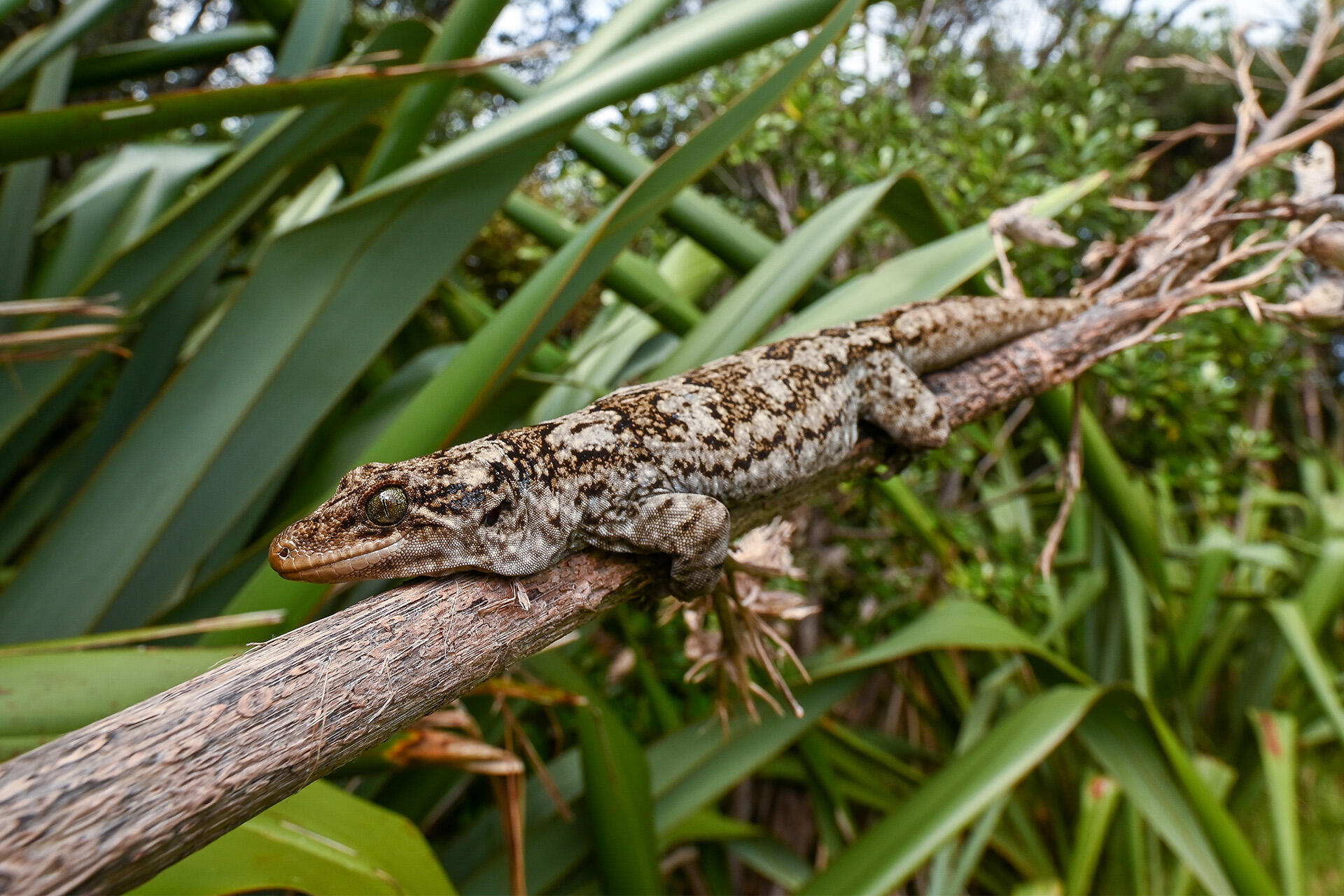
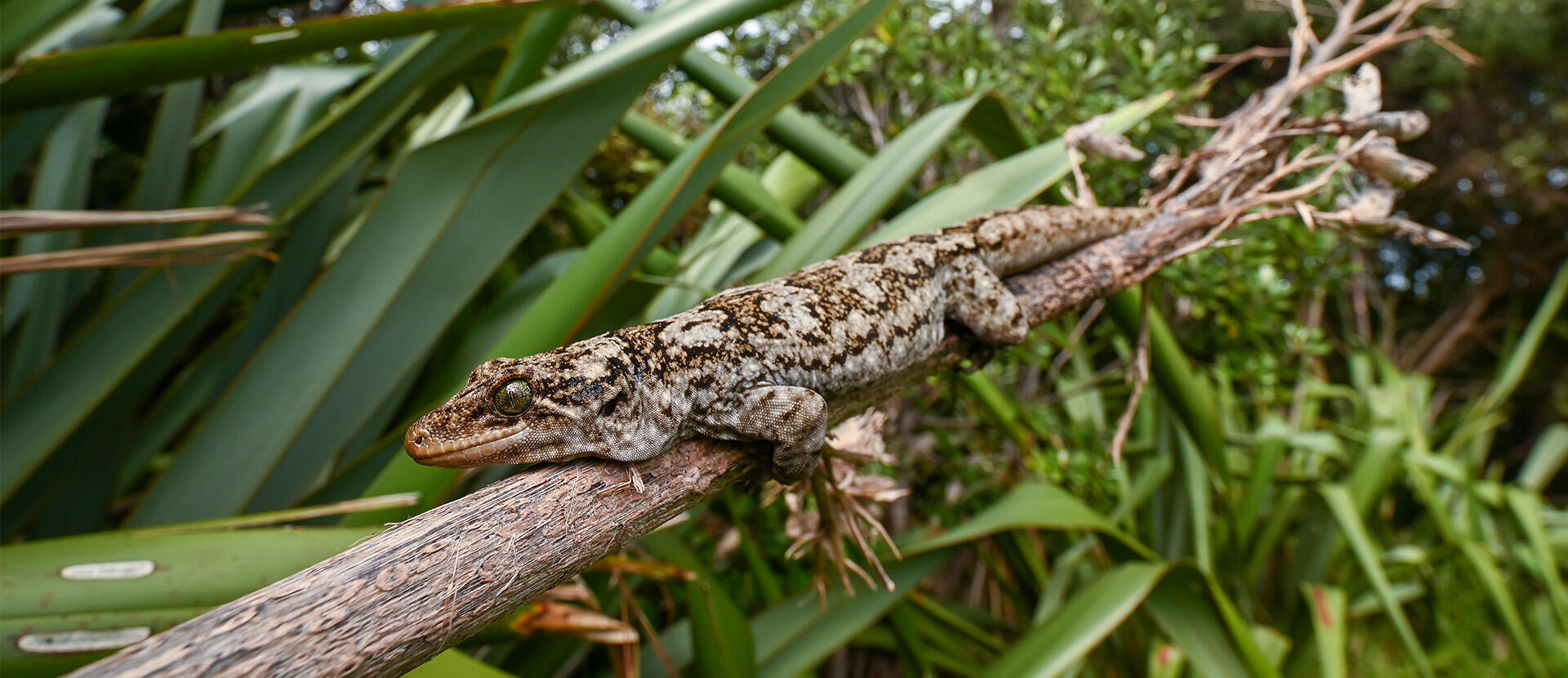
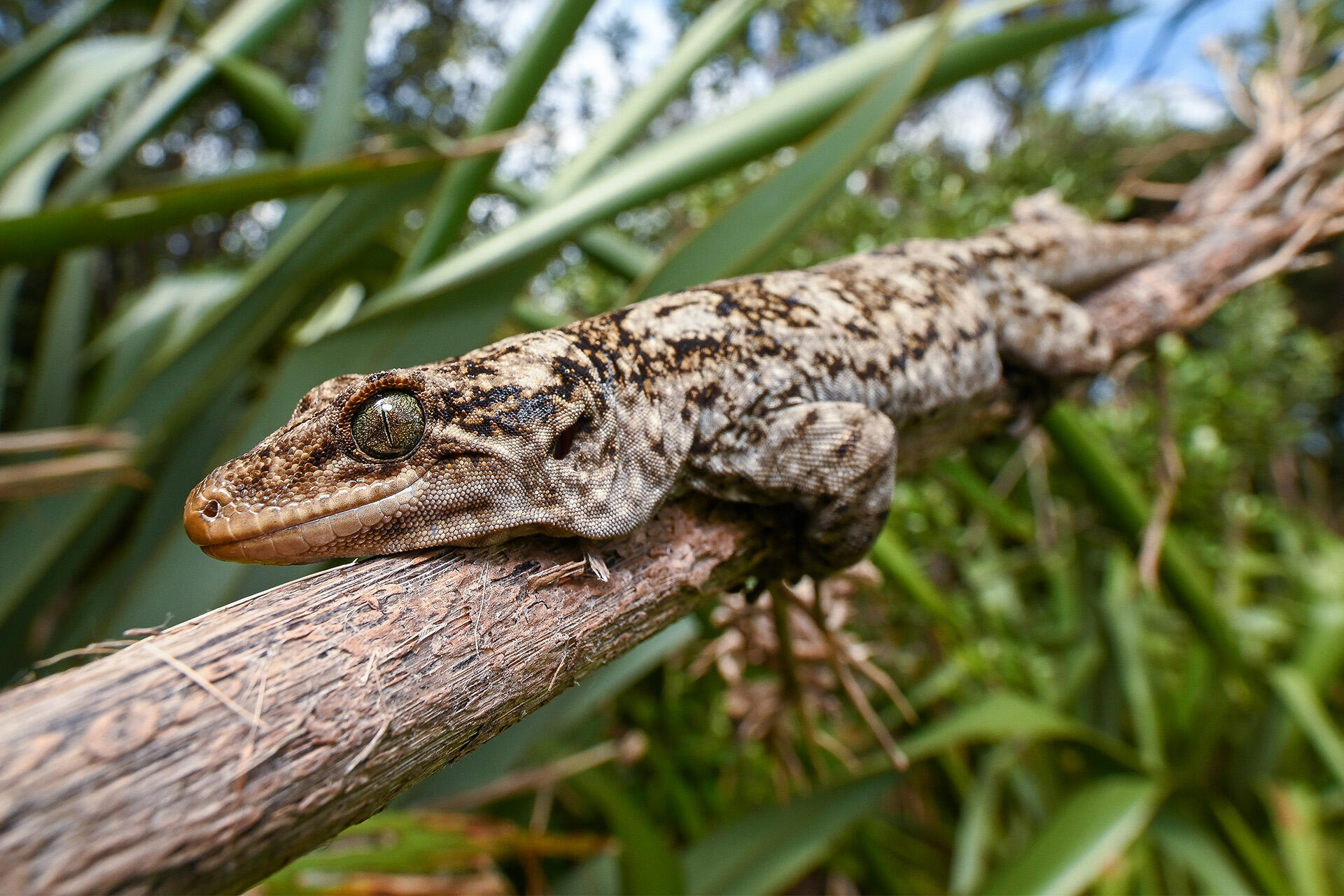
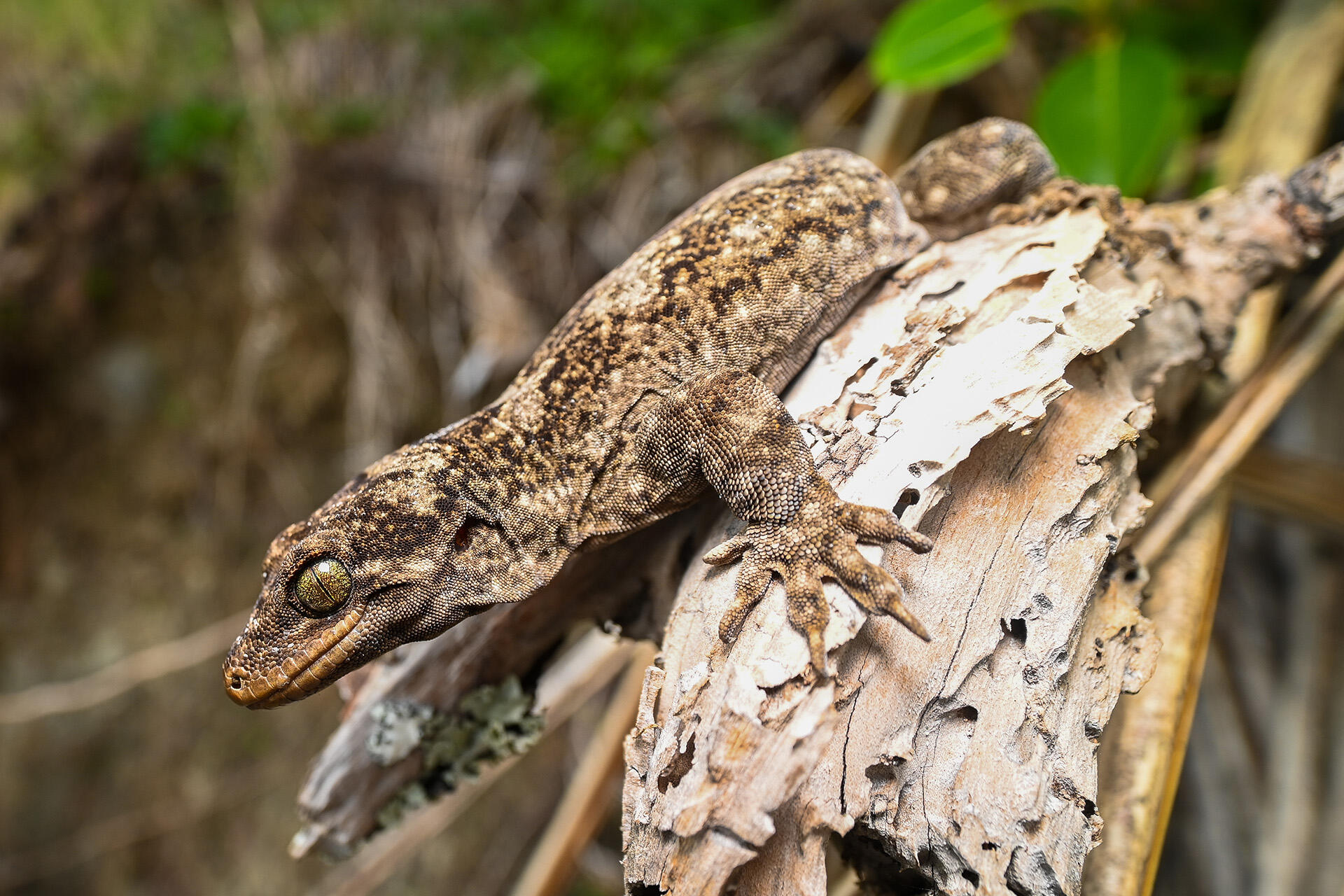
They’re the largest living geckos in New Zealand, and they’re also expert climbers! This is thanks to number of lamellae on their feet and their long toes. Lamellae are specialised ridged pads on their toes that are covered in microscopic hairs, and these allow them to climb vertical surfaces like rocks and bark with ease. Just imagine being able to walk straight up your bedroom wall!

A gentle giant of the gecko world

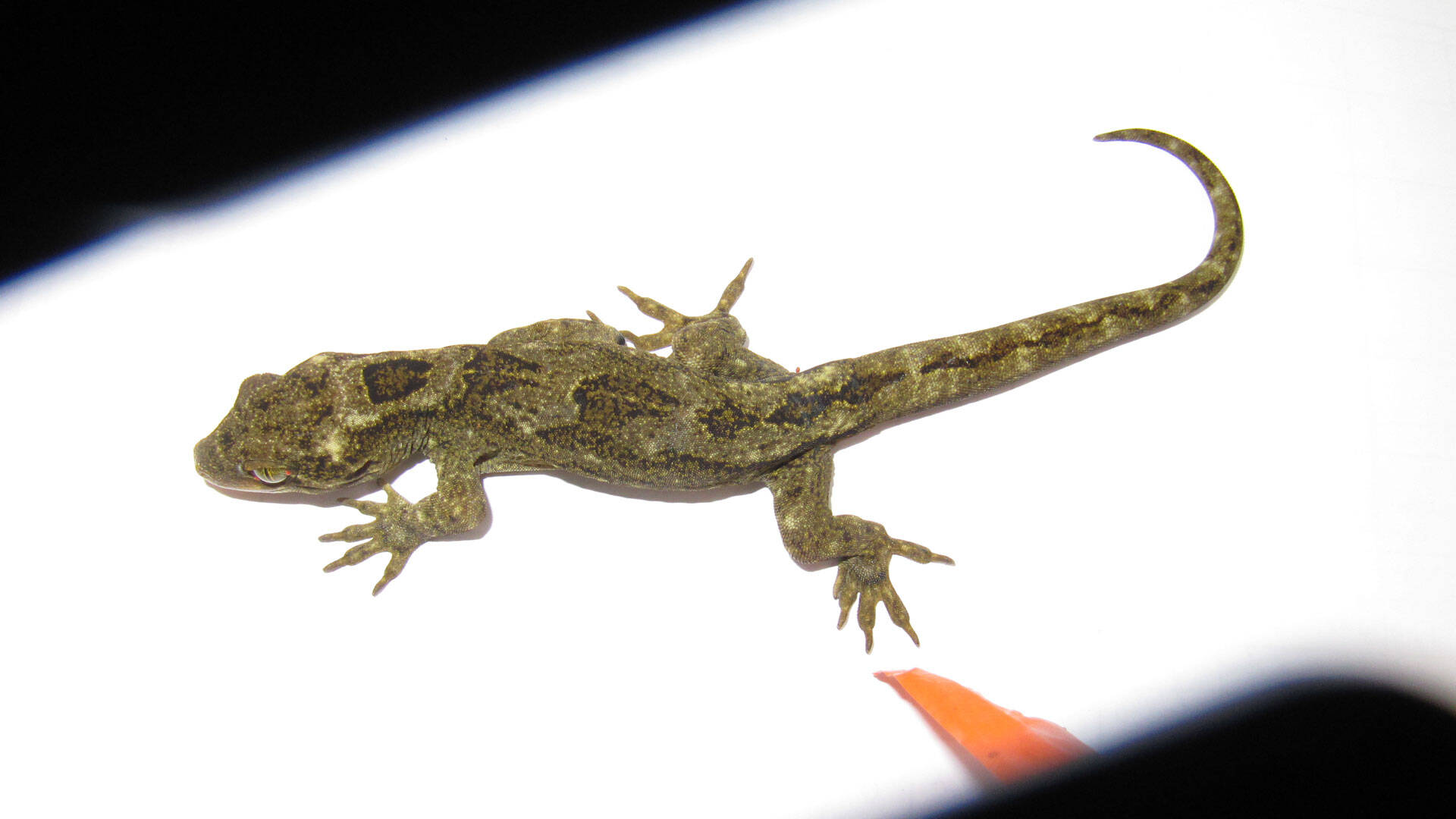
Duvaucel’s geckos or kawekaweau are our largest endemic lizard, growing up to 160mm from snout to vent. If you include their tails, their total length is more than 300mm! A robust, slow-growing lizard, they were once found all throughout the North Island.

Sadly, due to the introduction of predatory mammals, the species is now restricted to predator-free offshore islands, where it shelters in forests, bluffs, cliffs and coastlines in lowland areas. Impressive in size, they are built for their rugged New Zealand environment. 

These geckos have a broad and opportunistic diet, feeding on large insects such as pūriri moth and wētā, as well as fruit, nectar and occasionally other small lizards and shearwater eggs.

Slow growing socialites

Despite their size, Duvaucel’s geckos are tolerant of one another and are often found sharing shelter in small groups of up to eight individuals. These groups usually include several females and some offspring, but typically there will only be one adult male. Life moves slowly for this species, taking around seven years to reach sexual maturity and they will normally produce just one or two offspring annually, making patience a defining feature of their biology.
At the Zoo

You can find the Duvaucel’s geckos in The Islands in Te Wao Nui. Take your time and see if you can spot them, they are experts at remaining motionless and blending into their surroundings.

In the Wild

Origin: New Zealand (North Island)

Habitat: Terrestrial – forest, shrubland, marine coastal/supratidal.

Conservation status: IUCN – Near Threatened

How we’re helping

In 2020, a 10-year breed-for-release programme at Massey University, managed by wildlife biologist Manuela Barry, resulted in the release of 90 Duvaucel geckos onto predator free islands in the Hauraki Gulf.

This project was supported by the Auckland Zoo Conservation Fund alongside other conservation partners, Ngāi Tai ki Tāmaki, Motutapu Restoration Trust and the Department of Conservation.

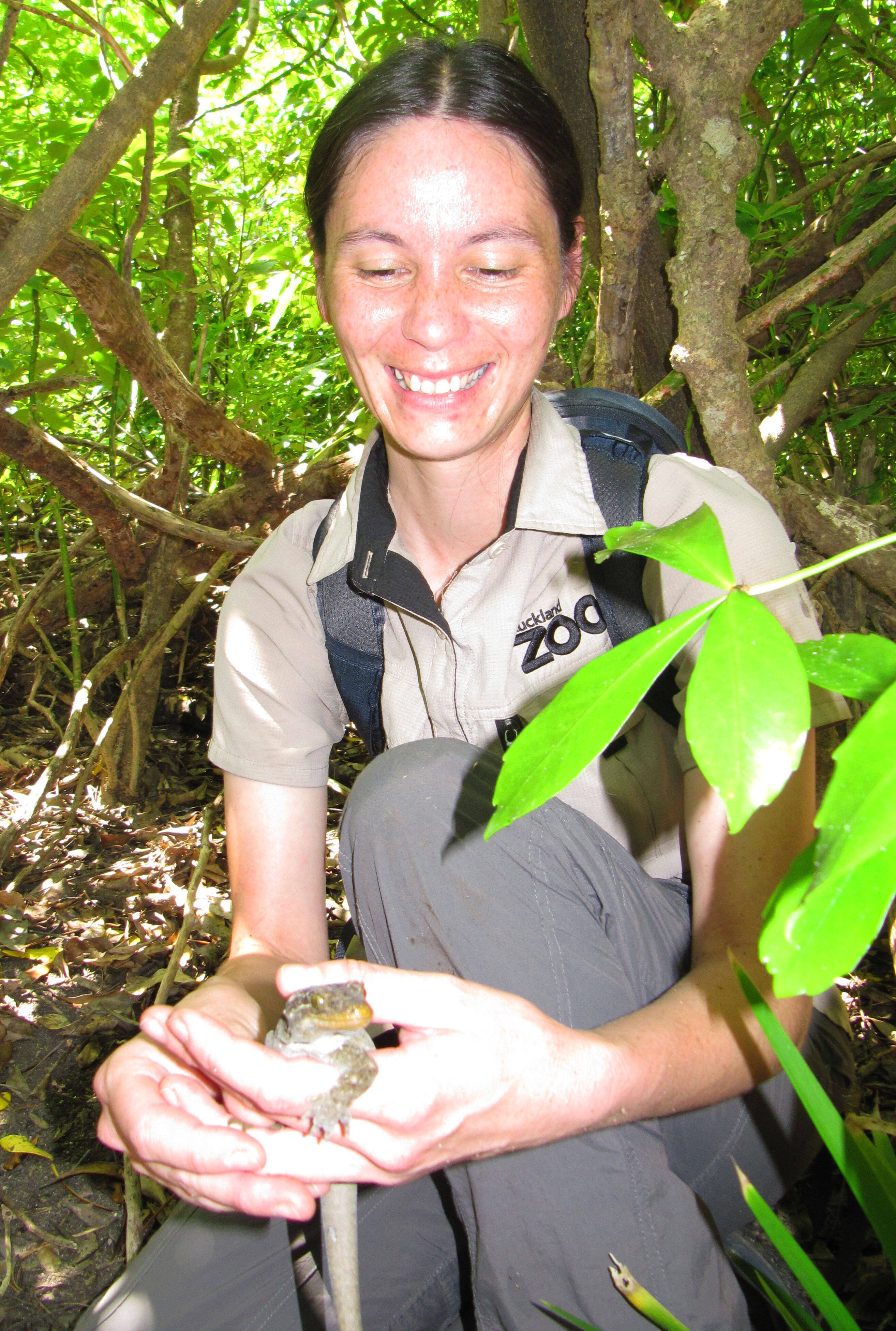
In early 2023, Auckland Zoo ectotherm keeper Chye-Mei travelled to one of these islands to support Manuela Barry in monitoring the geckos that had previously been released there.

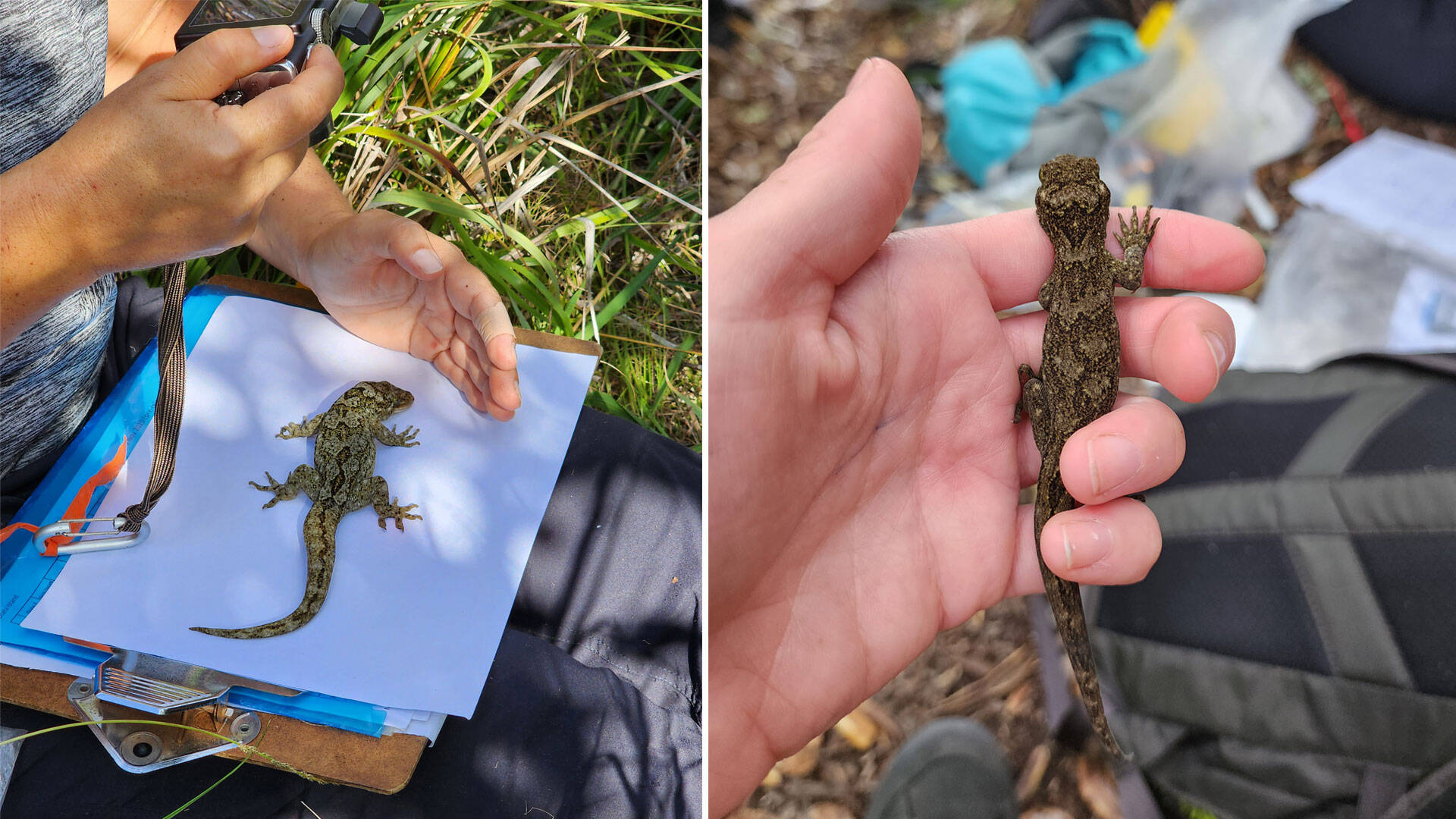
Due to COVID-19 restrictions and a series of unprecedented weather events, this survey marked the first opportunity to monitor the geckos since their initial release. The team successfully located 12% of the founder geckos, all of which were in excellent body condition, with no signs of illness or having been predated on. They even discovered three island-born young geckos and confirmed that one of the females was gravid (pregnant).  

Why are we doing it?

In 2023, DNA sampling revealed that what was previously thought of as one gecko, was actually two genetically distinct species – the Duvaucel’s gecko (Hoplodactylus duvaucelii) and te mokomoko a Tohu / the Tohu gecko (Hoplodactylus tohu).

Duvaucel’s geckos were once widespread throughout New Zealand’s North Island, but introduced predators and habitat destruction have meant that naturally occurring populations are restricted to 36 offshore islands. The species has a conservation threat status of ‘at risk’ and it is estimated there are approximately 20,000 mature individuals.

The Tohu gecko is in much more dire straits - with an estimated 600 individuals surviving in the wild today, and is found on Cook Strait's Ngāwhatu-kai-ponu/Brothers and Kuru Pongi/Trios Islands.

The breed for release programme outlined above, allowed for Duvaucel’s geckos to be released at five separate island locations. This signifies a positive step forward in ensuring the future of native species and preserving the rich biodiversity of New Zealand for future generations.

How you can help

As a not-for-profit, we rely on our amazing supporters like you to be able to continue our conservation Wild Work for the world’s most vulnerable and at-risk animal species. Help our wildlife in need by donating here!

Other New Zealand Species