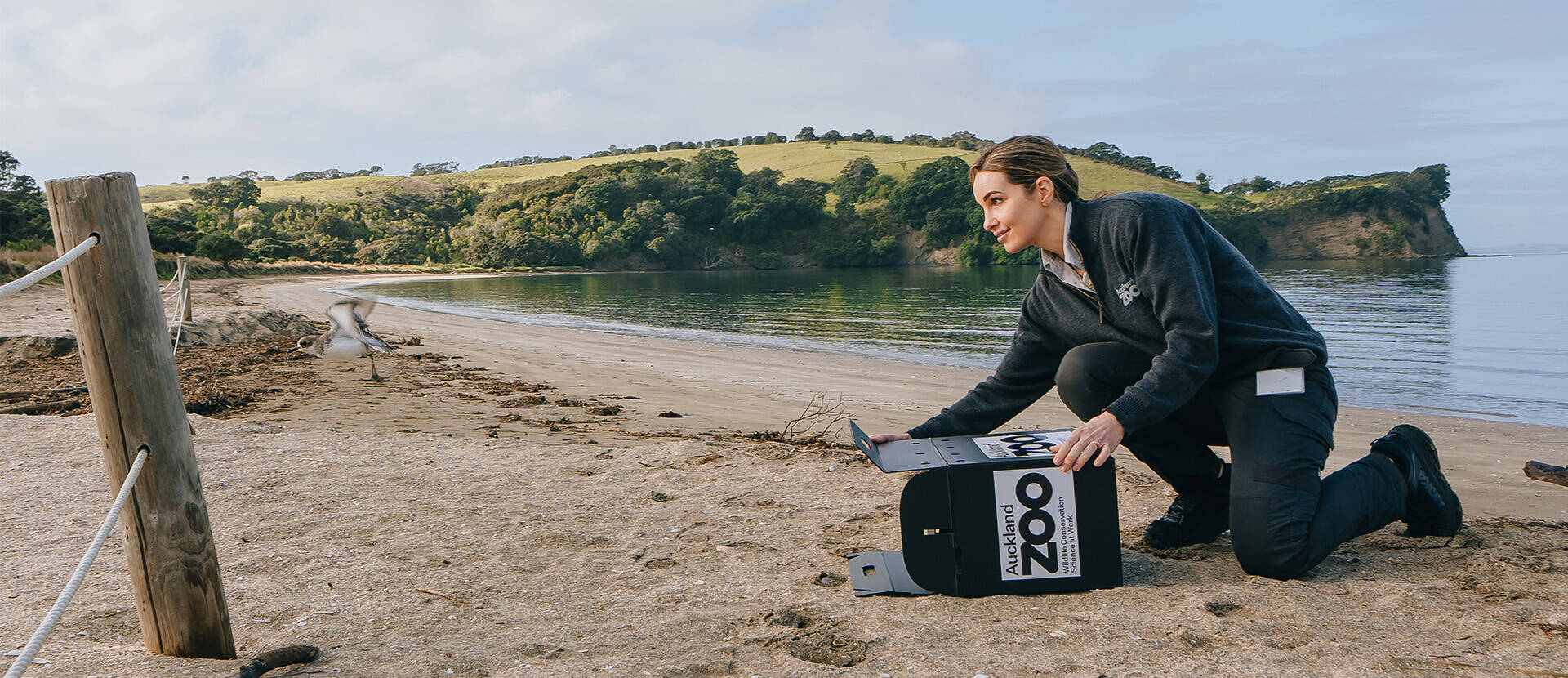
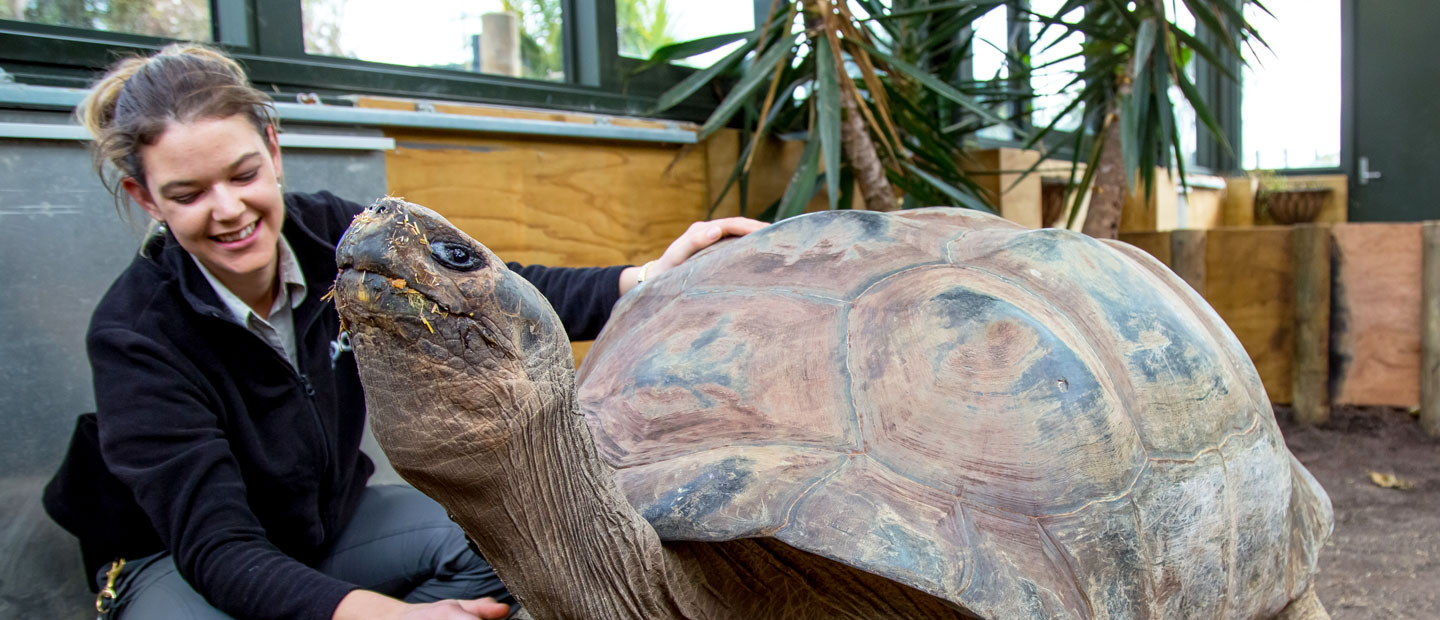
We're highlighting all of our amazing vet nurses this week for Veterinary Nurse Awareness Week 2025. We have an incredible team of five full time veterinary nurses and one veterinary nurse in training.

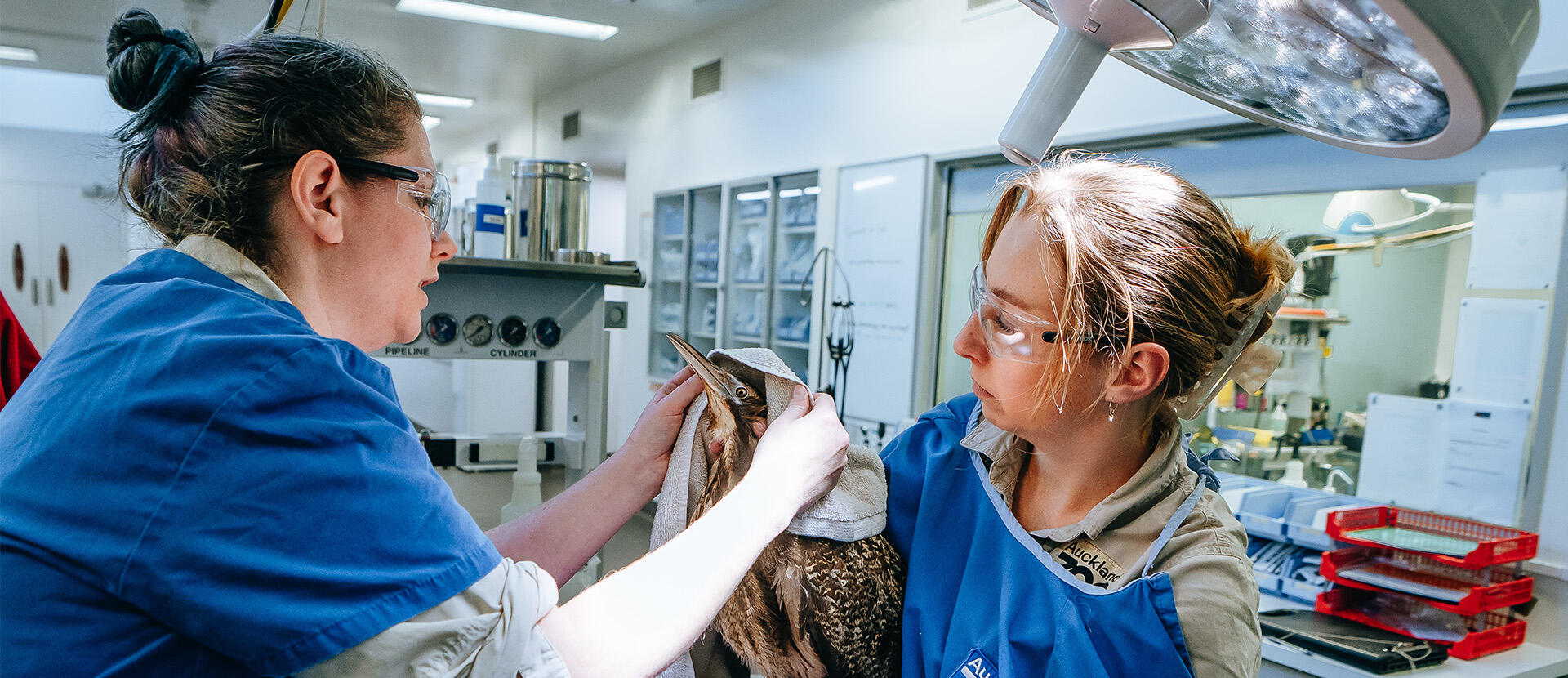
Our nurses, alongside our skilled vets, treat patients from both within the Zoo, as well as injured wildlife across Aotearoa New Zealand that are brought to our veterinary hospital for their specialist care.

Cathy Priscott

“There are many ways to care for animals, but it’s the nurturing and hands-on aspect of vet nursing that appeals to me,” explains Cathy.

We’re so grateful for our team of Zoo vet nurses, including Cathy who has 20+ years of experience! She started with us in 2022 and soon became a permanent member of our vet team. Prior to this, she worked in vet hospitals across Auckland, Melbourne and London and gained further experience caring for non-domestic animals in specialist veterinary clinics.

Caring for New Zealand’s native parrot species has been a real highlight for this Kiwi. A species she is particularly fond of are the clever kākā. She says, “we often treat kākā at our veterinary hospital when they’ve been brought in from the wild with injuries. It is such a privilege to build a bond with this highly intelligent and social species.”

Being a Zoo vet nurse means caring for animals that may not have been in human care before. This comes with its own unique challenges in ensuring our patients feel comfortable, safe and are not likely to get stressed or accidentally injure themselves while receiving treatment.

“We are very lucky to have state-of-the-art camera equipment that allows us to monitor our patients without being present in the room. This is especially important with our patients from the wild, such as the matuku-hurepo (Australasian bittern) we successfully cared for and released last year. As reducing their stress levels can hugely impact their recovery.”

Breeze Buchanan

Conservation, collaboration and inspiring the next generation – these are key reasons why Breeze loves her role as a Zoo veterinary nurse!

When she was just 13 years-old, Breeze started helping out as a kennel hand at a local veterinary clinic, it was there that she discovered her passion for vet nursing. In 2014, after gaining years of experience caring for animals, she joined our team at Auckland Zoo (and we’re very lucky to have her!).

Breeze says one of the best things about veterinary nursing in a zoo or wildlife context is the collaboration. “Sometimes we receive wild patients that we’ve rarely, or never, treated before. In those cases, we collaborate with colleagues in New Zealand and around the world on husbandry, medical considerations, and species-specific needs. Every case adds to our knowledge and helps us grow as professionals.”

One of her professional highlights this year was witnessing the release of five sea turtles at Rangiputa Beach. “I had helped nurse them when they first arrived at the hospital at their sickest, helped monitor them during their rehabilitation at Kelly Tarlton’s and then got to see them released back into the sea. Being part of that full circle – from rescue to recovery to release – was emotional and deeply rewarding.”

Now having gained years of experience, she can share this with vet nursing students that have placements with us. “It feels so rewarding to pass on knowledge and practical skills, to hopefully inspire them with my passion for wildlife, and play a small role in shaping their journey.”

Her advice for those interested in joining vet nursing or a profession they love is, “Find your passion and pursue it. Don’t let anyone tell you it’s too hard, that you’re not smart enough or that it’s unattainable!”

Celine Campana

Every day is different at our vet hospital – from caring for Zoo patients to treating wildlife from the wild!

No one understands this better than Celine, who has been one of our treasured veterinary nurses since 2017. “We could plan a health check with a kangaroo, but suddenly there is an iguana with a fractured tail or a kiwi with an egg they can’t pass and we need to drop everything and change plans accordingly,” she says.

Celine dedicates a lot of time to thinking about the best way to provide comfort to species of all shapes, sizes and requirements, while they’re receiving treatment. A significant part of this is creating hospital habitats that have lots of hiding places, leafy foliage and areas to climb or burrow if needed. This ensures the animal patients feel as relaxed as they can be. And she says, “Each species has their subtle differences and quirks!”

She’s also kept busy with co-ordinating work placements for veterinary nurse and veterinary surgeon students at our vet hospital. This can also include qualified veterinary professionals that want to learn more about wildlife (non-domestic) animal care.

“Regular veterinary and vet nursing curriculums do not include teaching medical care of avian or reptilian species. I feel it’s my responsibility to share my knowledge of these animals – particularly our native taonga – so that these students go on to be comfortable providing first aid and treatments once they are out working in vet practices! It is a way we can indirectly contribute to better welfare of those patients.”

The best part? “I love explaining something and seeing that ‘lightbulb moment’ when students understand a new concept - it’s one of my favourite things!”

Jess Erb

“Passion drives dedication, and that is what makes the difference,” says veterinary nurse Jess.

Jess’s passion for animals began growing up on a farm in Taranaki and volunteering at her local zoo. She says volunteering – something she highly recommends, was incredibly valuable, helping her gain hands-on experience and the confidence to keep learning and growing, and opened doors to further opportunities.

A keen interest in animal husbandry and behaviour inspired Jess to complete the zookeeping course at Unitec here in Auckland, where in 2013 she also went on to gain a diploma in veterinary nursing.

“A key moment for me was visiting a wildlife and zoo hospital in Australia. Seeing the work being done there was incredibly inspiring, and it made me realise I could combine both areas of expertise to contribute in a meaningful way.”

Jess says veterinary nursing in a zoo environment is hugely different from working in general practice because of the sheer diversity of species.

“Every animal presents unique challenges and considerations, whether it’s their anatomy, behaviour or specific needs during hospitalisation or anaesthesia - but that’s exactly what makes it so engaging, mentally stimulating, and fulfilling.”

Since joining our amazing veterinary team in 2024, Jess has worked with dozens of different patients, from those in the Zoo’s care to those that come in sick and injured from the wild.

“One of my most memorable experiences has been helping rehabilitate and release a southern giant petrel. When he first came into the hospital, he was extremely unwell. Seeing his transformation – gradually regaining his strength and returning to full health, and then getting to help release him from a boat out in the Hauraki Gulf was incredible.

“Watching him swim confidently and attempt to skim across the water was not only an emotional experience for me, but a powerful reminder of why I love this work.”


Mikaylie Wilson

“Advanced technology like CT scans allow us to understand what’s going on in our patients so much quicker these days,” says vet nurse and our vet hospital’s clinical coordinator Mikaylie.

The animal lover (who knew she wanted to work in a zoo since she was five and joined our veterinary team in 2012) loves the science and evidence-based approach her job requires.

“We find the best available research and data – using everything from physical examinations, blood tests and x-rays, and when needed, CT scans, ultrasounds and endoscopies - to figure out how to provide the most appropriate and best possible care for every animal we treat.”

“We’ve been using CT scans on an increasingly regular basis. They’re able to provide detailed computer imaging of bones, soft tissues, organs and blood vessels, so can tell us so much about what’s going on in the body - and fast! We don’t have to wait weeks to see how a patient responds to different treatments and can also avoid having to do invasive surgeries” explains Mikaylie.

A patient she has loved being part of a team working with over the past year has been elderly southern white rhinoceros Zambezi, who due to his age, has had several dental procedures.

“I always enjoy working with rhino as I feel they’re such gentle giants. Back in 2020 I had the great privilege of being present at female rhino Jamila’s first birth (to female Nyah), which was an incredible moment to be part of.

Mikaylie’s other great love is using her skills working out in the field with Department of Conservation (DOC) Kākāpō Recovery colleagues to help this rare taonga.

“I’m living my dream and would say to anyone else out there wanting to get into veterinary nursing - go for it, as there is always a way in, even when it sometimes feels impossible.”

Adriana Cornelissen

Adriana cares for animals - as a zookeeper and as a veterinary nurse in training!

She attributes her passion for wildlife conservation as starting at an early age, growing up around animals and the outdoors in a small town in Canterbury.

After completing her studies, Adriana joined our Zoo as a bird keeper in 2023, as well as working as an assistant vet nurse in a general practice clinic. Just recently, she became a Zoo vet nurse in training, learning how to care for a variety of different patients with our incredible vet team.

Being able to combine her zookeeping husbandry skills with caring for patients in a veterinary hospital has been really rewarding. “I have a particular interest in birds, so caring for a wild albatross (Salvin’s mollymawk) in my first week has been such a huge privilege to me. Being involved in caring for this magnificent bird - and using my bird handling skills to take bloods and provide supplementary feeding - has been so fulfilling,” explains Adriana.

 “I have learnt an insane amount in a few weeks already! That's what I love about this job, you are constantly learning, growing and developing your skills. All I want to do is to make a difference for wildlife and conservation, and here at Auckland Zoo I am able to contribute to that.”

Her advice on what we can all do to help wildlife in need? “I think working collectively is the key to success. Every small thing, like picking up a piece of rubbish you see at the beach, makes a difference. Collectively if we educate those around us and those younger than us, we could better preserve our environment.”