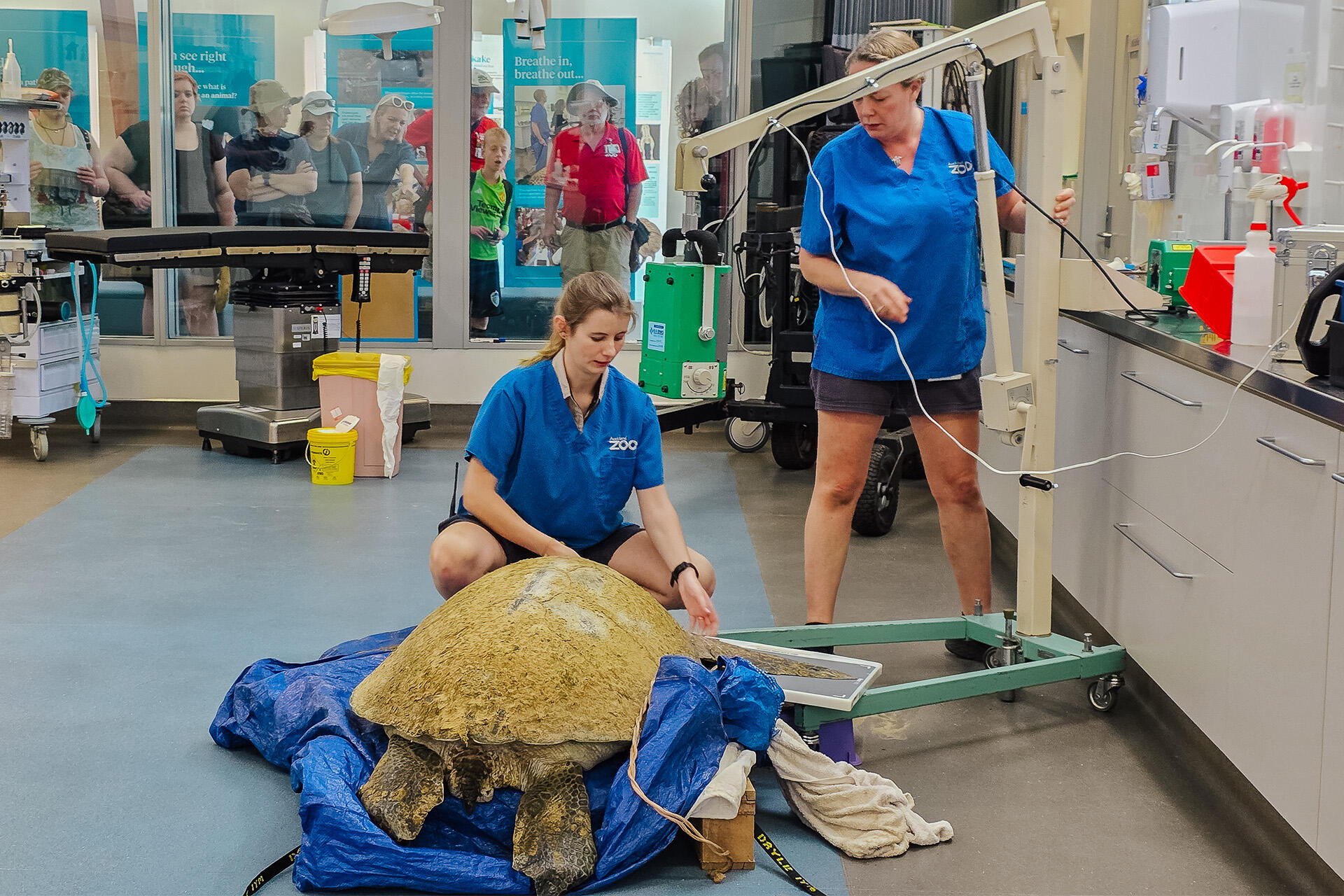
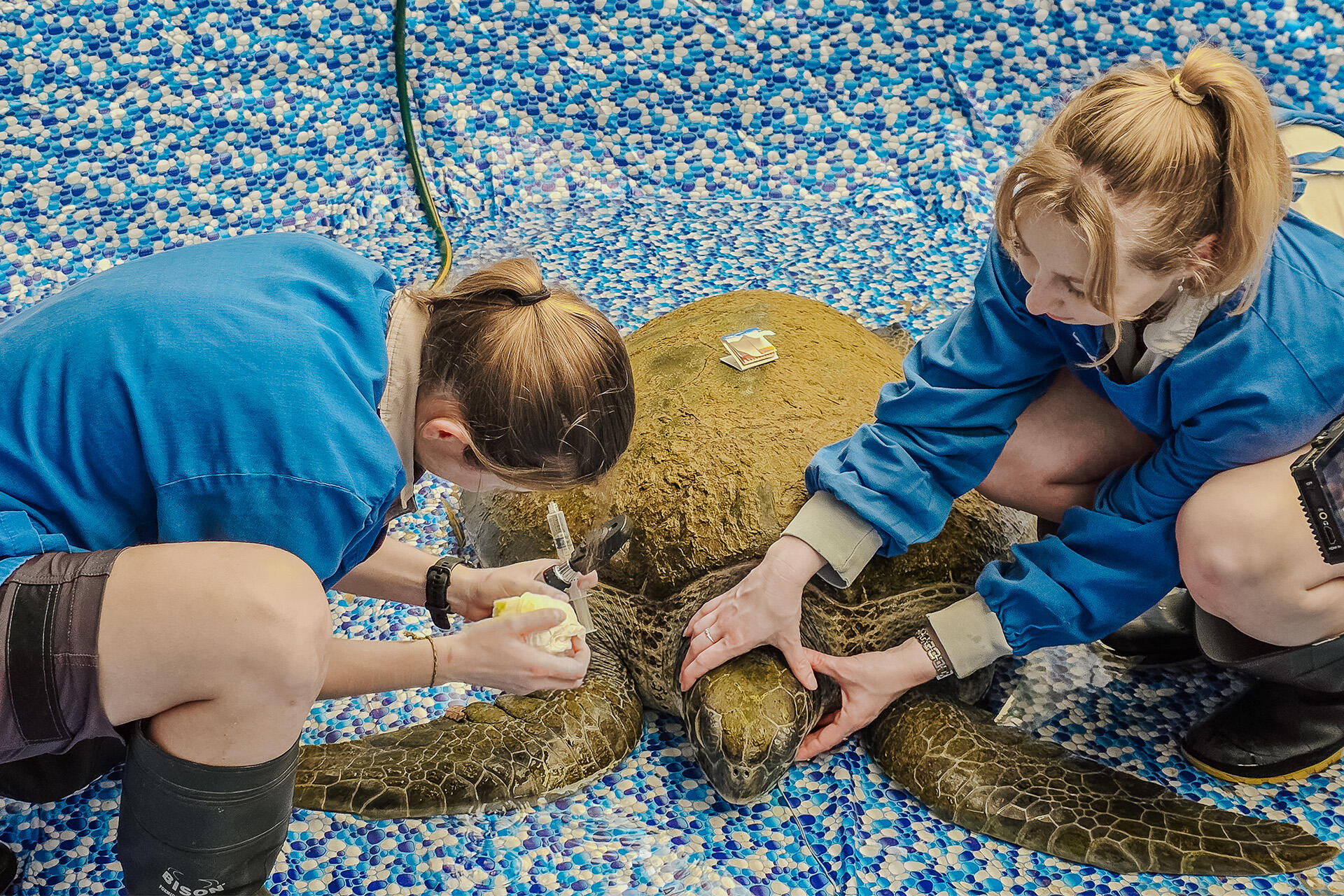
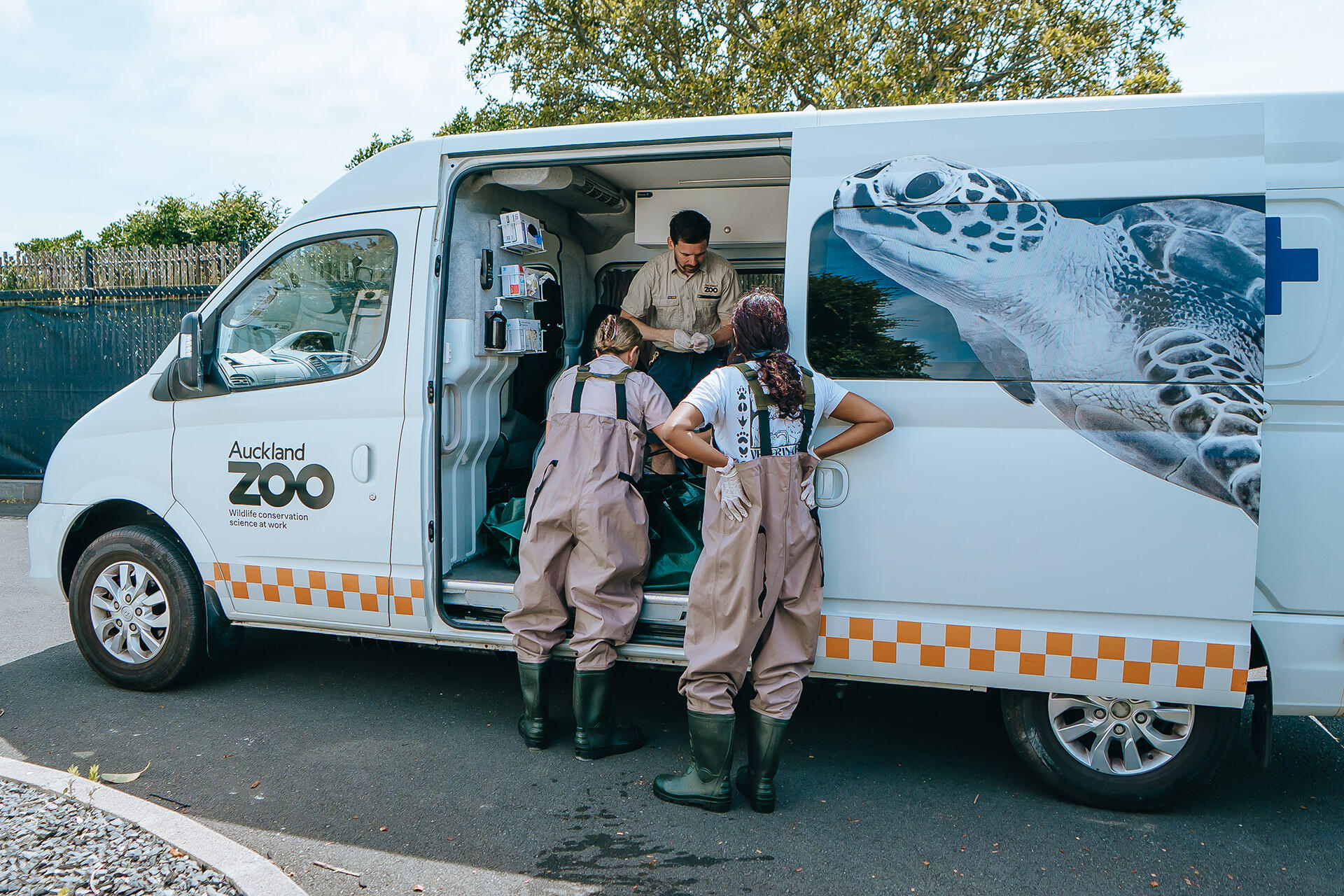
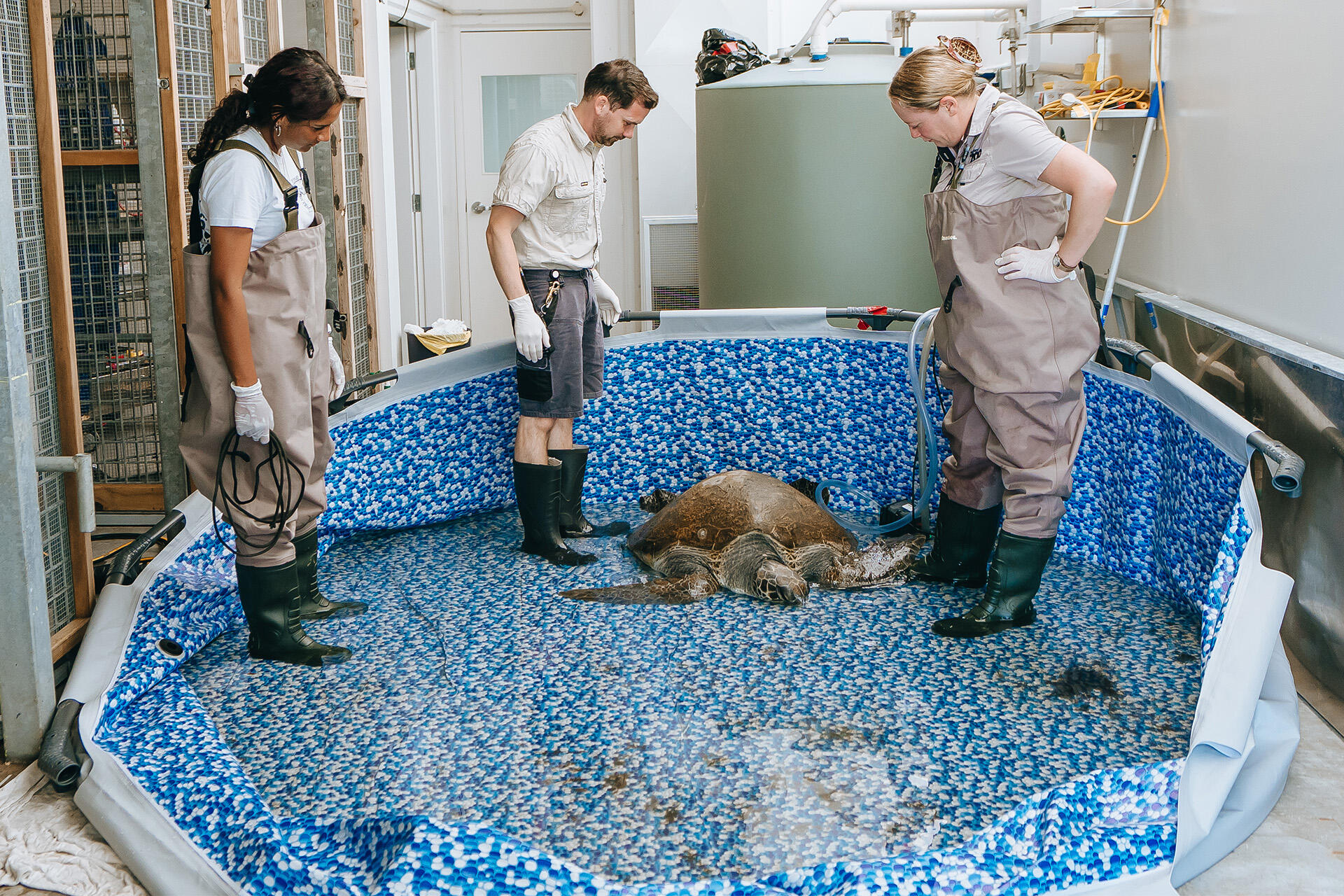
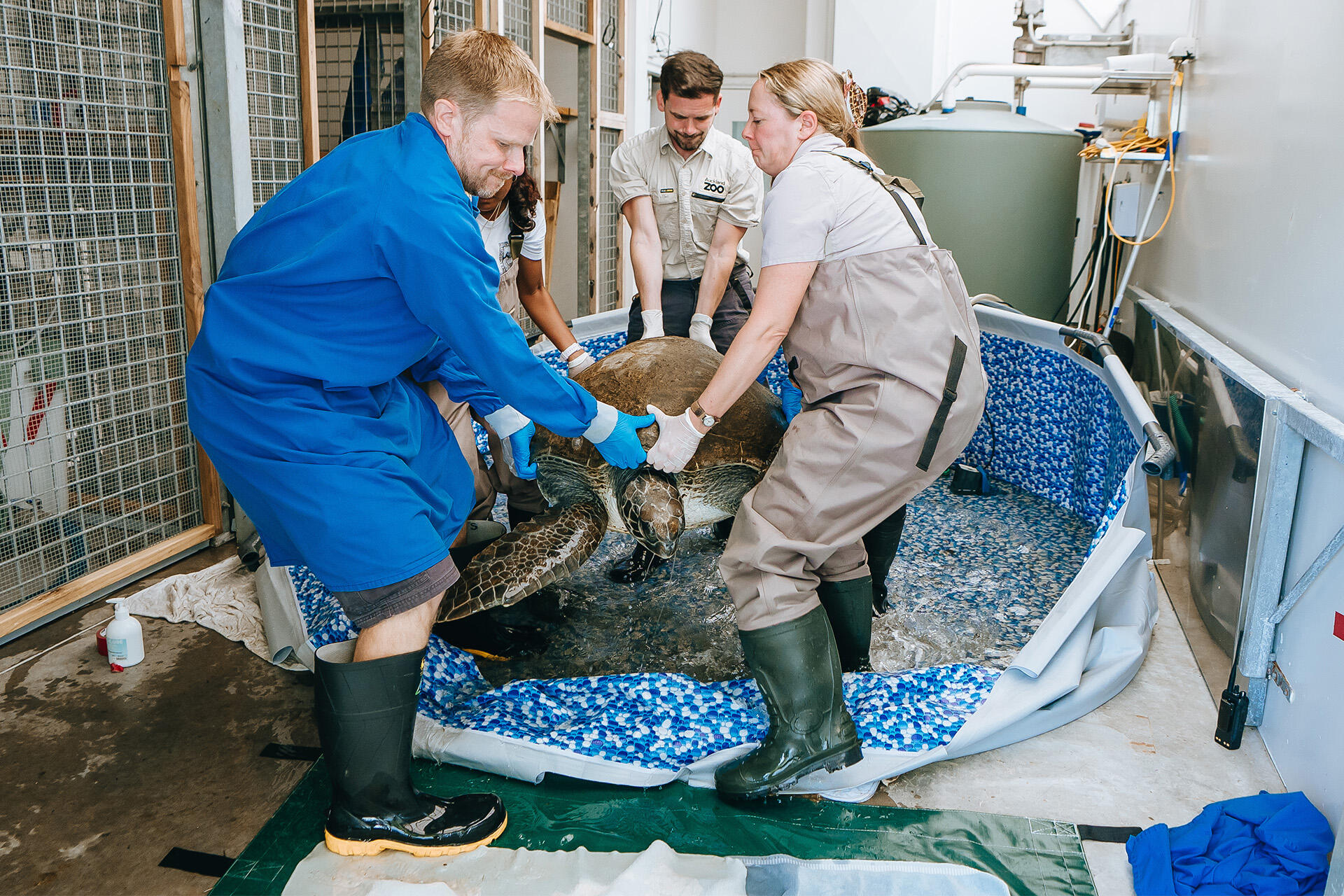
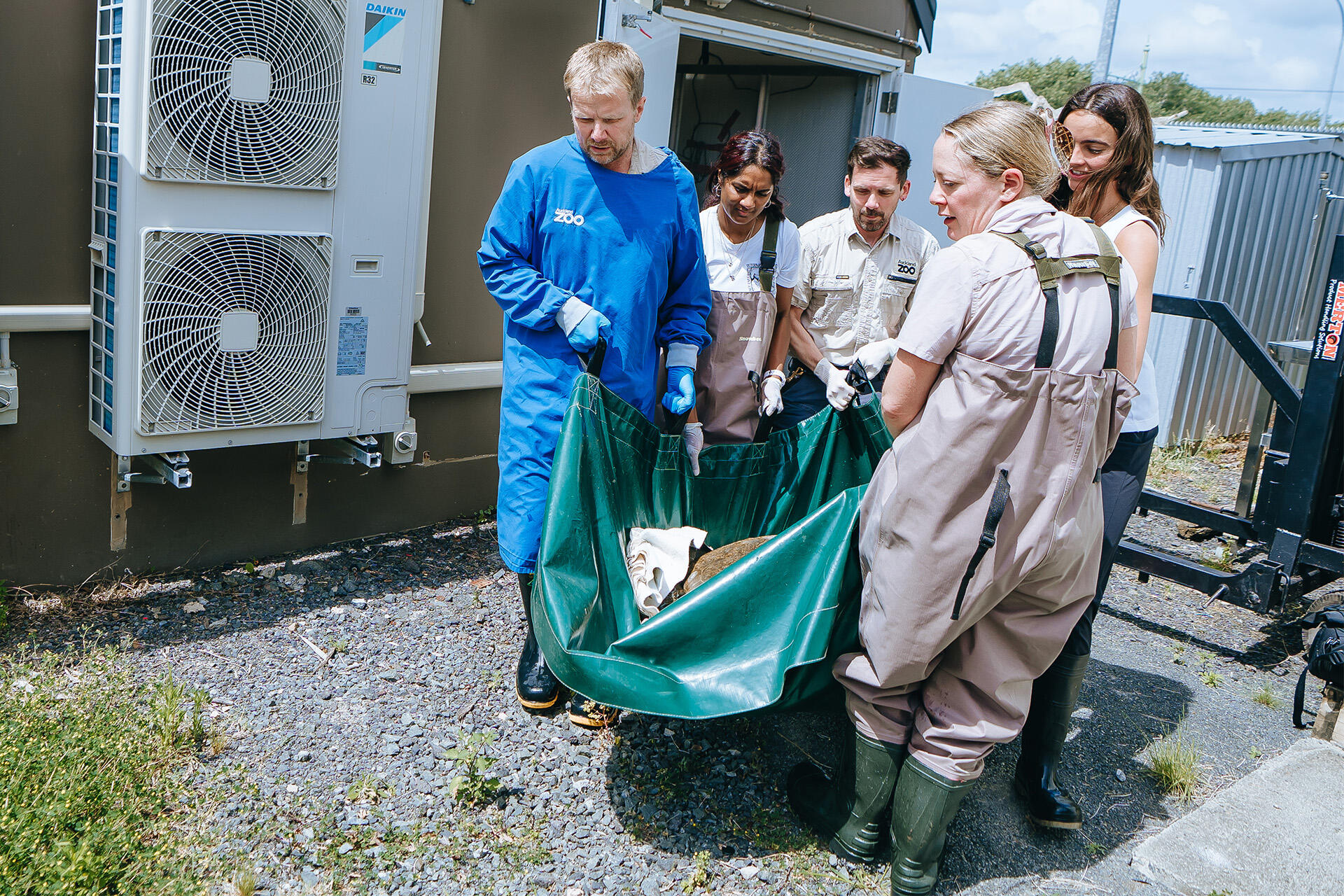
Simply bringing the turtle into our hospital was a challenge! Our team had to use our bespoke Galápagos tortoise hoist, to safely move it into the right area for a clinical examination and X-rays.
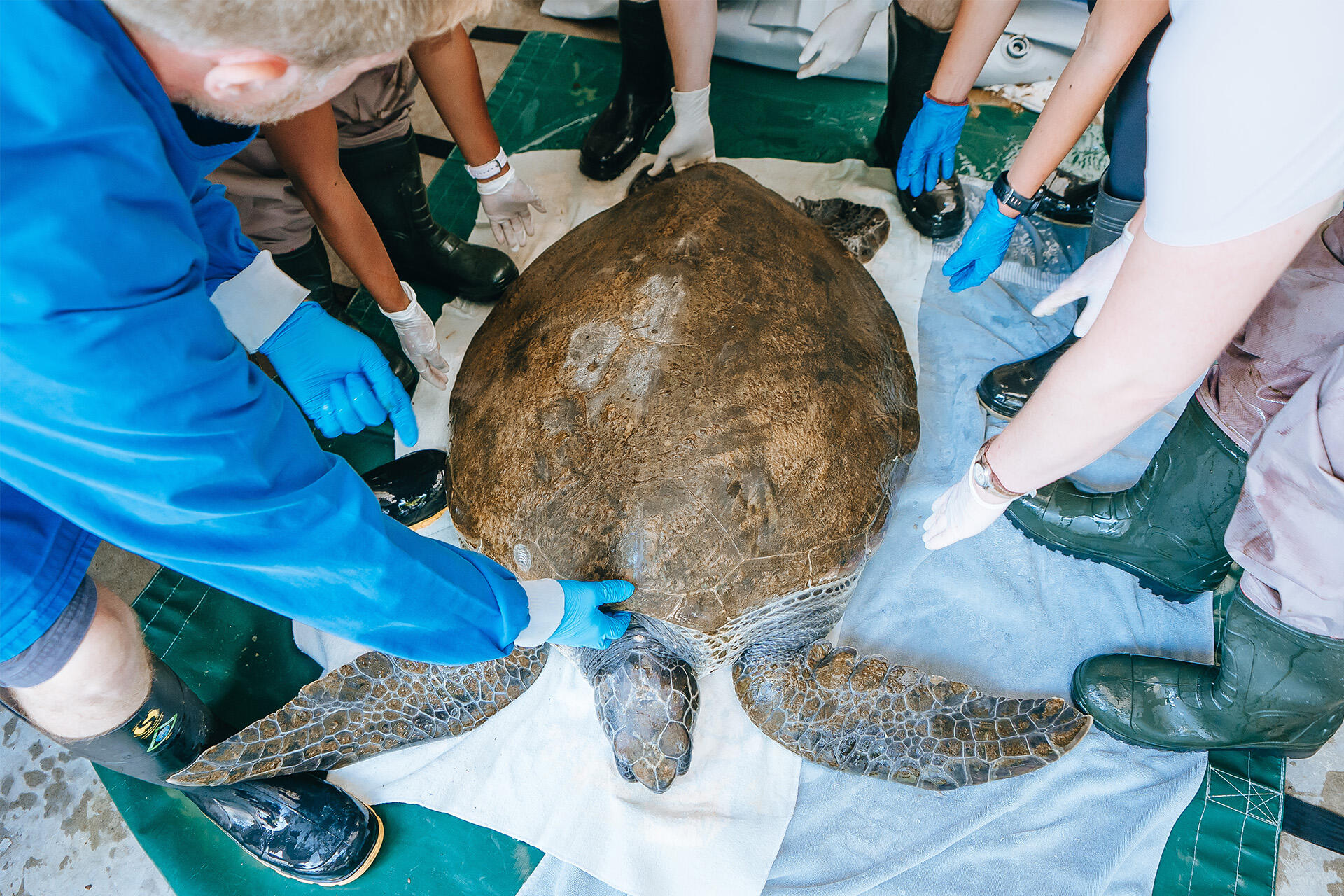
Because of its sheer size, X-rays had to be taken in sections as the plate simply wasn’t big enough. For each image, our team had to reposition the turtle or shift the X-ray unit around its massive shell to piece together a complete picture of its internal health. Thankfully, the results showed no fractures or major injuries.
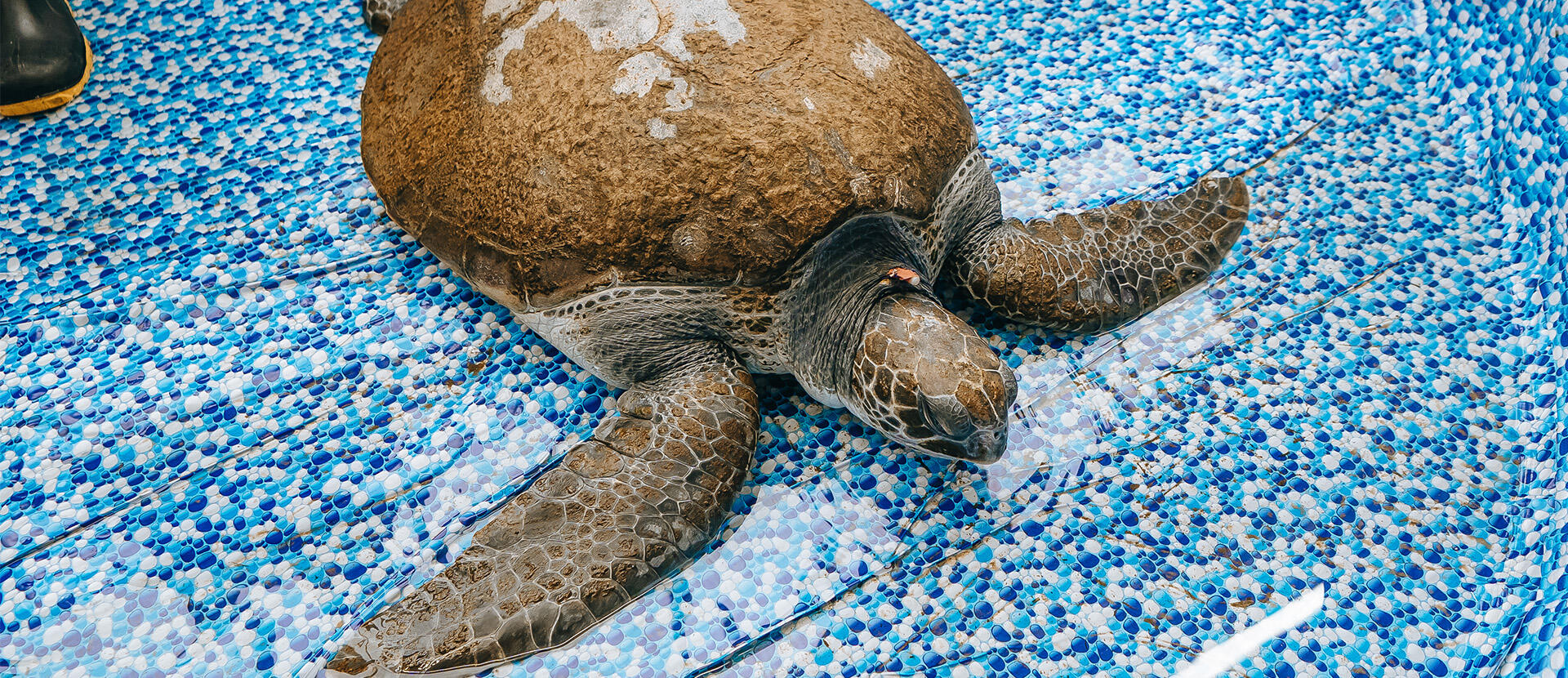
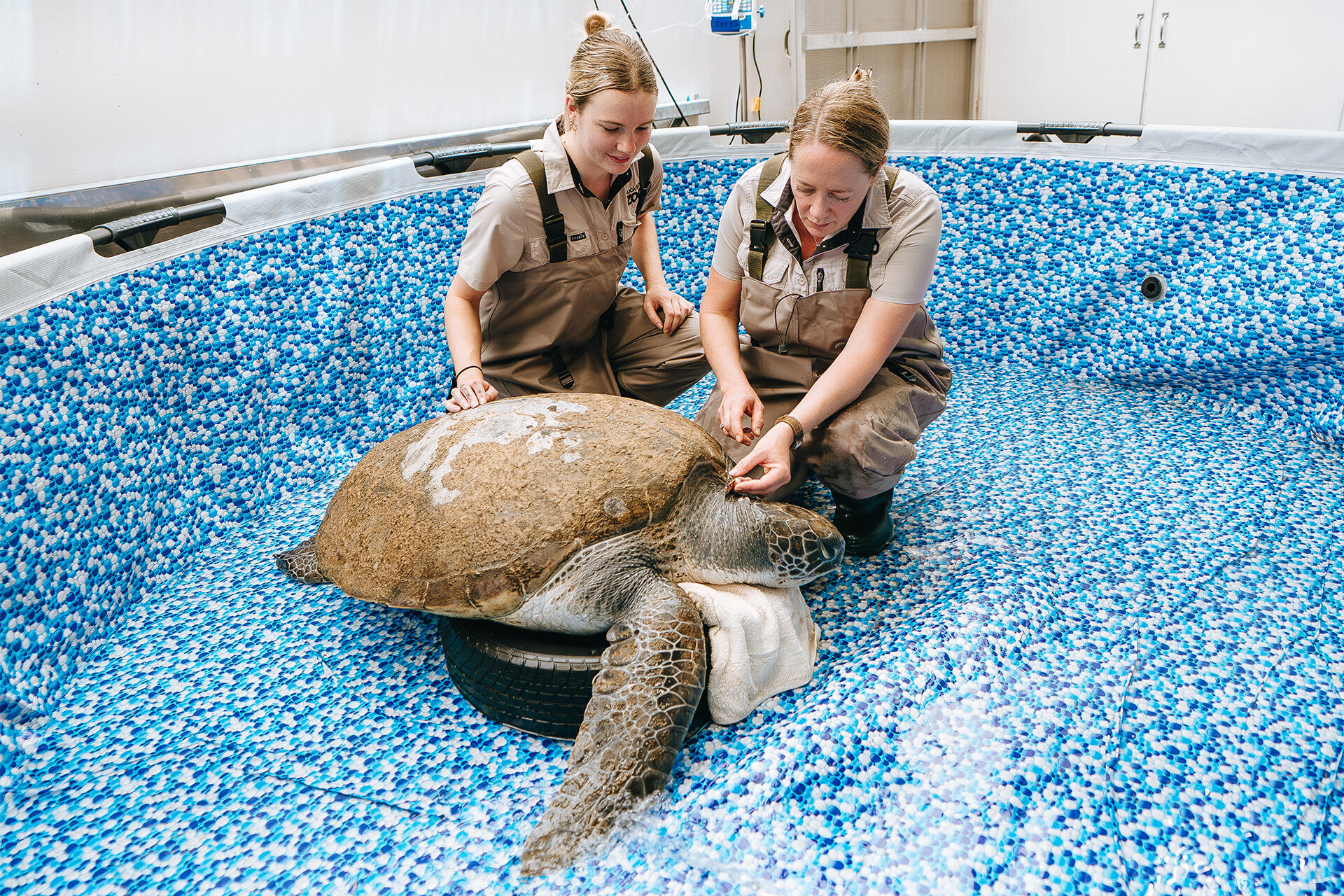
The next challenge was finding somewhere for it to recuperate. One of zoo kaimahi was sent on an urgent mission to source a pool large enough to safely house the turtle during its initial stabilisation.
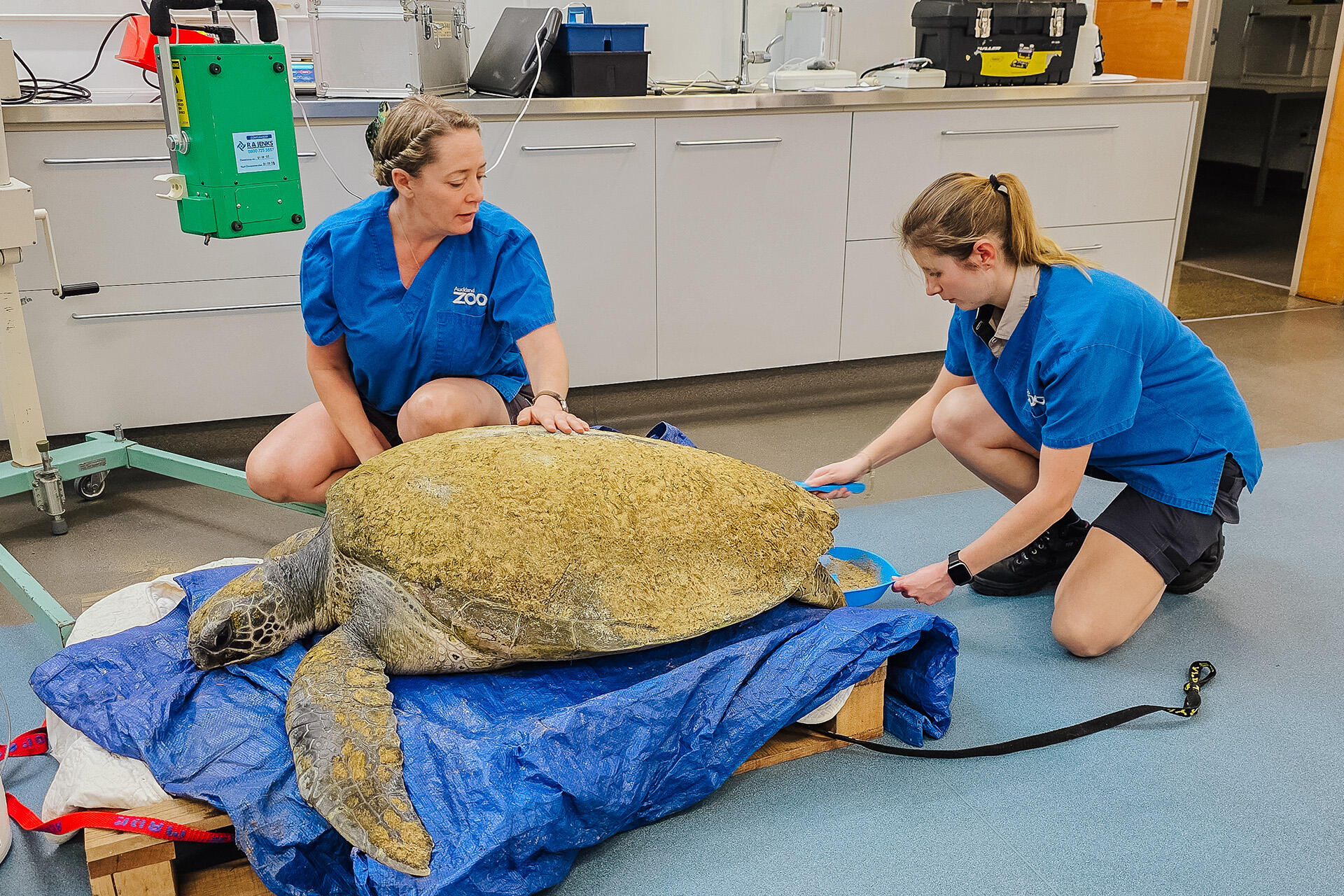
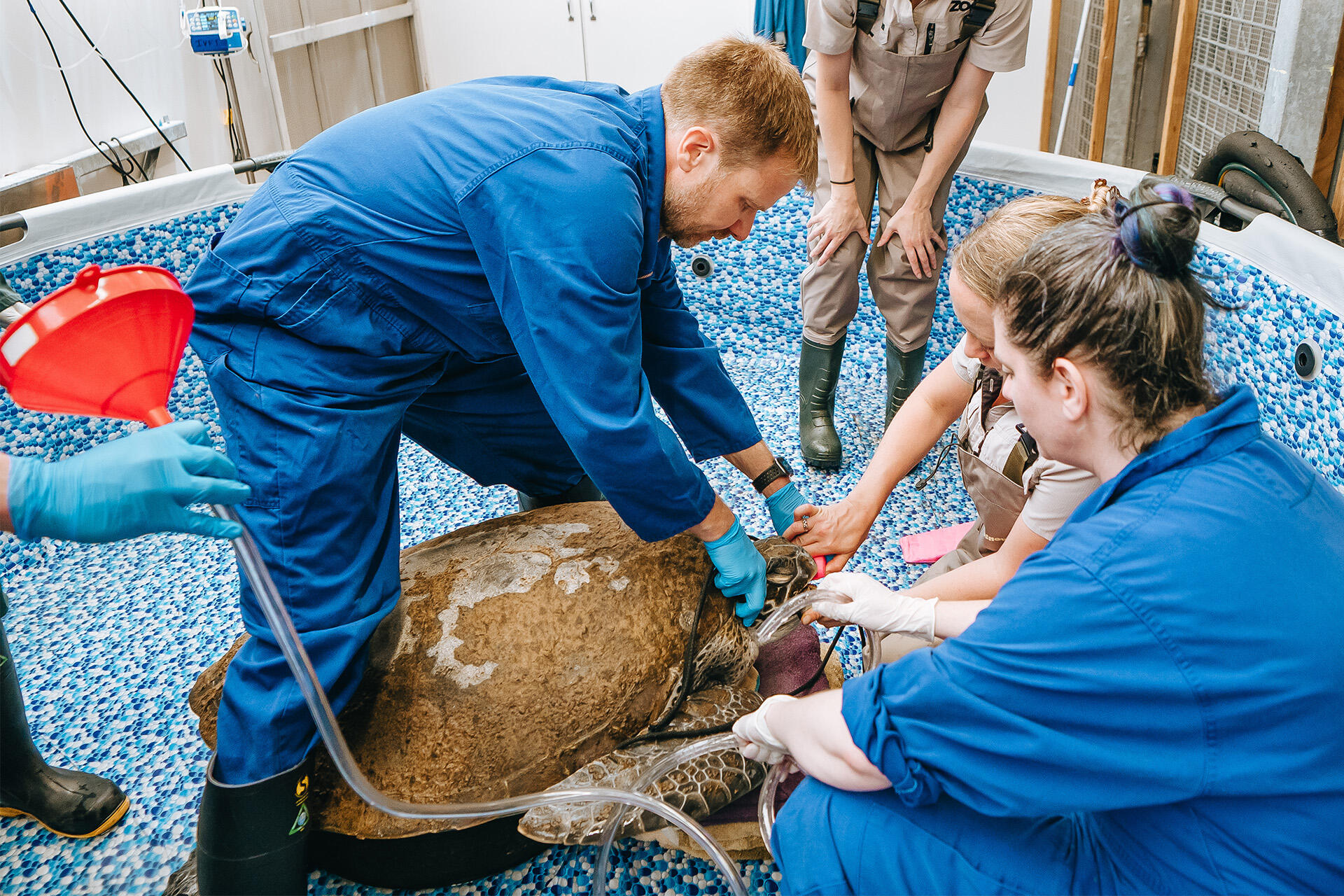
Feeding also required teamwork. It took around five people to gently move the turtle into place so a fish slurry could be tube-fed, ensuring it received adequate nutrition. Based on the minimal algae growth, very little seaweed, and the absence of a float line around the shell, typically seen on turtles who have been floating on the surface for a while.
– which is an encouraging sign for its recovery.