Fit for the forest

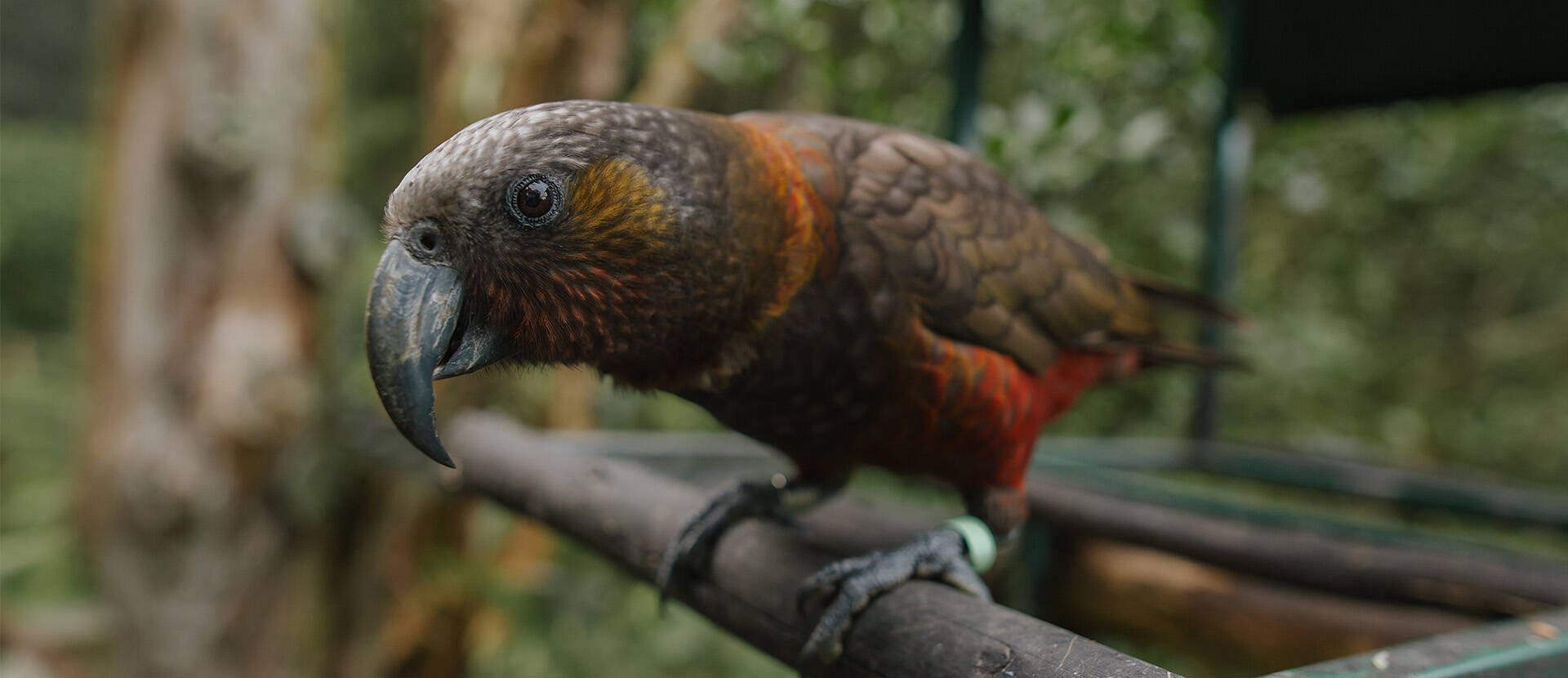
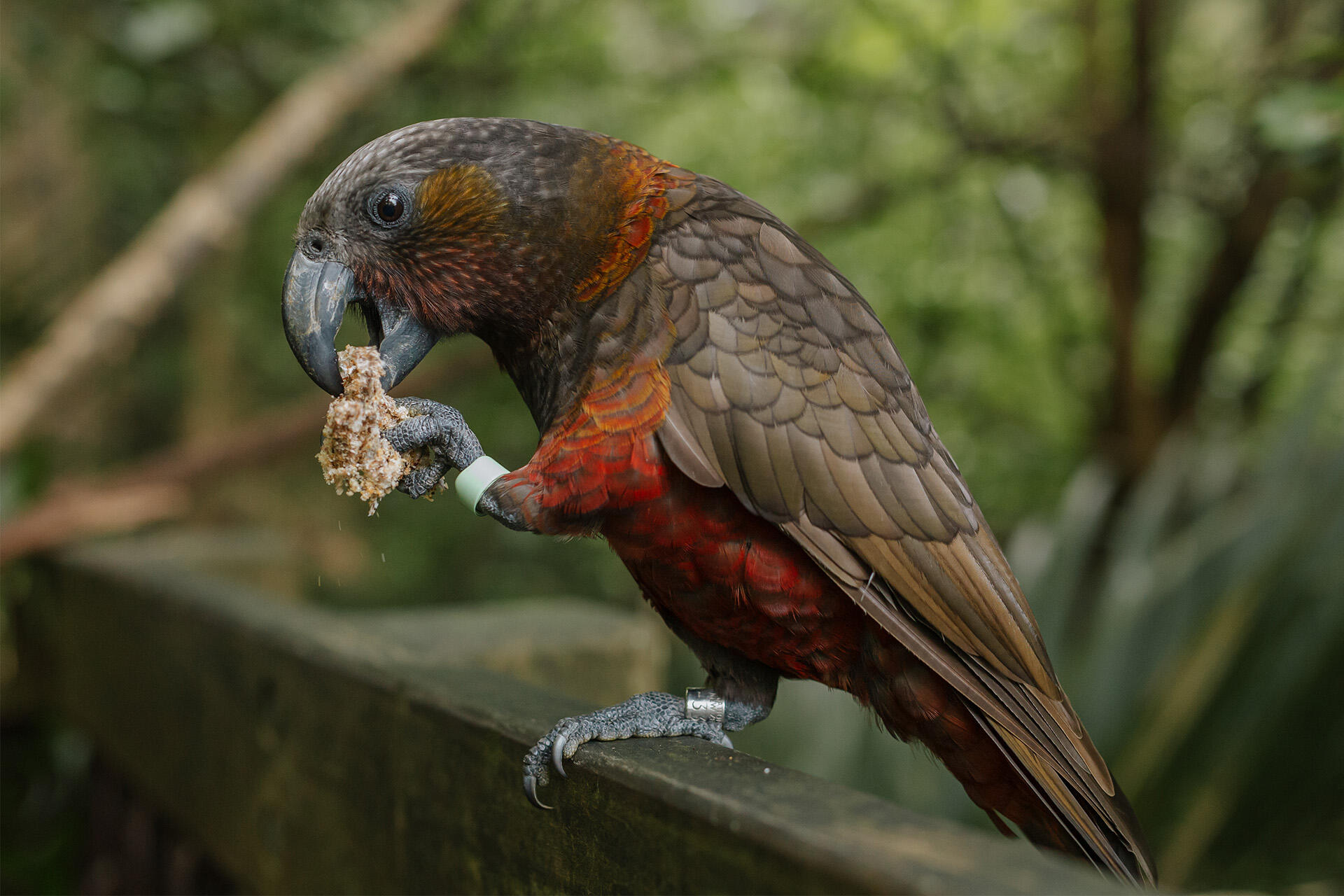
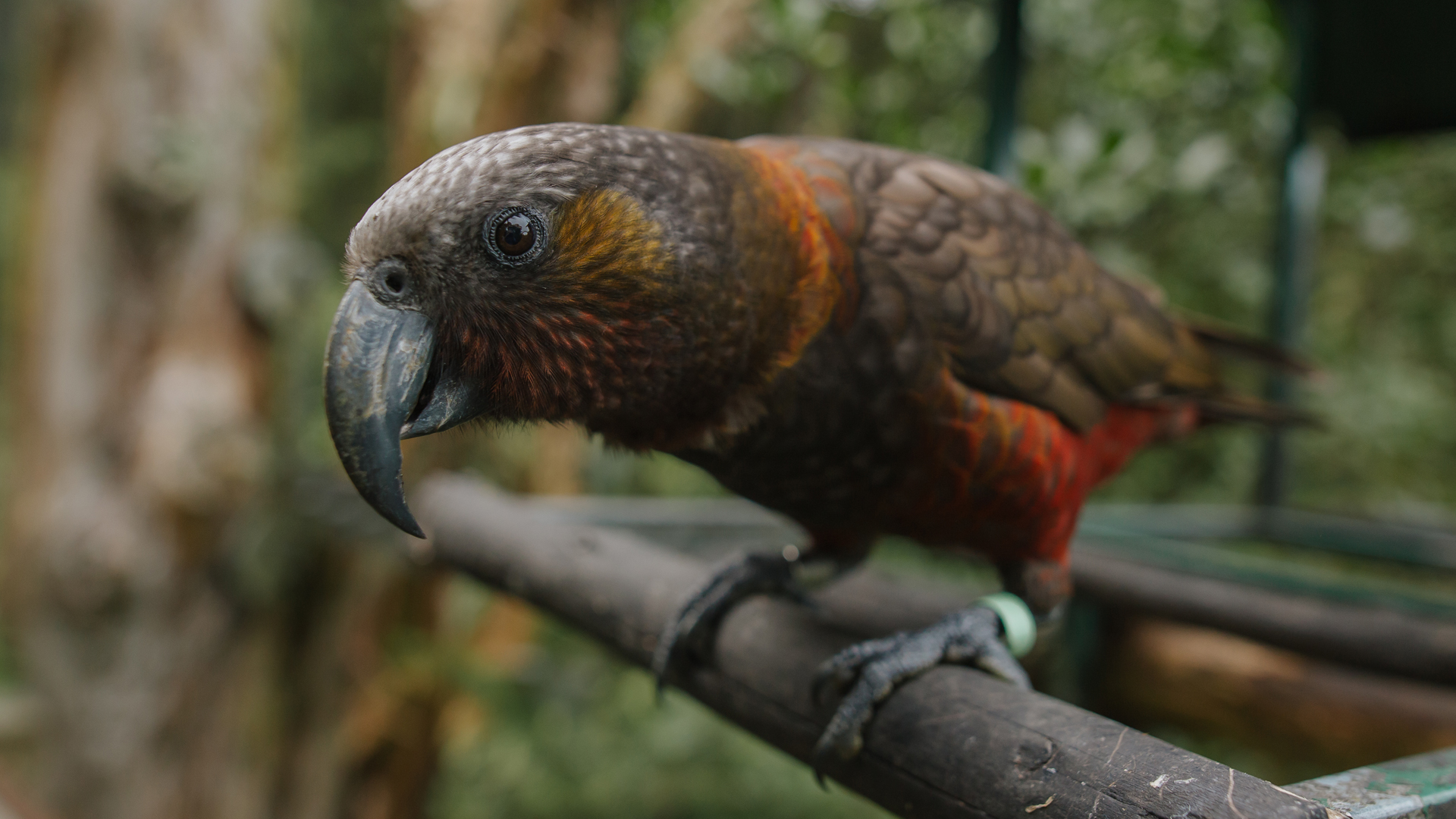
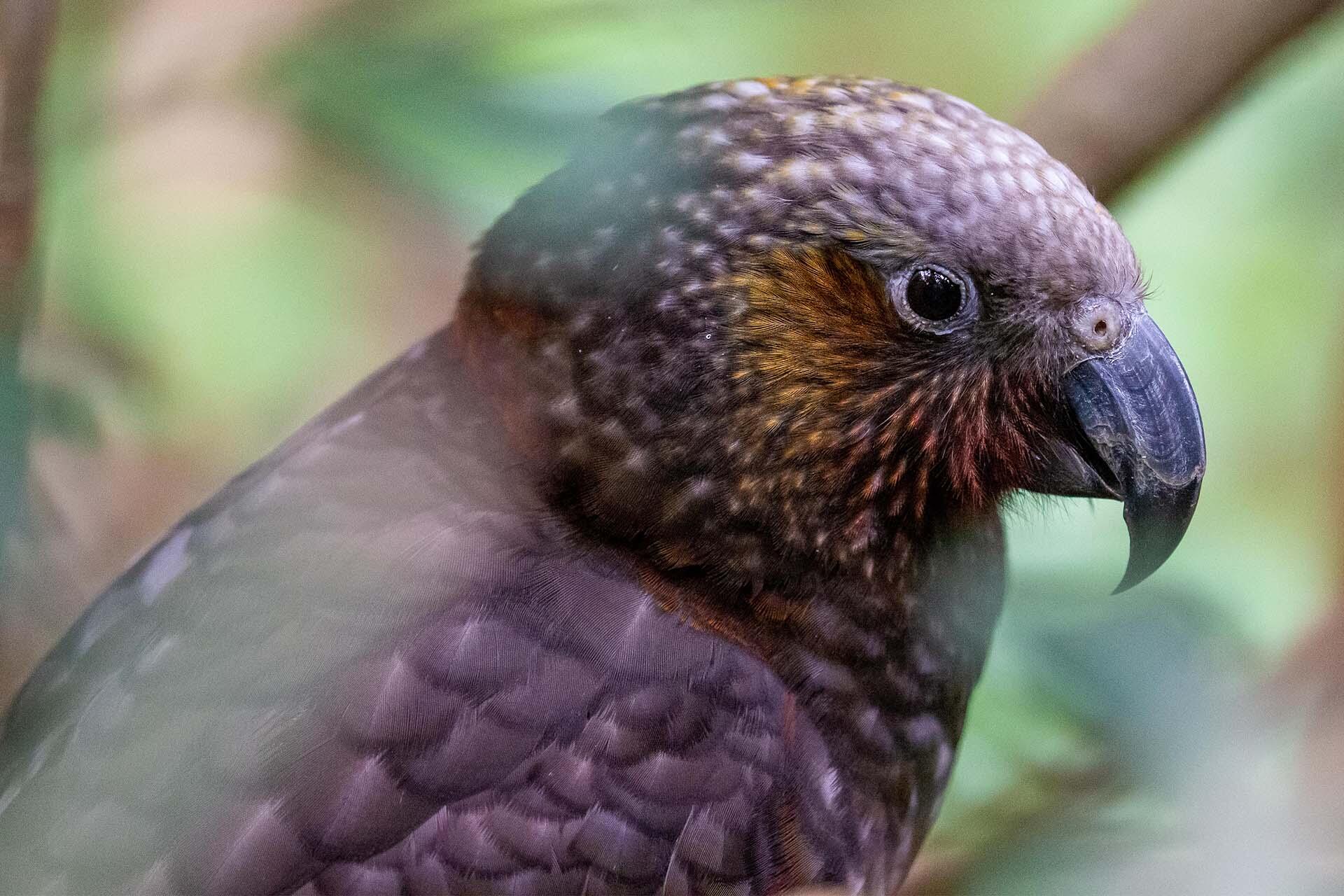
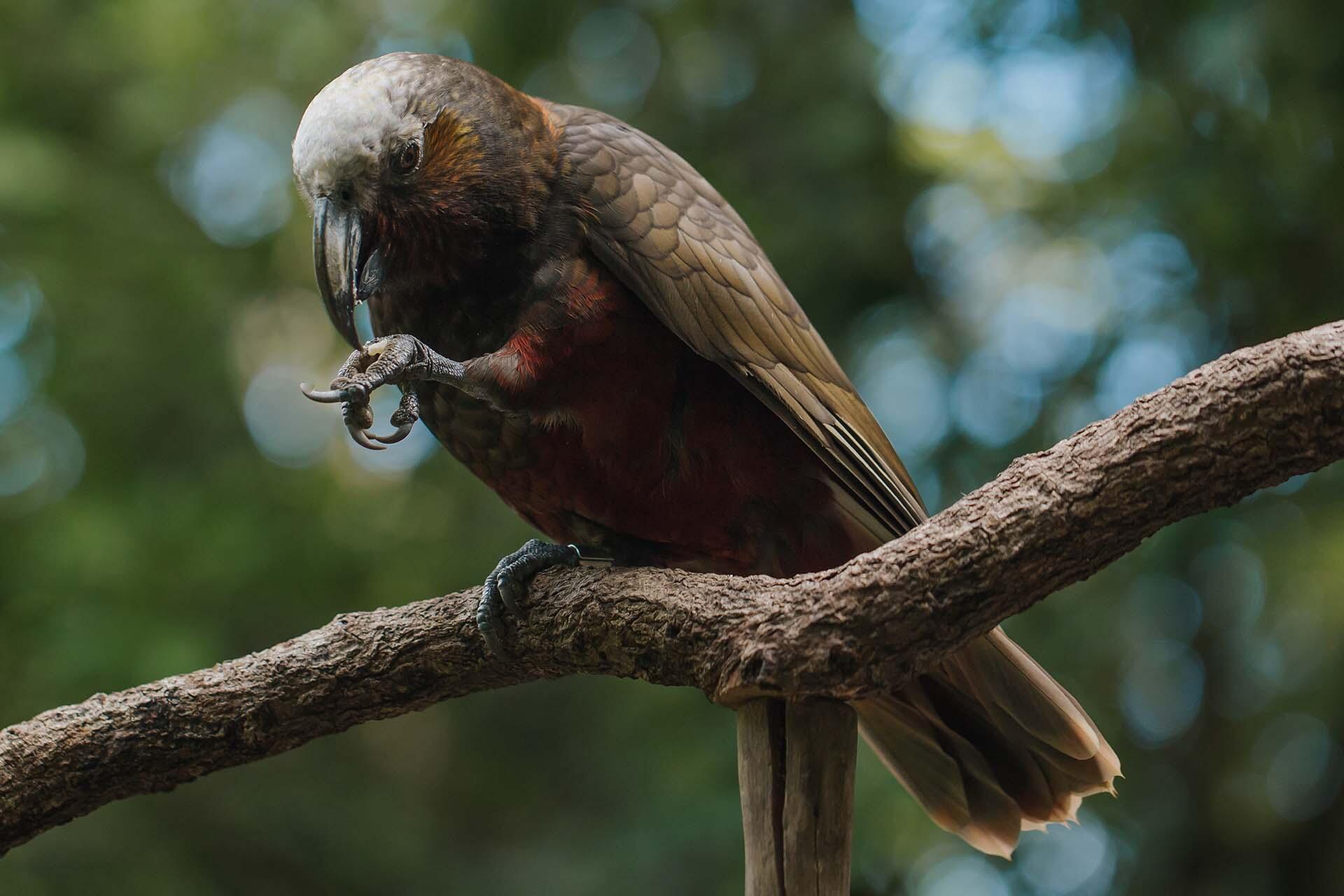
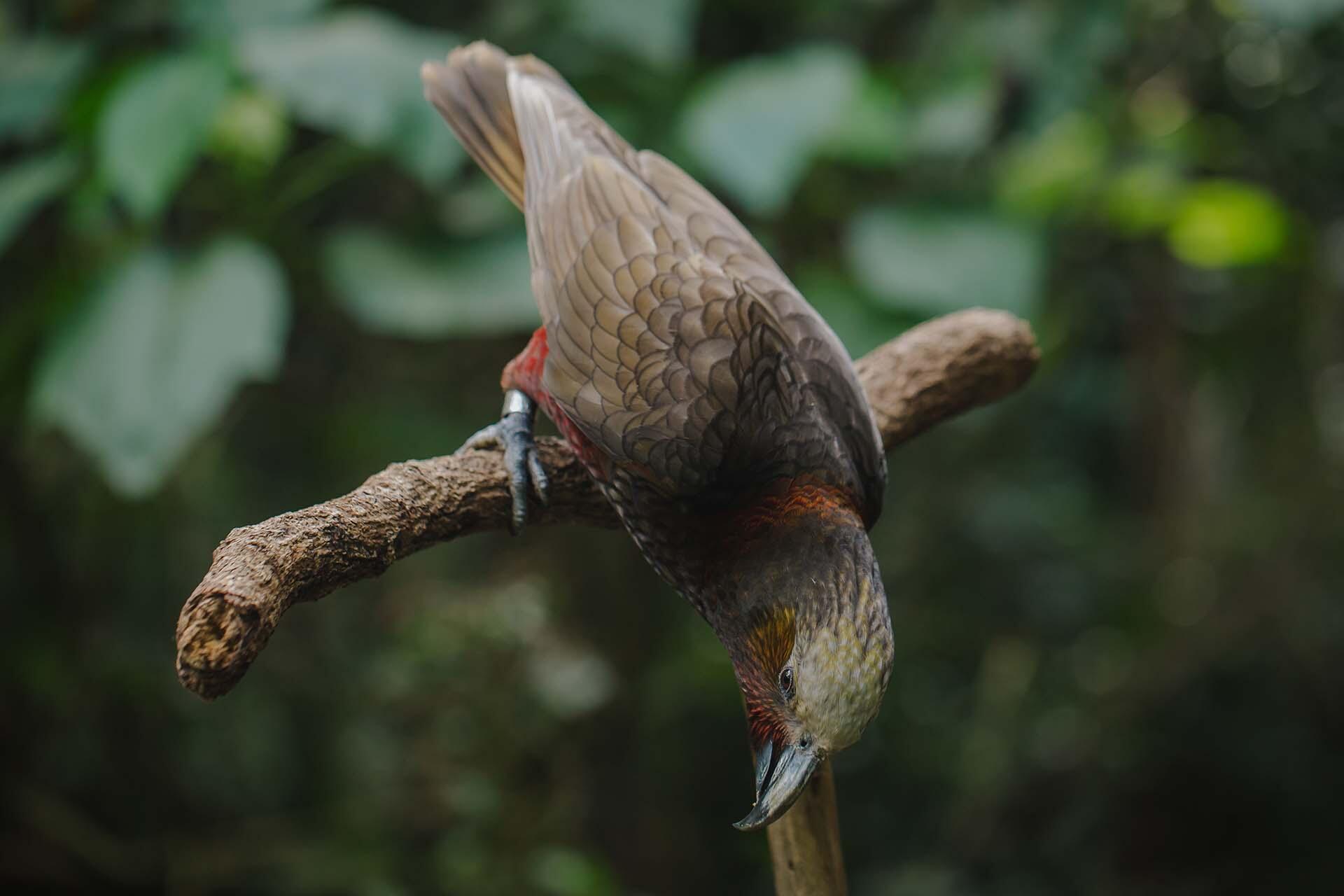
The kākā is well adapted to forest life. Its brush-like tongue can reach deep into pōhutukawa blossoms to collect nectar, while its strong beak can open the tough cones of kauri and dig grubs from logs.

Kākā means parrot in te Reo Māori and these birds are endemic to Aotearoa New Zealand. North Island kākā are found in large, forested areas, offshore islands and are most abundant in areas of predator control.

You can often hear kākā long before you see them. Their raucous chorus ranges from a loud “ka-aa” in flight to a sharp, screeching “kraak” when disturbed, alongside a mix of whistles and chattering.

Kaka vs Kea – how to tell them apart 

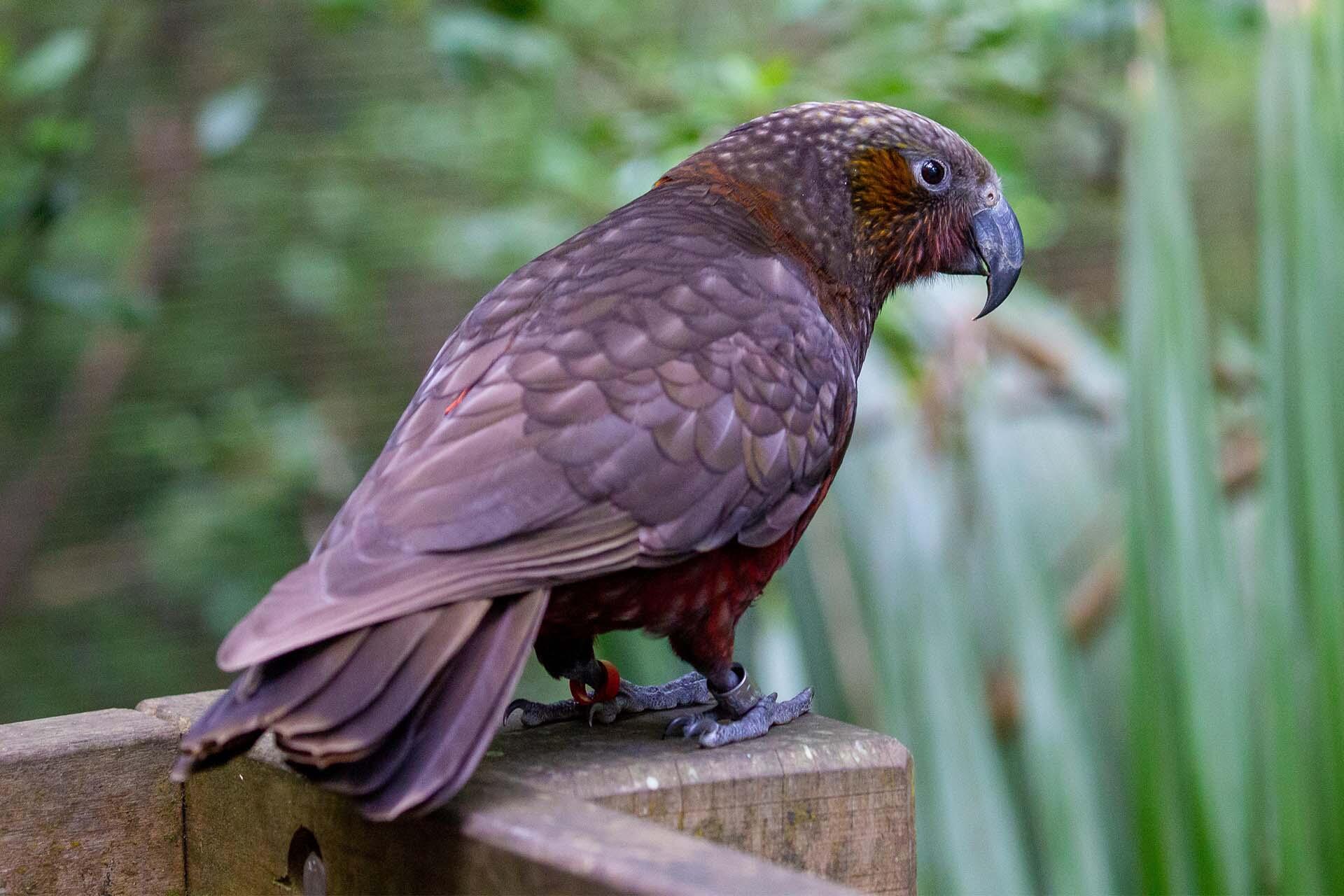
At first glance, kākā look similar to their alpine cousin, the kea. On closer inspection, they are slightly smaller, with olive-brown plumage and red colouring beneath their wings.

On the up – kākā populations are making a comeback

The boisterous kākā was once abundant in forests throughout Aotearoa. But habitat loss and the introduction of mammalian predators such as stoats and possums made these charismatic parrots increasingly rare. Thanks to targeted predator control and reintroduction programmes, kākā are making a comeback in protected areas, including Pureora Forest Park and Tāwharanui Regional Park.

New Zealand plants that provide food for kākā

Kākā have a highly flexible diet, meaning they don’t rely on just one food source. Instead, they switch between foods as they become available throughout the year, making the most of whatever resources are seasonally abundant.

Flowers can be especially important from late winter into early spring, while fruits, seeds and sap become more prominent at other times of the year. The plant species they use can also vary between populations, depending on what is available in their habitat.

Planting a variety of native trees and shrubs that flower and fruit at different times can help provide a more continuous range of resources for kākā and other native wildlife throughout the year.

Video

Keeper Chat - New Zealand's kākā and tīeke!

Bird keeper Ashleigh tell us about the kākā and tīeke in Auckland Zoo aviary The Forest

Kākā in Te Ao Māori

There are pūrākau (stories) that describe a ‘battle of the birds’ or Te Pakanga Manu. Early on, birds began to multiply in number, filling the skies and the land – yet there was no separation between the domain of the seabirds or the land birds. This came to a head when some seabirds saw that the river birds did not need to eat bony ika, but had more tasty kai available to eat – such as delicious tuna.

In one version of the story, the seabird kawau rallied the seabirds together in a large offensive to attack the land birds. The land birds fought back, and the kākā took part by rousing his fellow manu from their sleep at dawn with its call kia iro kia iro, and later called on the sea birds to surrender.

After many manu had perished, the land birds were declared the victors and the sea birds returned to the moana.  

Kākā are the only manu in New Zealand that are known to eat tree sap. They will peel off the bark to enjoy the treacly sap within. In times of sustained long journeys, Māori were inspired by this process – placing a piece of bark or a leaf between the lips to satisfy them in the absence of water.

The feathers of the kākā were prized by mana whenua as whero were highly regarded as symbols of bravery. They decorated korowai / cloaks, whāriki / mats, kite, waka and taiaha. Up to 90 different shades of red were recognised by Māori which was achieved by comparing tints between different birds and natural objects.

Video

Kākā stories and pūrākau

Do you know what happened in the ‘Battle of the Birds’ or Te Pakanga Manu? In this video, Tamati shares this pūrākau, special facts and whakataukī about the clever kākā in honour of Te Wiki o te Reo Māori.

Caring for kākā at Auckland Zoo

At Auckland Zoo, kākā receive a varied diet that reflects the wide range of foods they eat in the wild.

A large portion of their main diet is made up of peas, corn, legumes, carrot, leafy greens and papaya, alongside a rotating selection of other fruits and vegetables. Seed mix and specially formulated parrot pellets are provided as well.

Kākā forage naturally within their habitat too, stripping bark from trees to access sap and feeding on nectar and pollen from flowers as they become available.

During the breeding season, insect larvae may also be offered. Small amounts of honeyeater, peanuts and peanut butter are often used for enrichment and are firm favourites as rewards during training.

Health care training for clever parrots

Our bird keepers engage these highly intelligent parrots in positive reinforcement training for health checks, such as asking birds to show their wings and beaks to check for overall body condition. This voluntary training also includes encouraging birds to fly to a T-bar perch, a specific place within their habitat, or on to a scale where they can be regularly weighed.

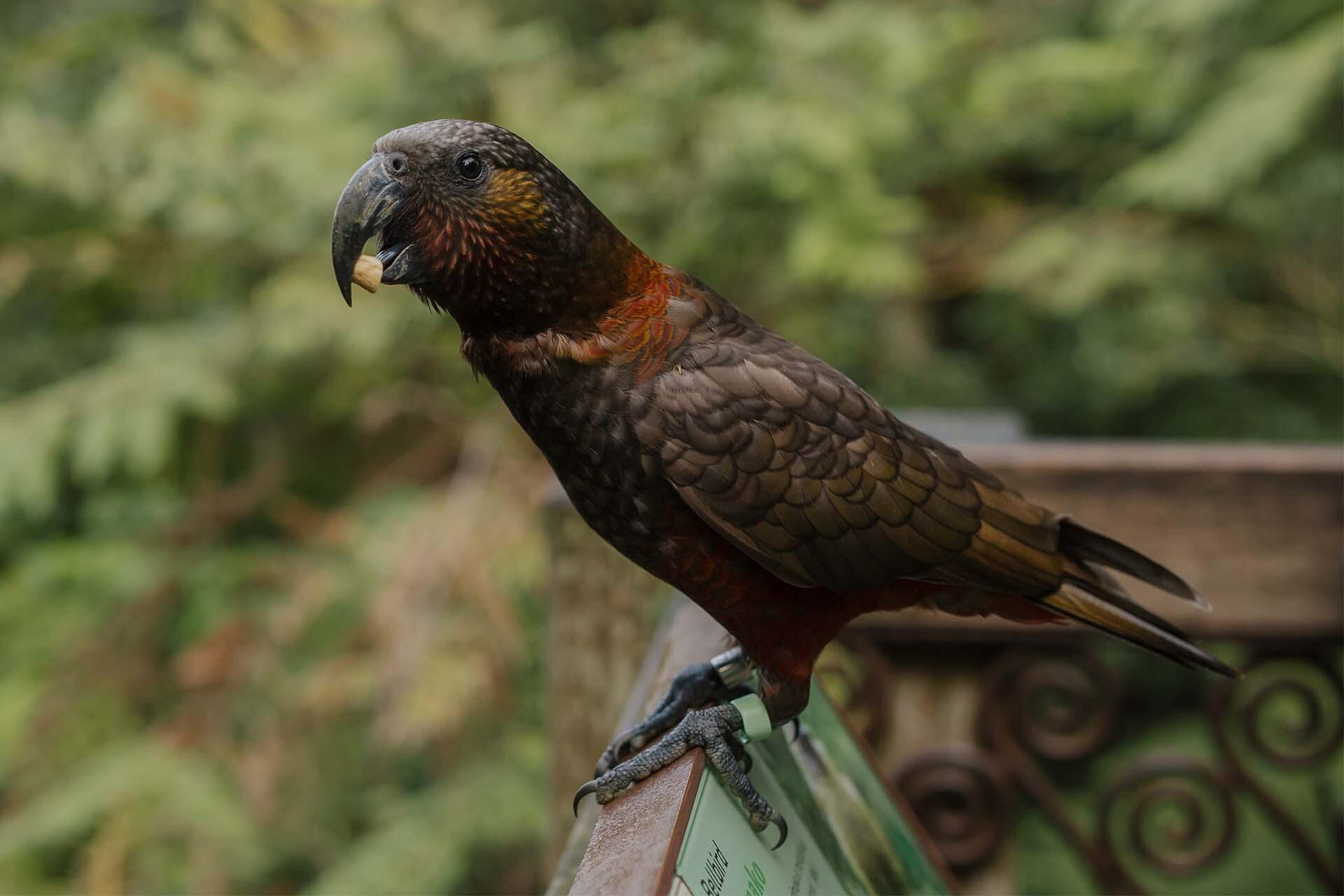
Our bird team also ensure the kākā are confident and comfortable moving in and out of a transport crate. Crate training is important as it means that any bird that needs to visit our veterinary hospital or be relocated, can be transported easily and safely. If they choose to engage with our keepers, they’ll receive a positive reinforcer - such as a tasty peanut.

Zoos Breeding and Advocacy programme for kākā

Auckland Zoo maintains and coordinates the zoos breeding programme for kākā, and in the past offspring bred here have been reintroduced to the wild.  

Kākā Mia, who arrived at Auckland Zoo in 1989, went on to mother an incredible 50 chicks over her lifetime that were released to wild sites. She laid her first clutch (group of eggs) in 1990 and her last in 2013. Mia and her partner Wild One spent several years at Maungatautari as ‘anchor birds’ – not only successfully fledging chicks for release into the wild but encouraging released juveniles and other wild kākā to stay in the vicinity (hence ‘anchor’).

You'll find our kākā living in The Forest habitat in Te Wao Nui.

Video

Five kākā chicks hatch

Five kākā chicks hatched at the Zoo at the end of 2016 and they've had their first vet check - watch as bird keeper Natalie puts them back in their nest box and tells us why these birds are so special!

Kākā Conservation and Population growth

Conservation status: IUCN - Vulnerable (recovering)

In 2024, the Auckland Zoo small grants programme funded a PhD project looking into the natal dispersal (movement from their birthplace to their place of first breeding) of juvenile kākā. This research forms part of a long-term study and partnership between Manaaki Whenua Landcare Research and the Department of Conservation.

Up to 30 kākā nestlings were tagged by Manaaki Whenua researchers across several sites, with radio transmitters or solar-powered GPS tags. This data will help conservationists to understand more about their behaviours, populations and habitat use, and inform ongoing conservation efforts for kākā in the North Island and offshore islands of New Zealand.