
Tortoise or turtle - what’s the difference?

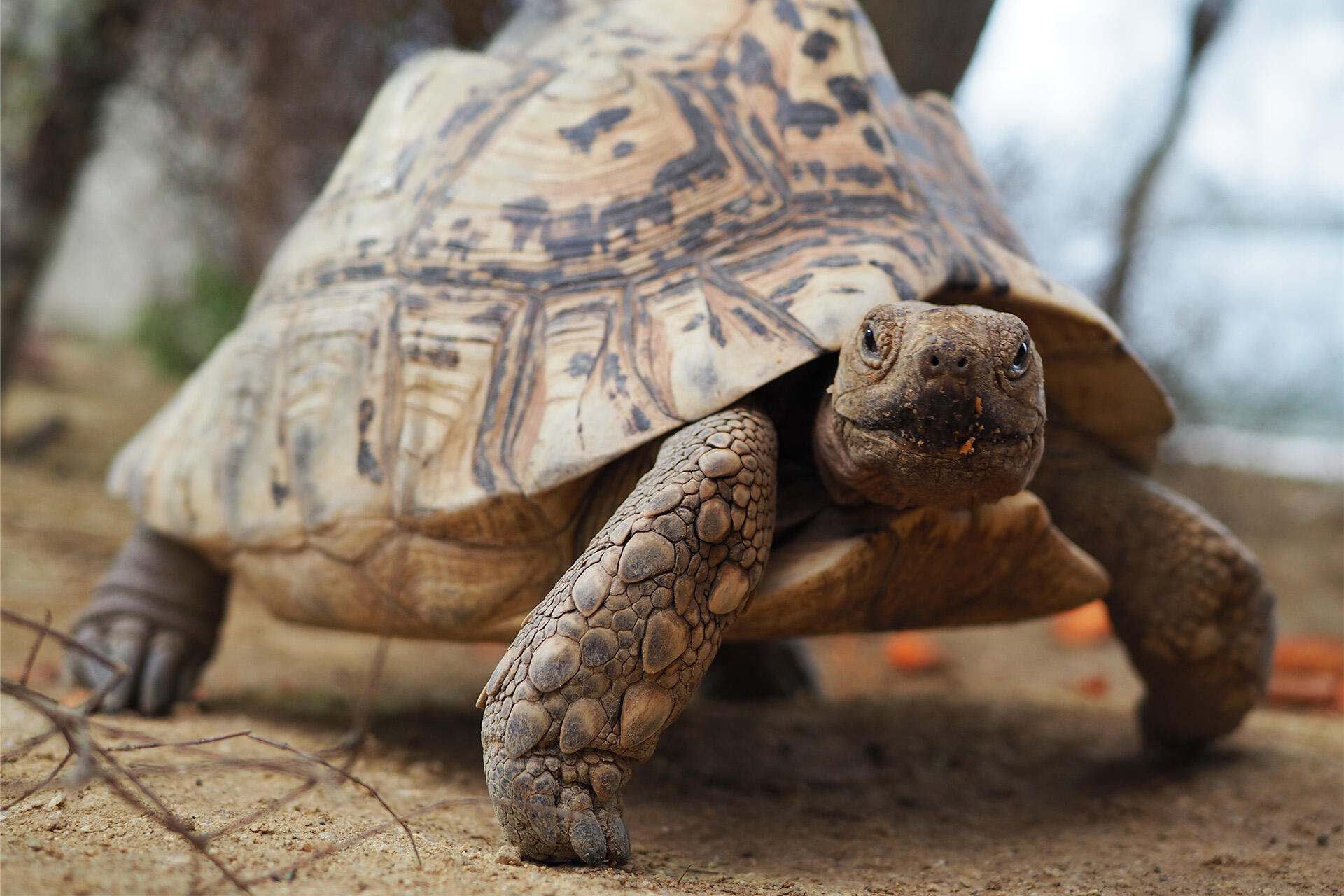
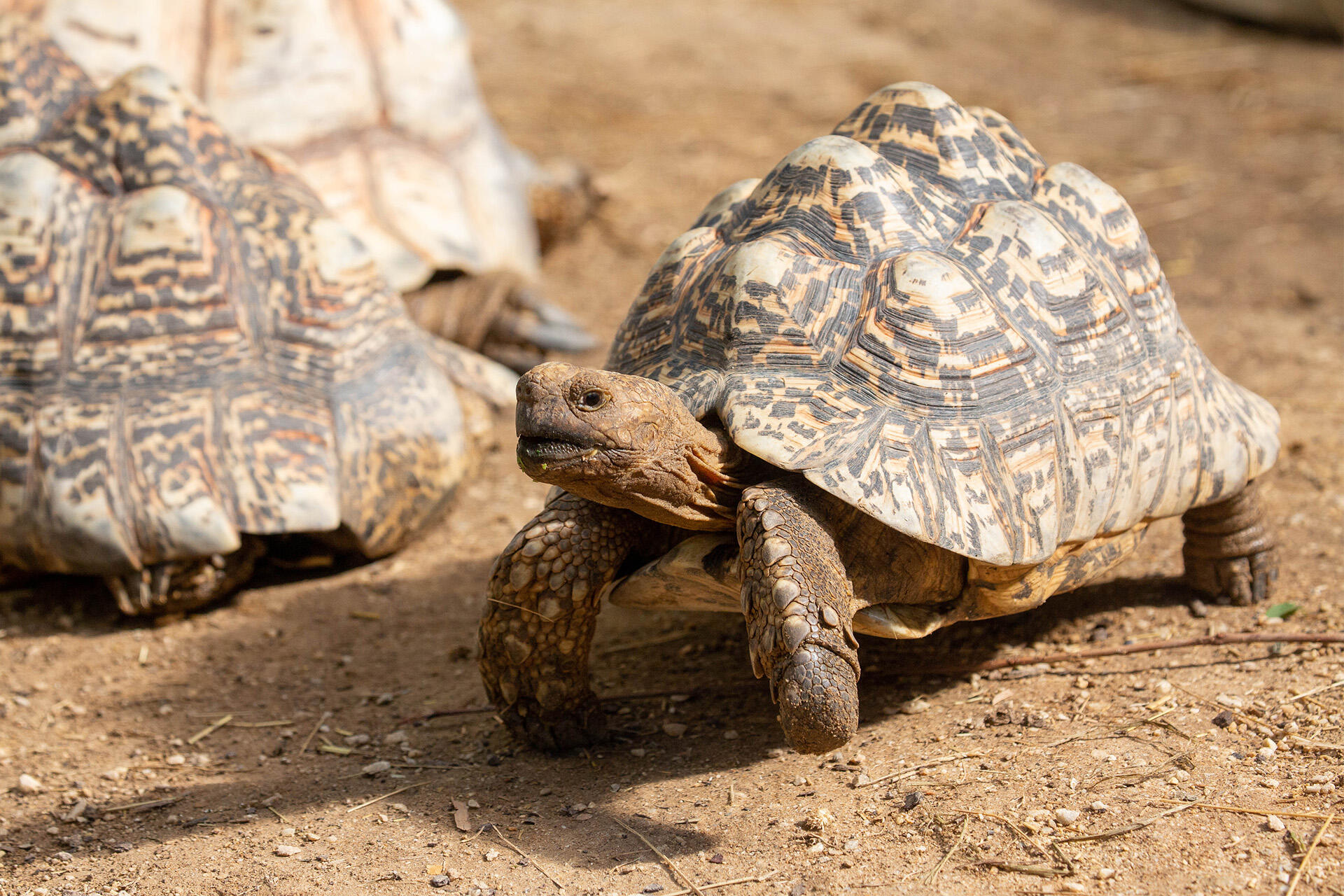
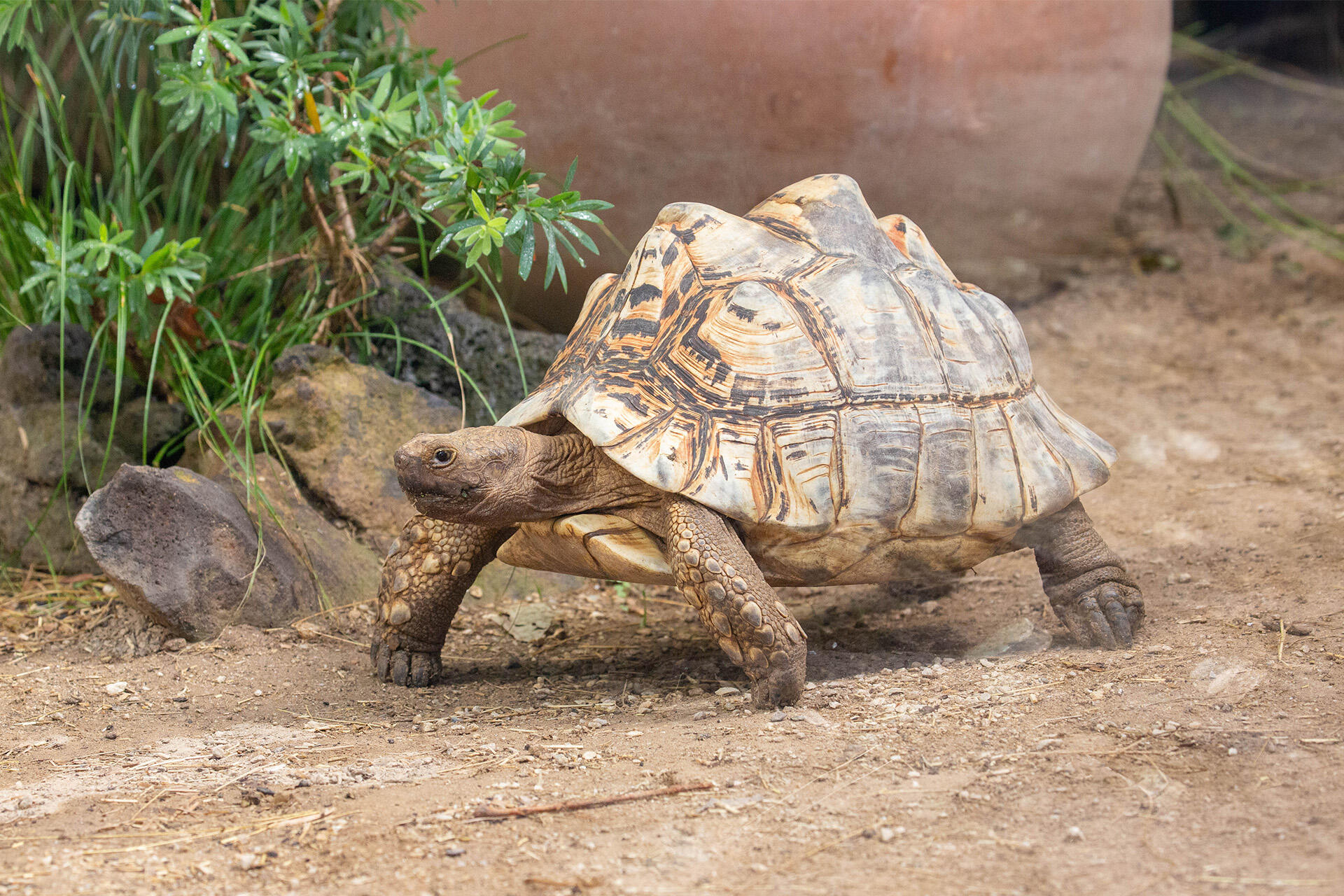
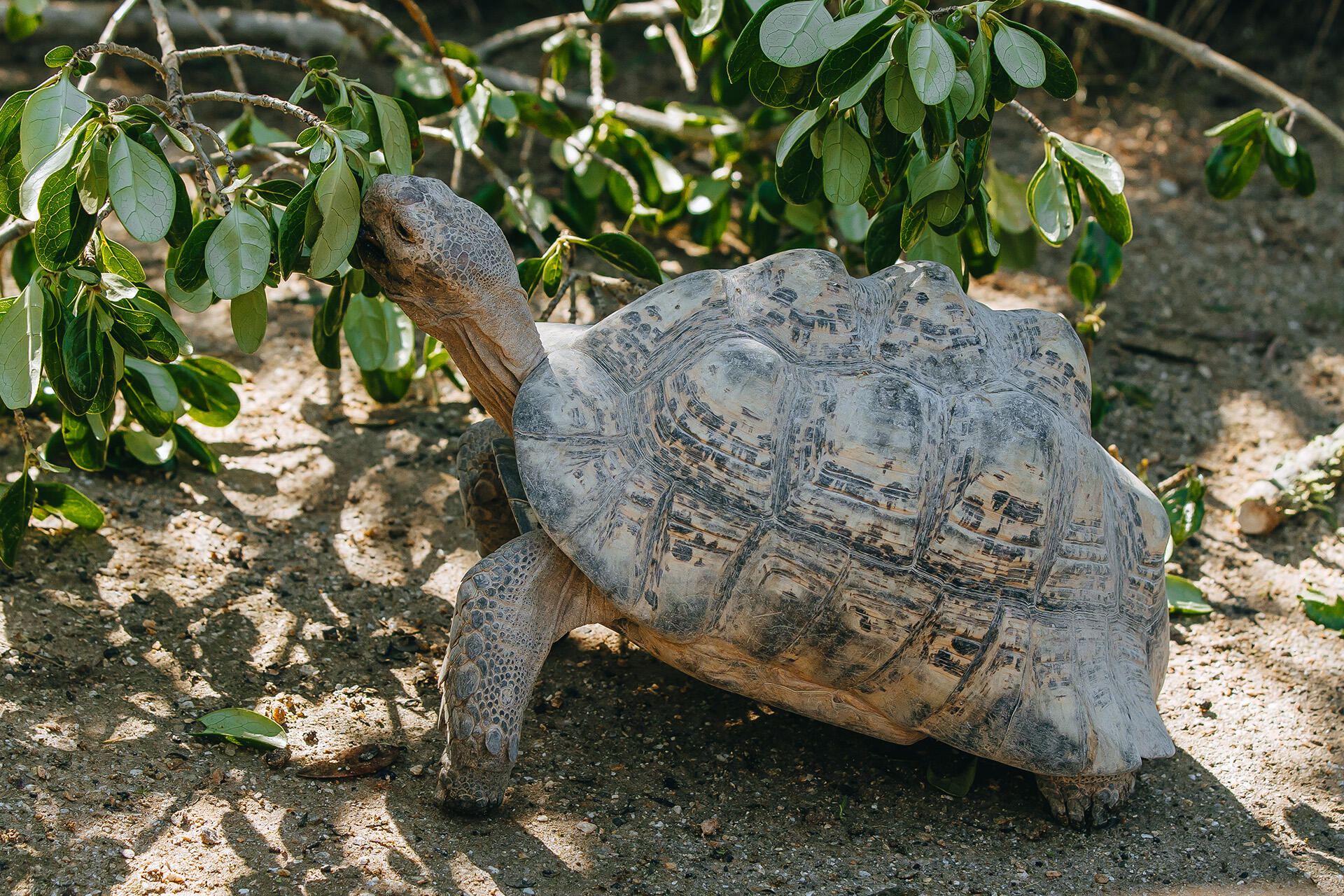
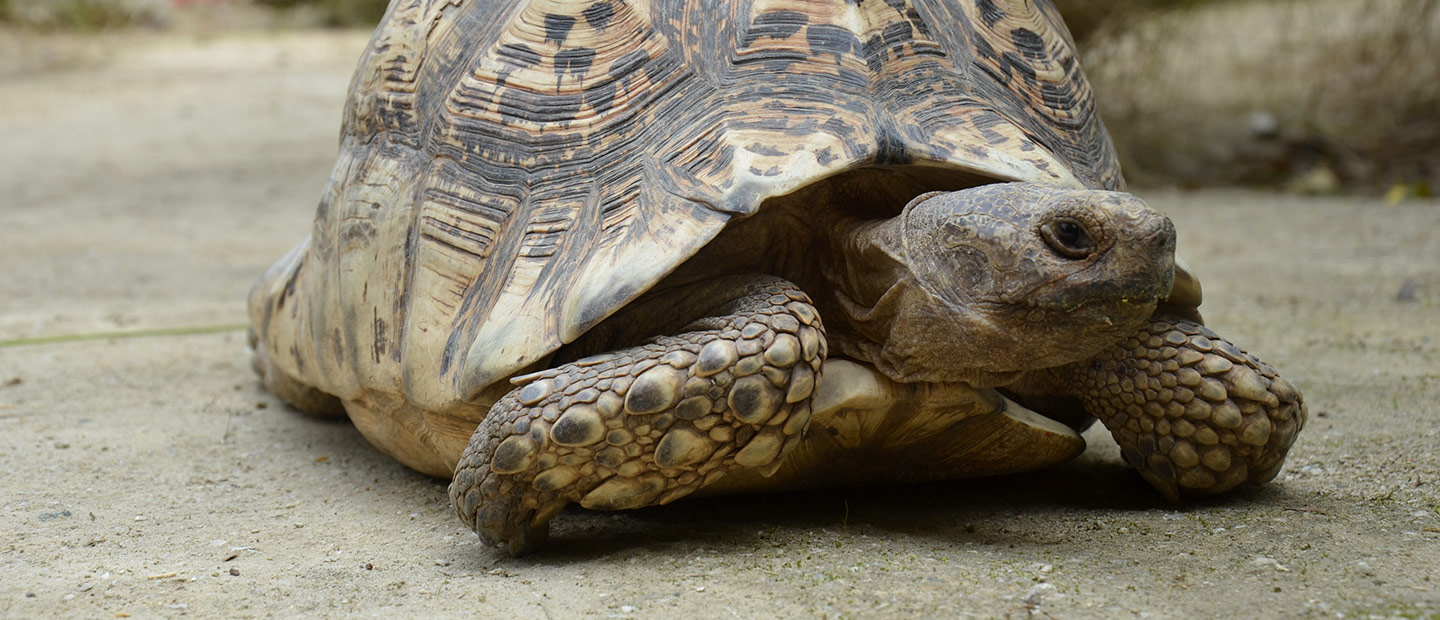
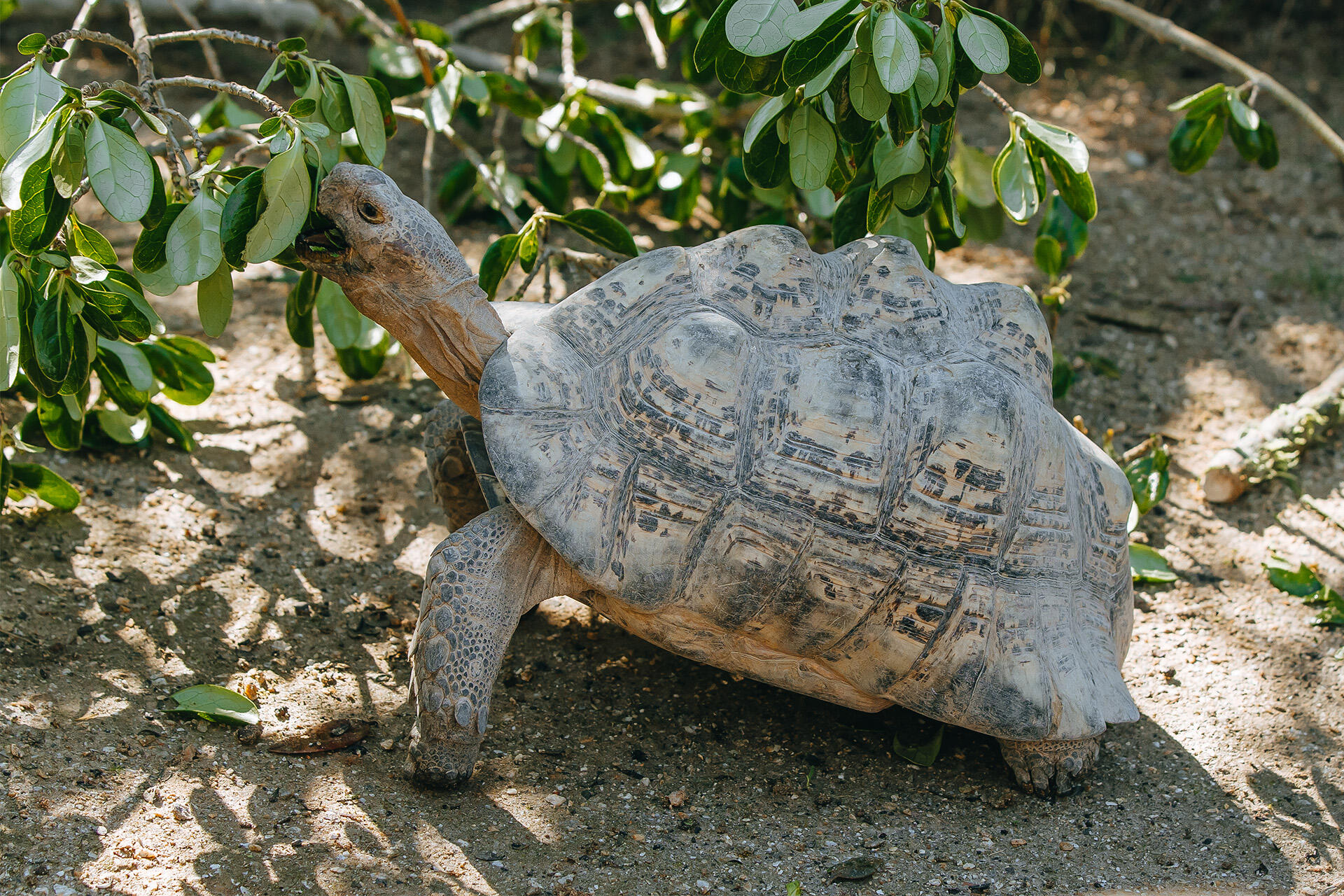
The most obvious behaviour that sets tortoises apart is their inability to swim. Instead of webbed feet for swimming, they have ‘elephant-shaped’ feet for moving on land. Most turtles have streamlined shells for swimming, whilst tortoises’ shells are more dome-shaped. The leopard tortoise can float and swim due to the sizeable lung space in their large, domed shell that allows buoyancy. This shape also accommodates their defensive mechanism when threatened: they will retract their feet and head into their shell.

Flipping clever animals

The leopard tortoise’s high, domed shell means it can do something turtles can’t - right itself if flipped over. Most leopard tortoises learn when young that flipping onto their backs is normal, though righting themselves again takes patience and experience! Luckily, left to practice they master this important task before they get too big.

This skill comes in handy when they reach adulthood. Males will use the technique of flipping other males onto their back to show dominance!

Life-long loners

In the wild, leopard tortoises spend most of their time on their own, only coming together to mate. At the Zoo, we provide them with plenty of hiding spots for some alone time. You may even see some adults over near the lovebird nestboxes: this usually happens during breeding season when the females might need time out from enthusiastic males!
At the Zoo

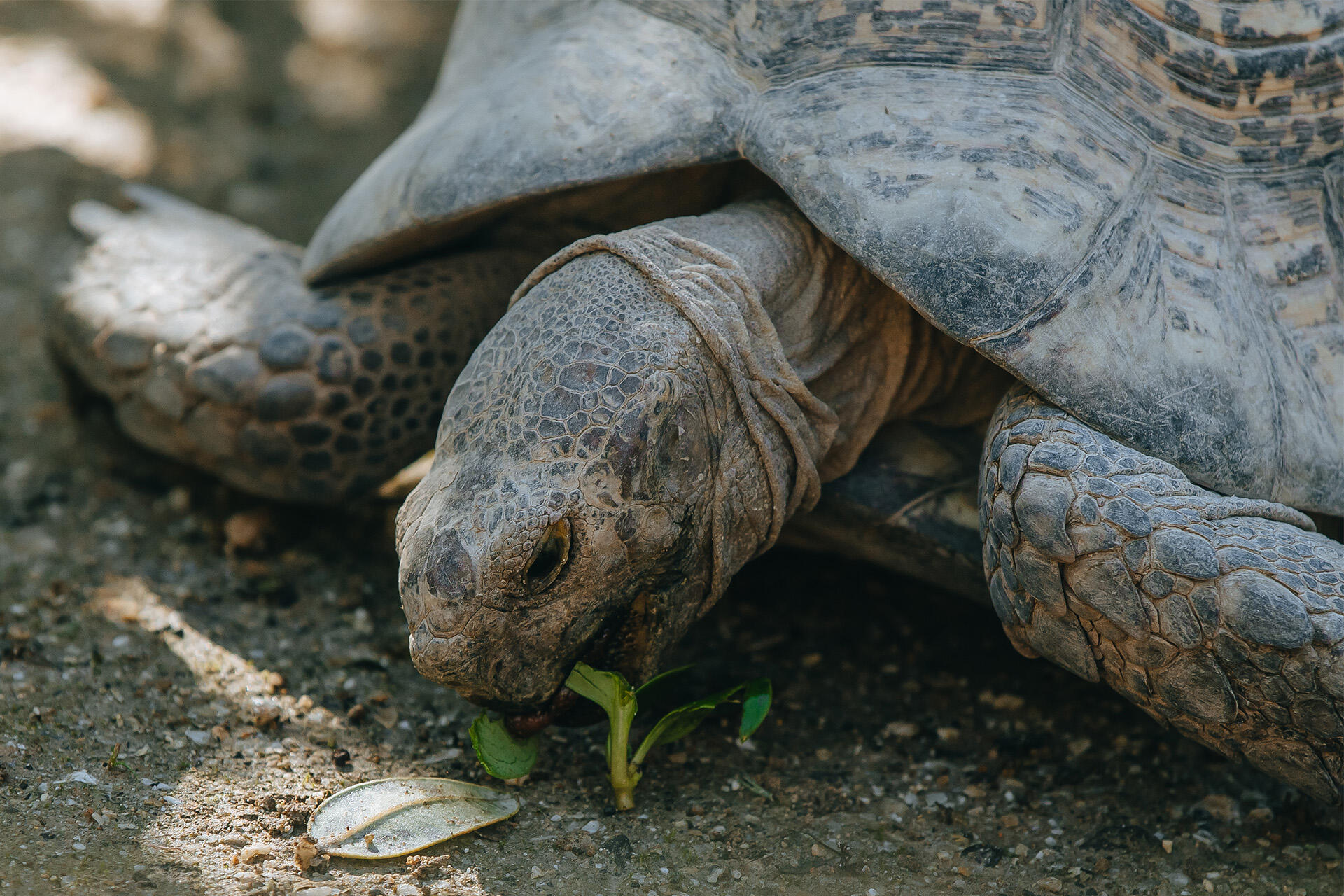
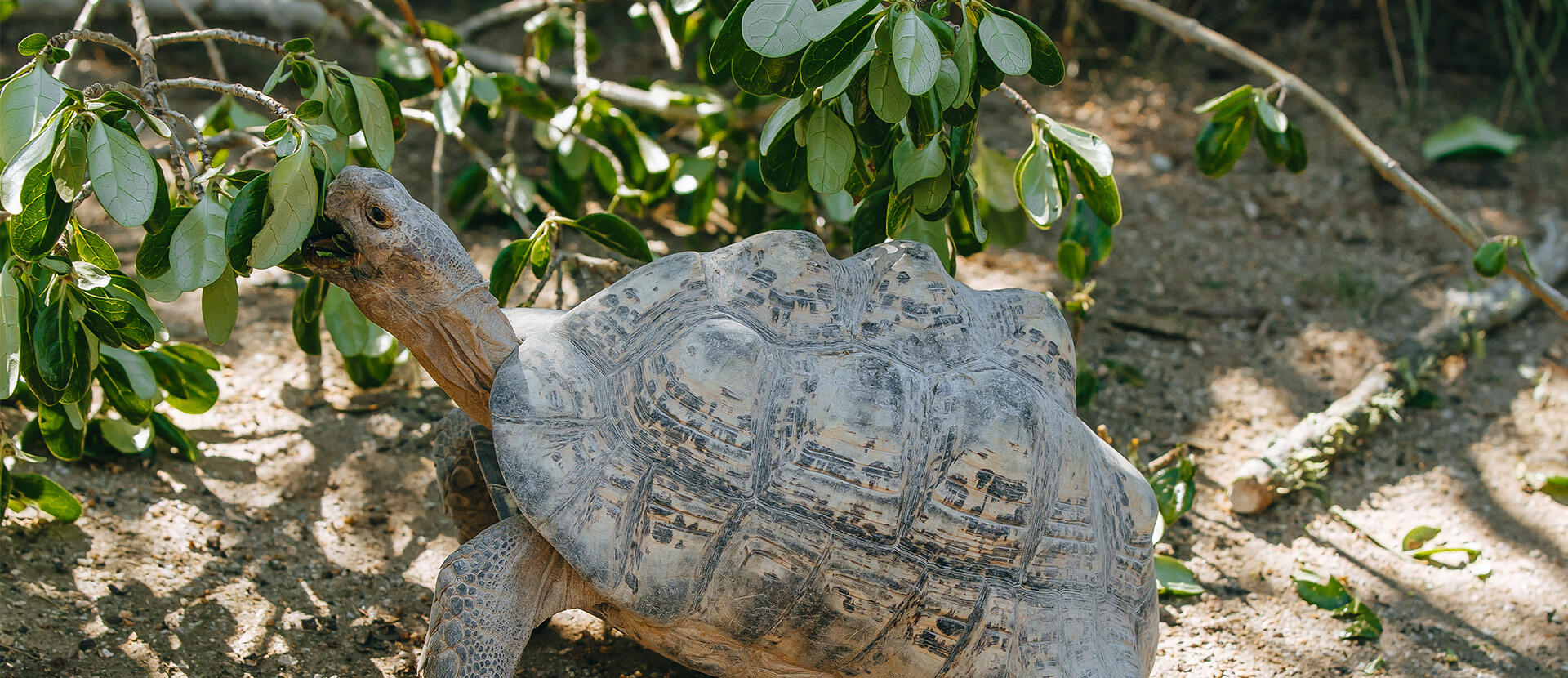
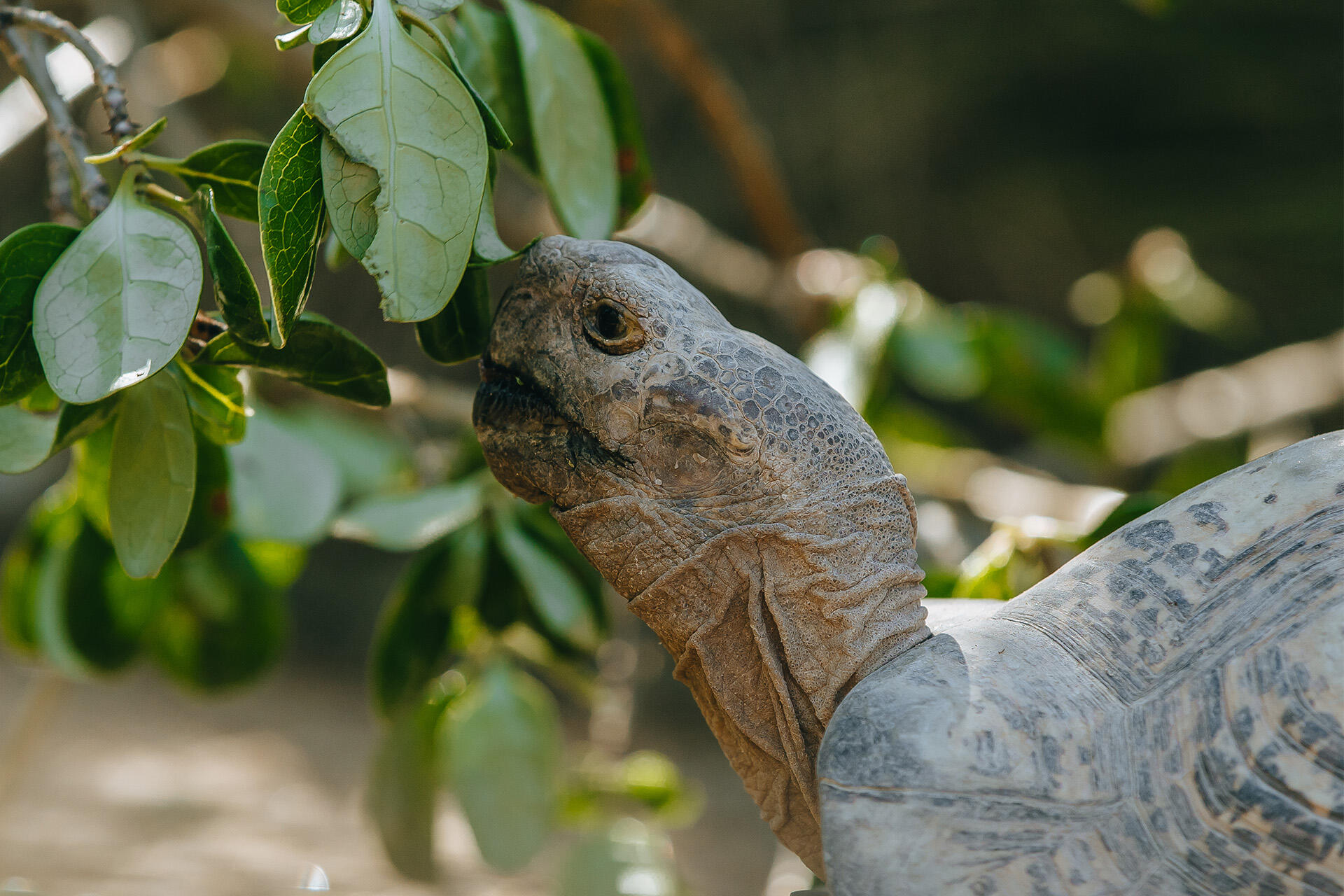
You can find the leopard tortoises in a habitat within our multi-species aviary on the Africa Safari Track. They receive a varied diet of weeds, hay, browse, pellets and powder supplements containing multi-vitamins and minerals. During colder weather, they have a heated indoor space to provide warmth.

In the Wild

Origin: Found widely through the arid and savannah regions of Eastern and Southern Africa, from South Sudan and Somalia to Namibia and South Africa.

Habitat: Savannah, shrubland

Conservation status: IUCN – Least Concern

Leopard tortoises are seen throughout their geographic range as agricultural pests, and because of this, retaliatory killings do happen. They are also a staple food item for many local peoples, so where human populations are high, leopard tortoises are considered vulnerable.

How you can help

As a not-for-profit, we rely on our amazing supporters like you to be able to continue our conservation Wild Work for the world’s most vulnerable and at-risk animal species. Help wildlife in need by making a donation.

Video

Leopard tortoise hatchlings take a bath

Splish Splash! Watch our weeks old leopard tortoise hatchlings that were born in 2017 take a bath.

Other African Species