
More than just a cheeky backside
Once revered by ancient Egyptians as representatives of the Egyptian god of learning, hamadryas baboons are also referred to as sacred baboons. Hamadryas have a unique and complicated social structure and can live in troops of up to several hundred individuals.
Social living
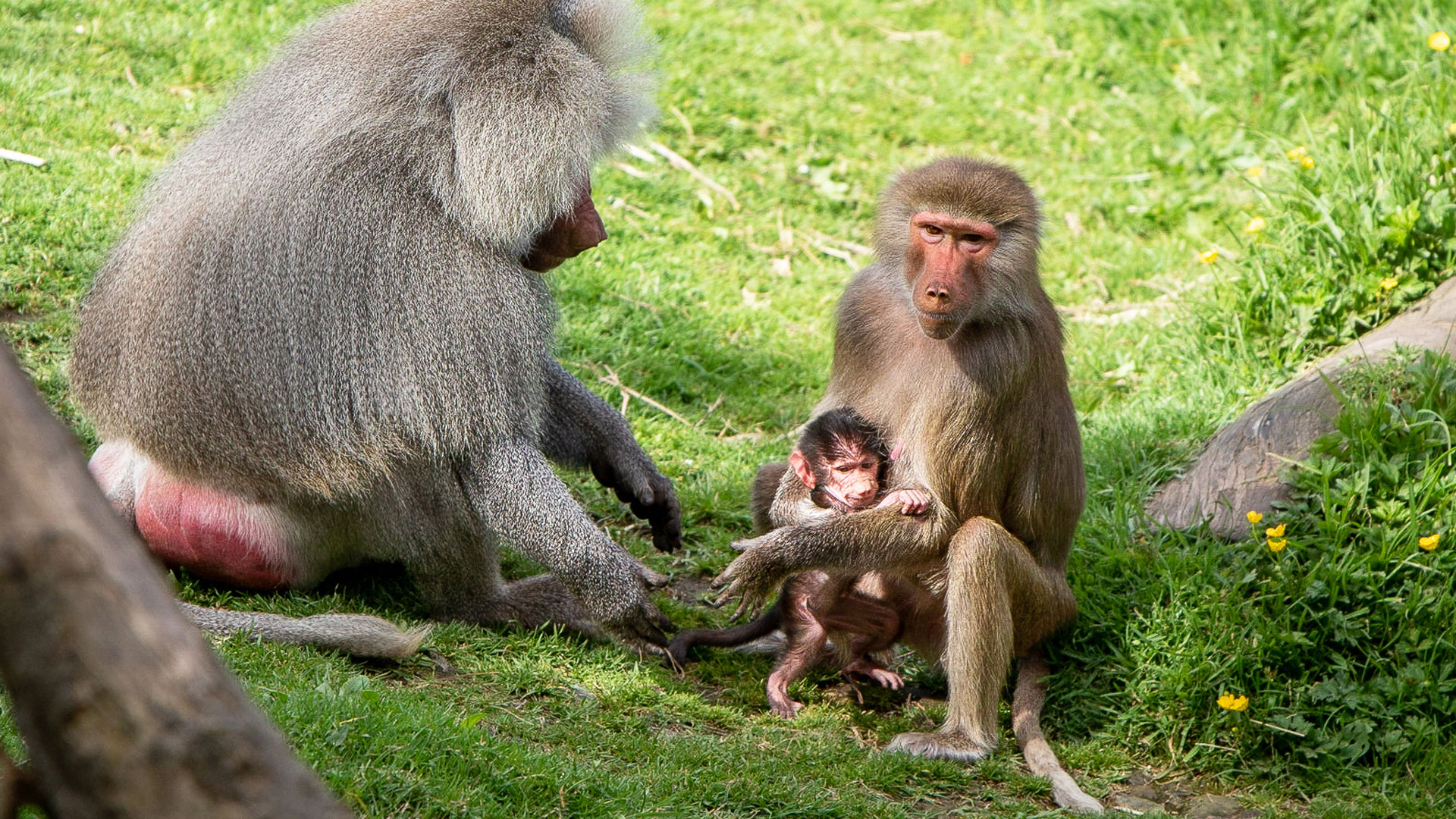
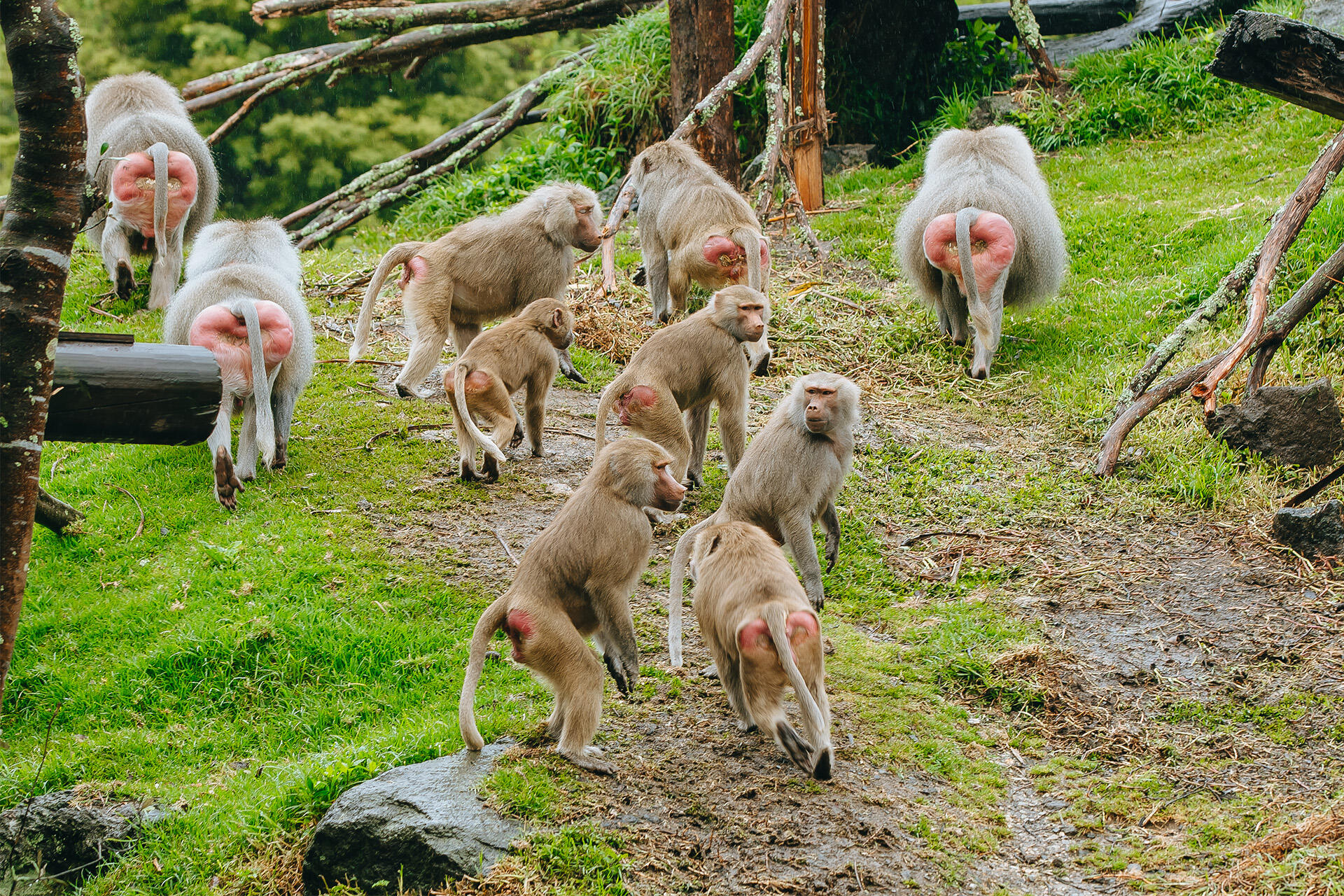
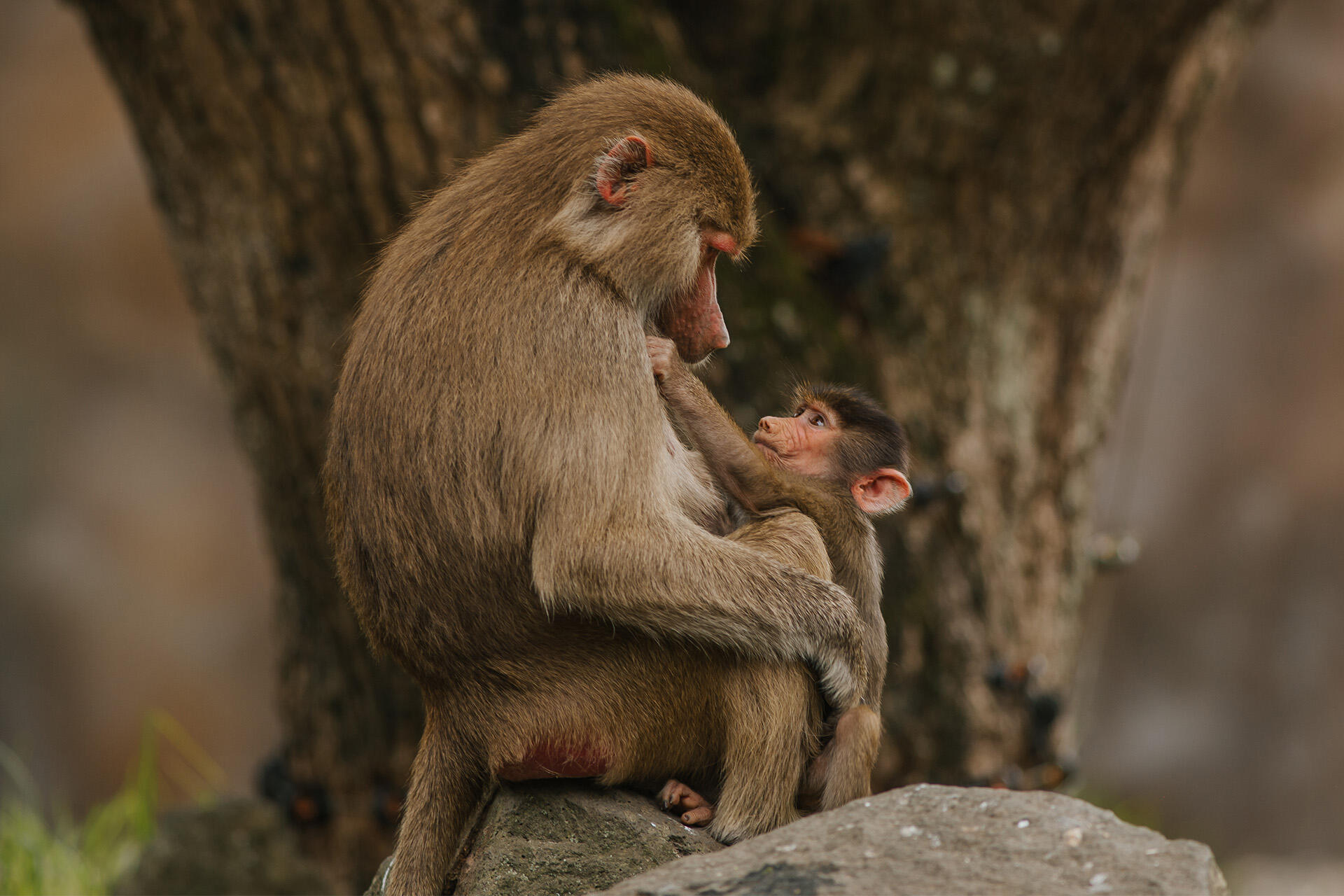
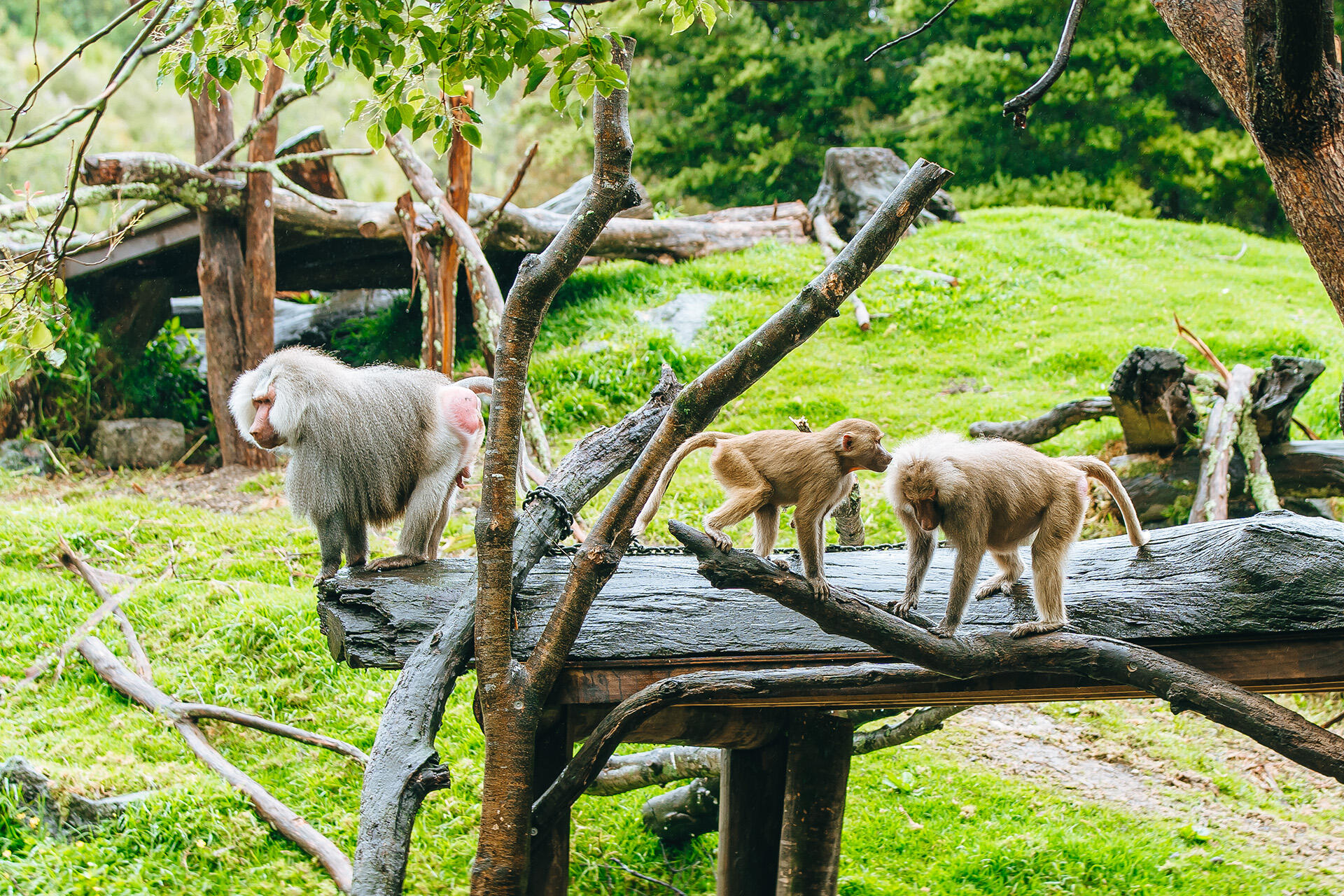
Hamadryas baboons are highly social primates known for their grooming within the troop. This grooming helps to reinforce bonds and maintain group cohesion. They also communicate in a variety of ways including calls, scents and gestures. The basic social group starts as a ‘harem’ or ‘one male unit’ – featuring a dominant male and up to a dozen females. In the wild, two or three harems form a ‘clan’, and the males are usually related. Several clans can then combine to make up a band. When they gather at dusk to sleep, they form a ‘troop’ which can be anywhere up to 800 individuals.
Whose coat is whose?
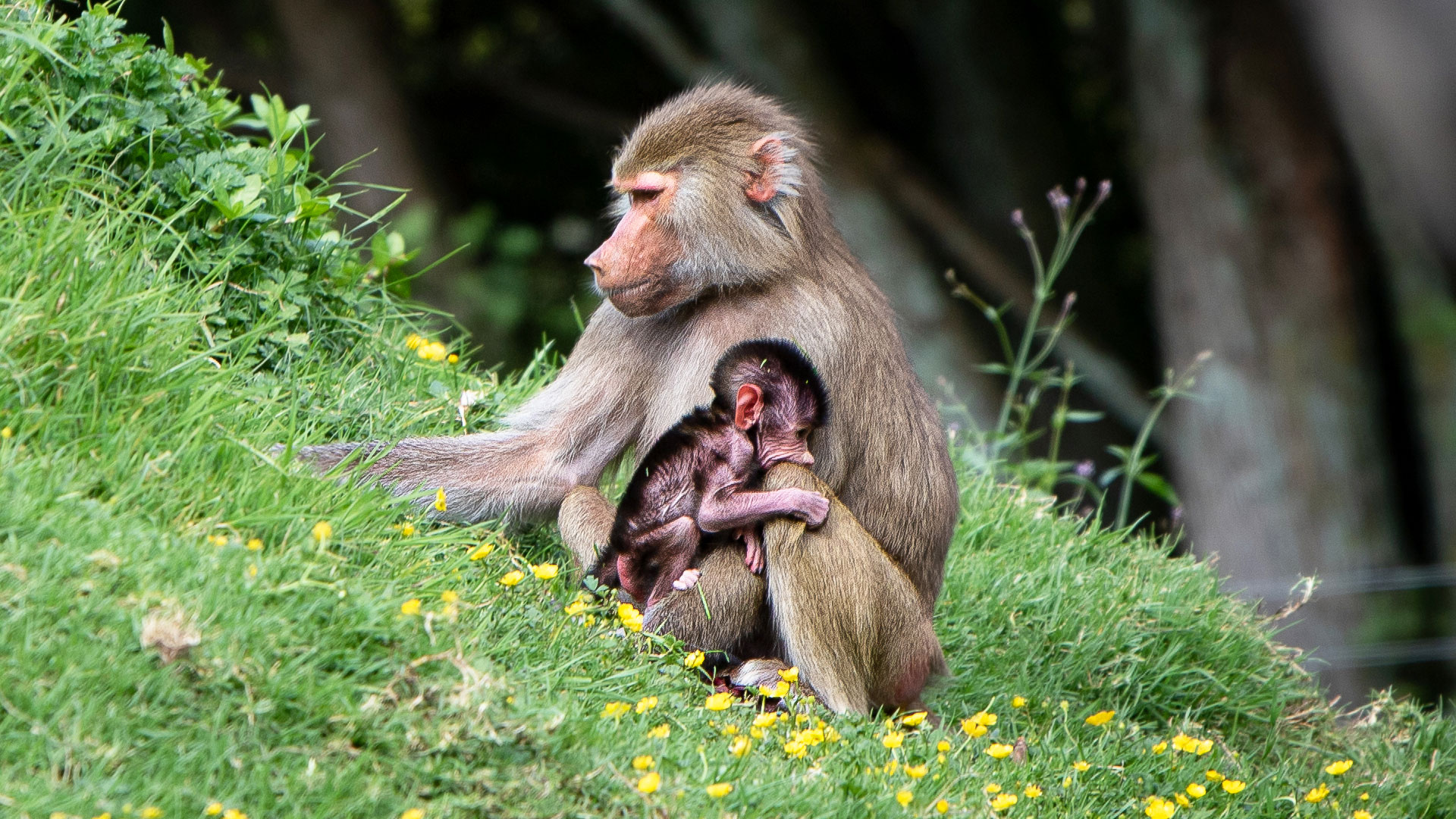
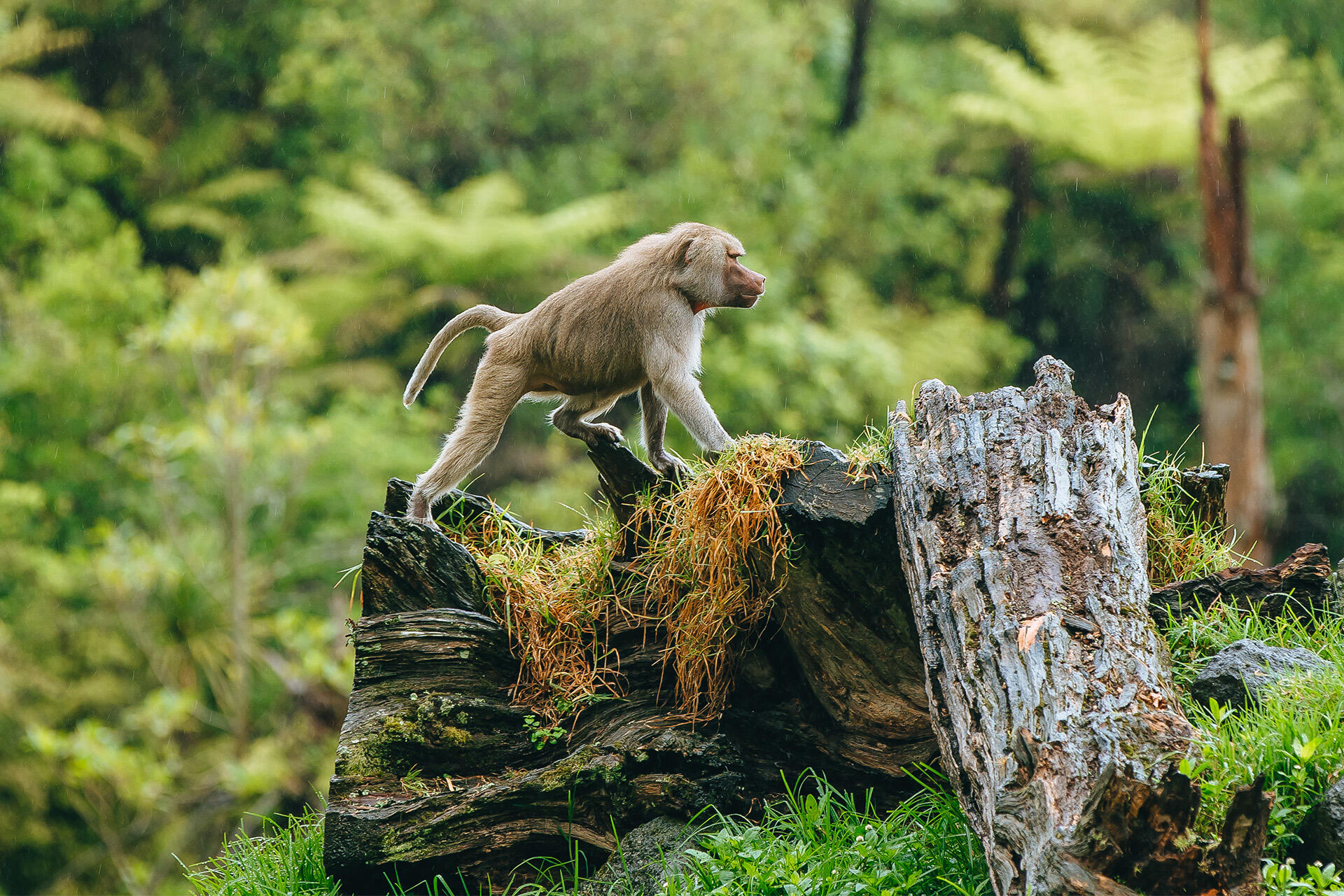
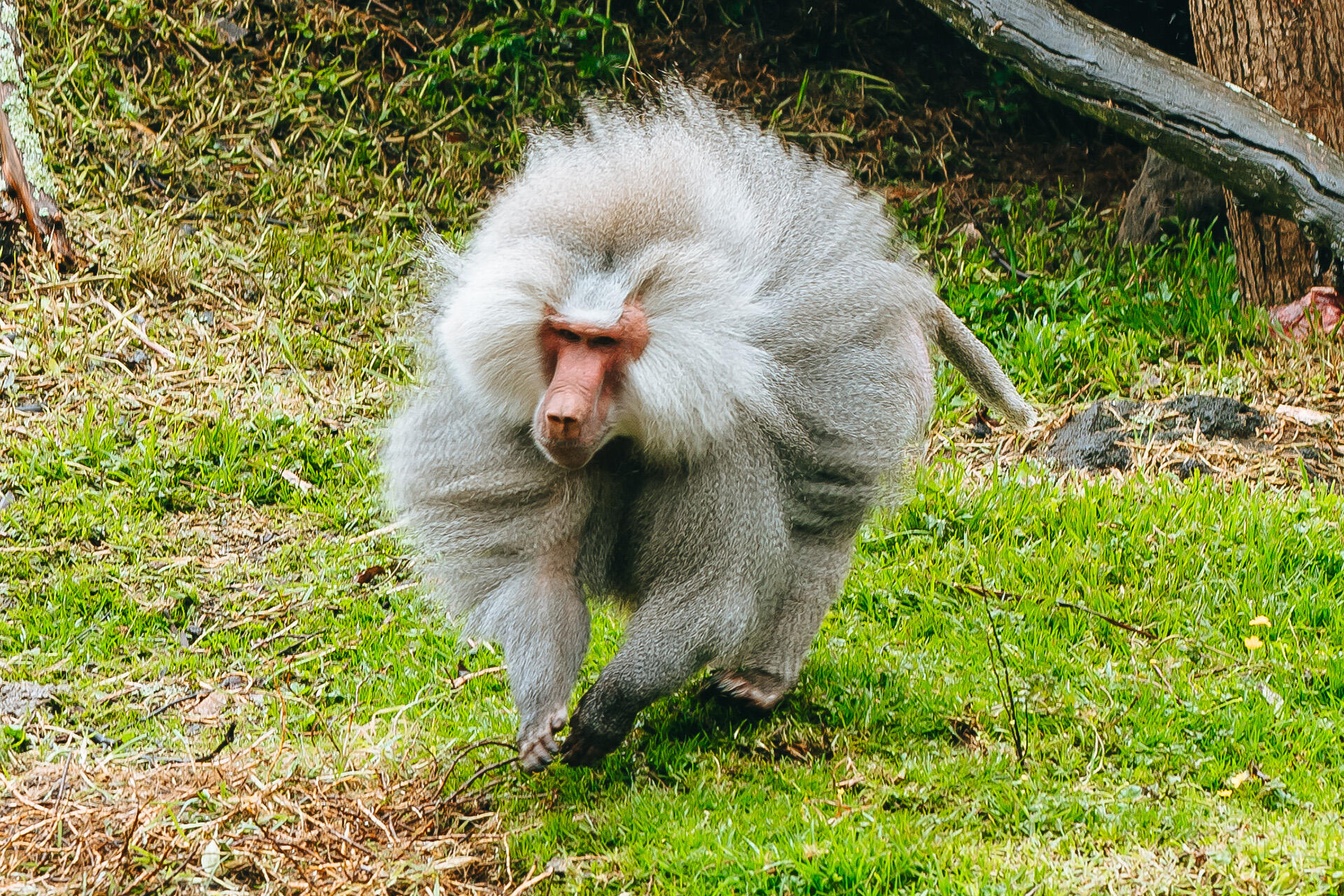
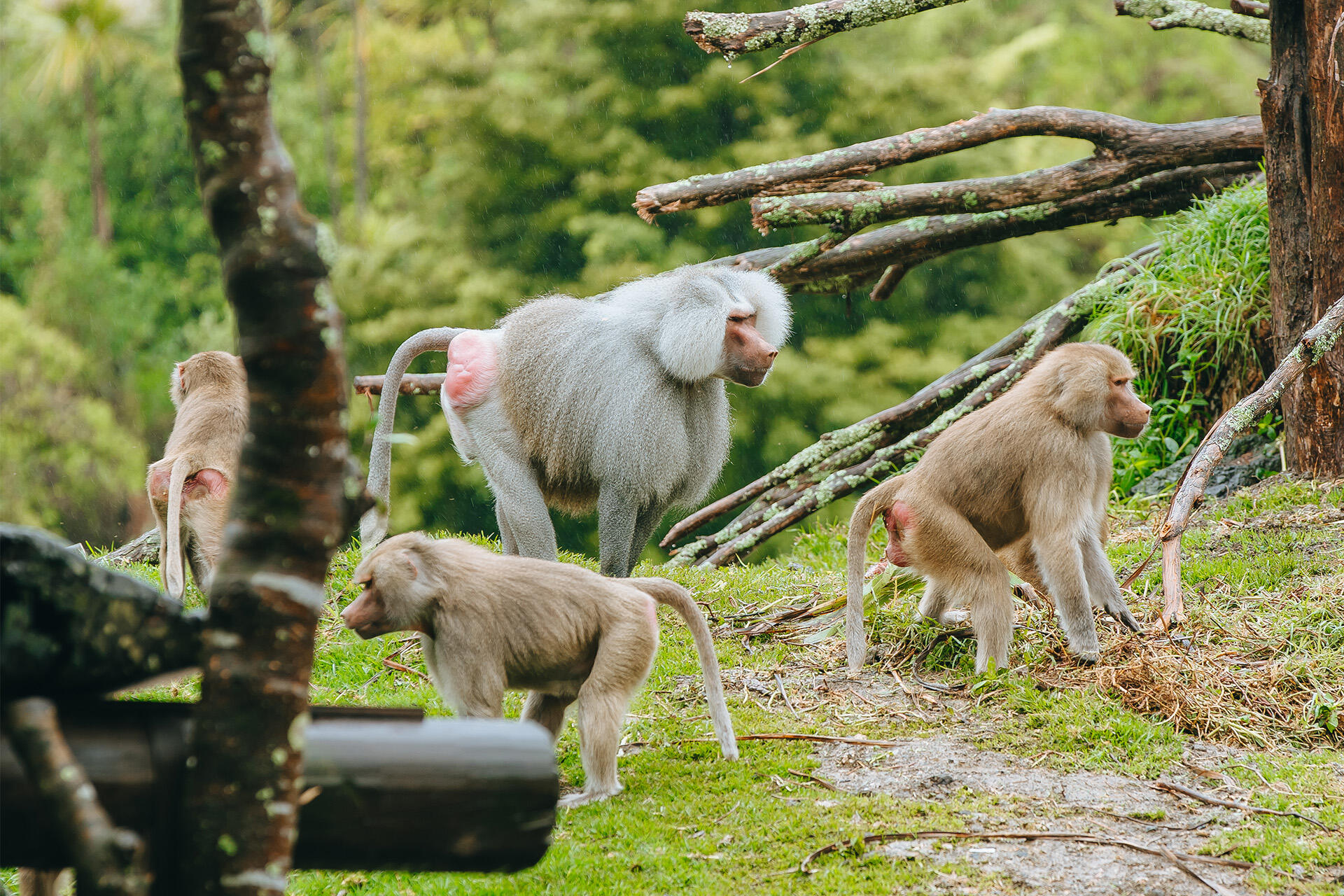
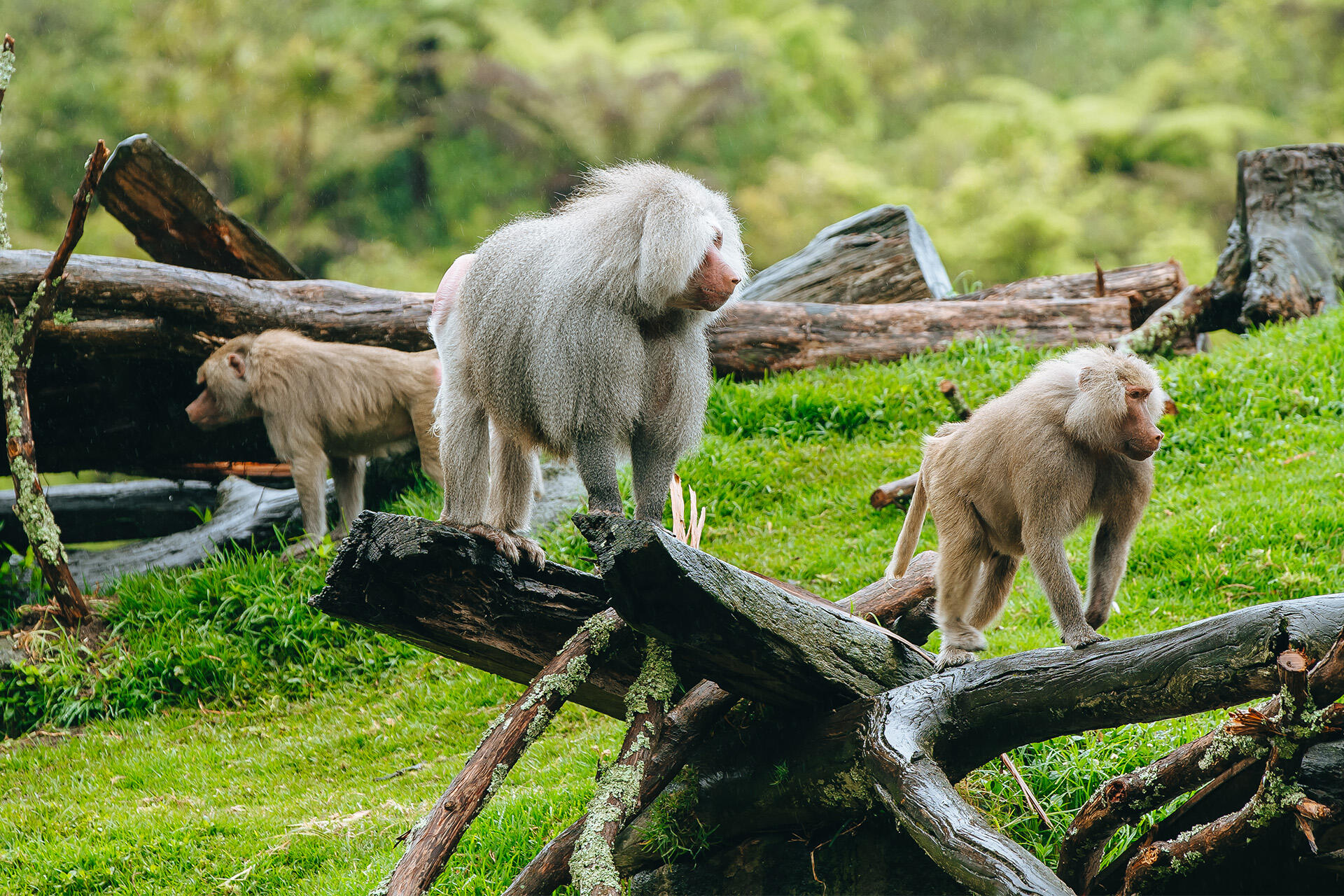
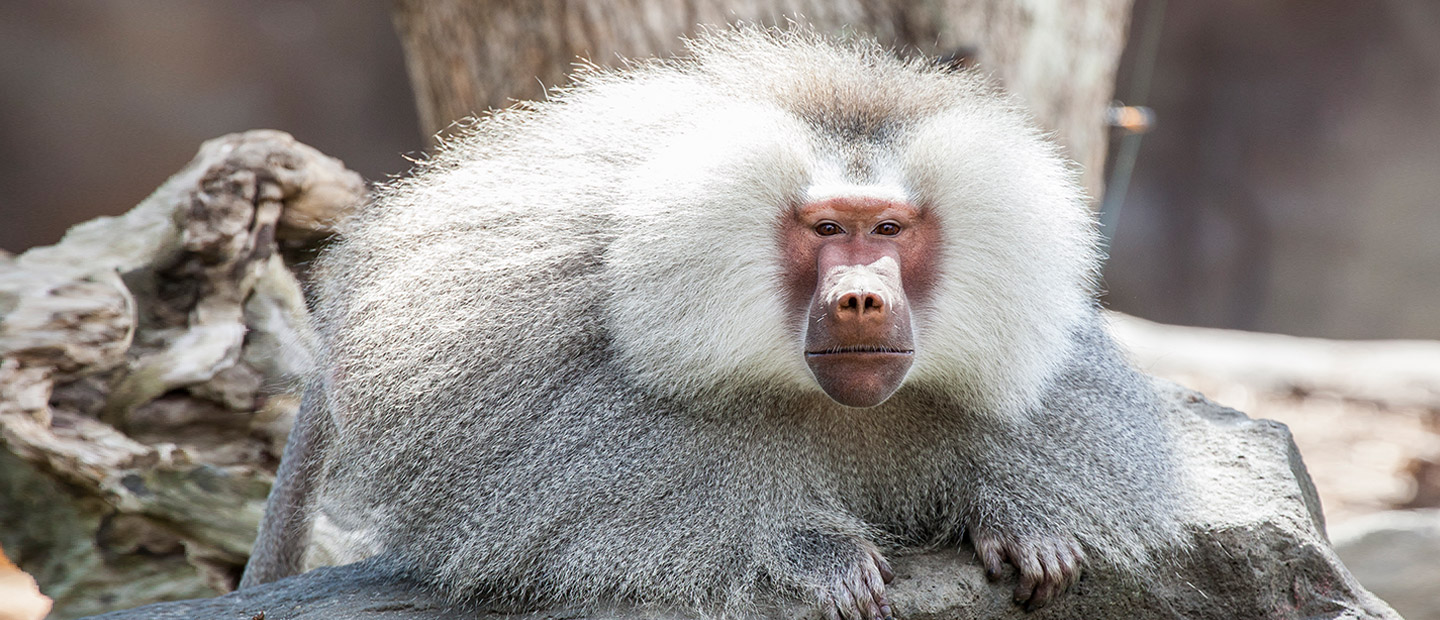
Male hamadryas rock a silvery-grey coat colour and have a very distinctive mane around their head. On the other hand, females have no mane, are brownish in colour, and are only half the size of their male counterparts.