
Now you see me, now you don’t

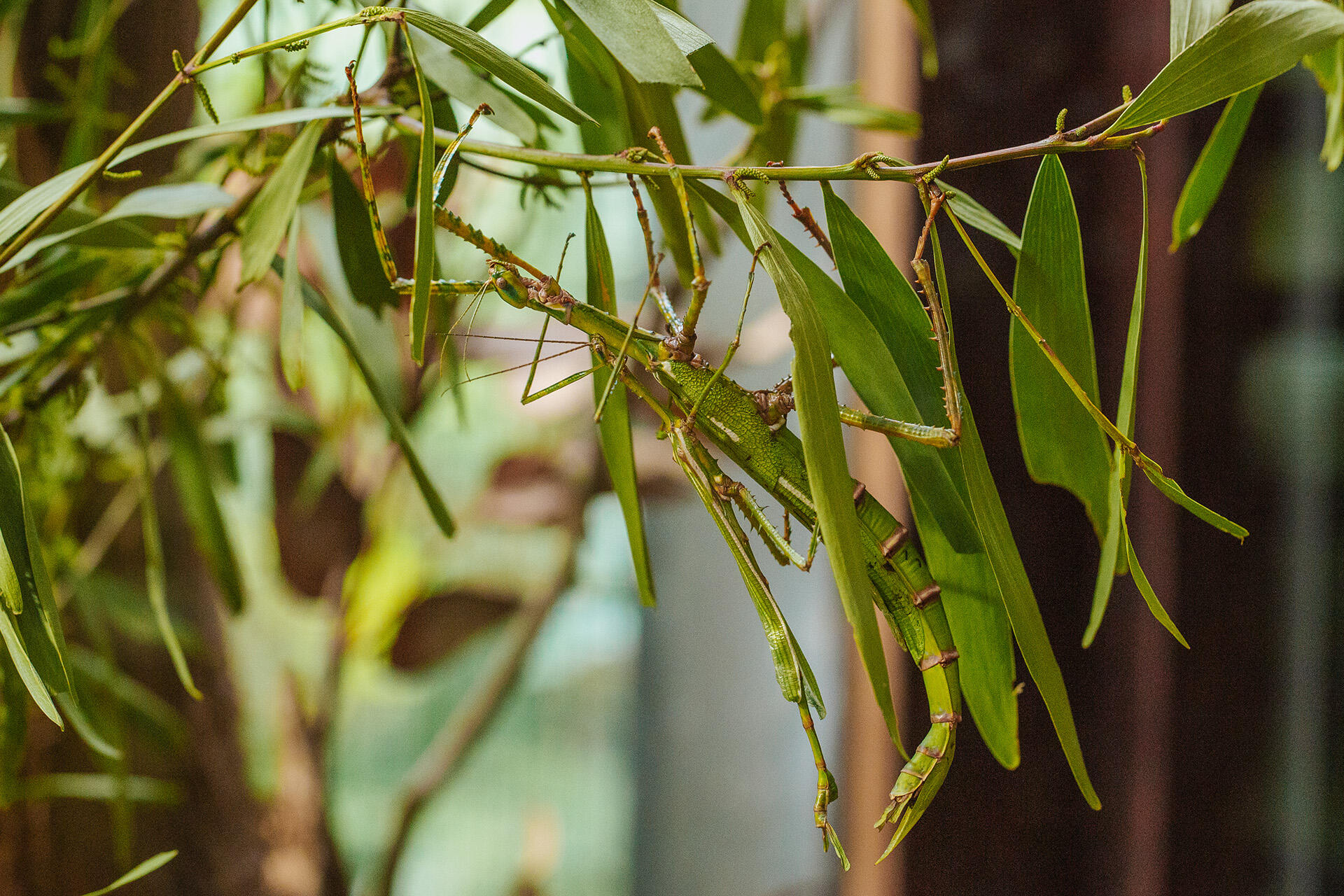
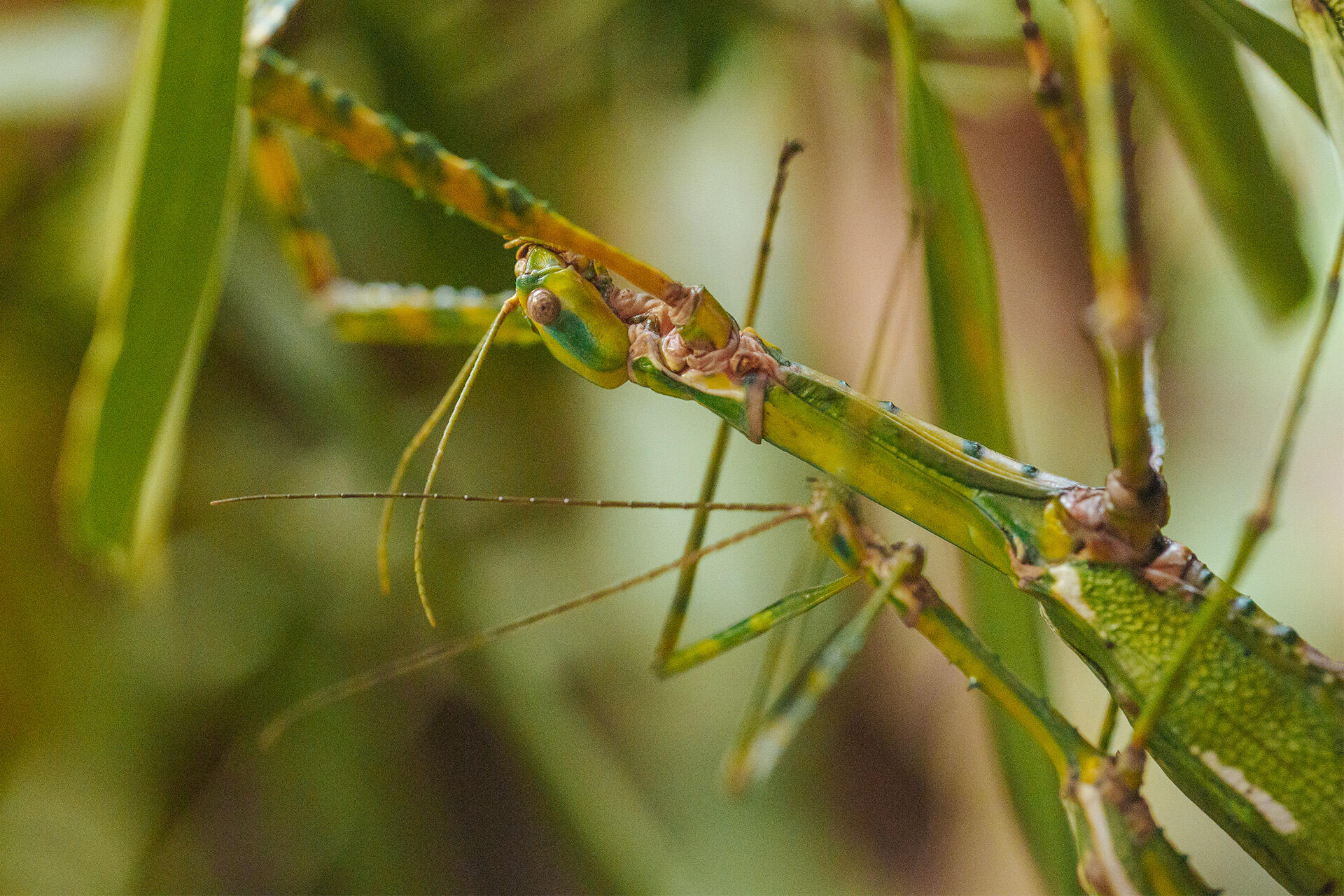
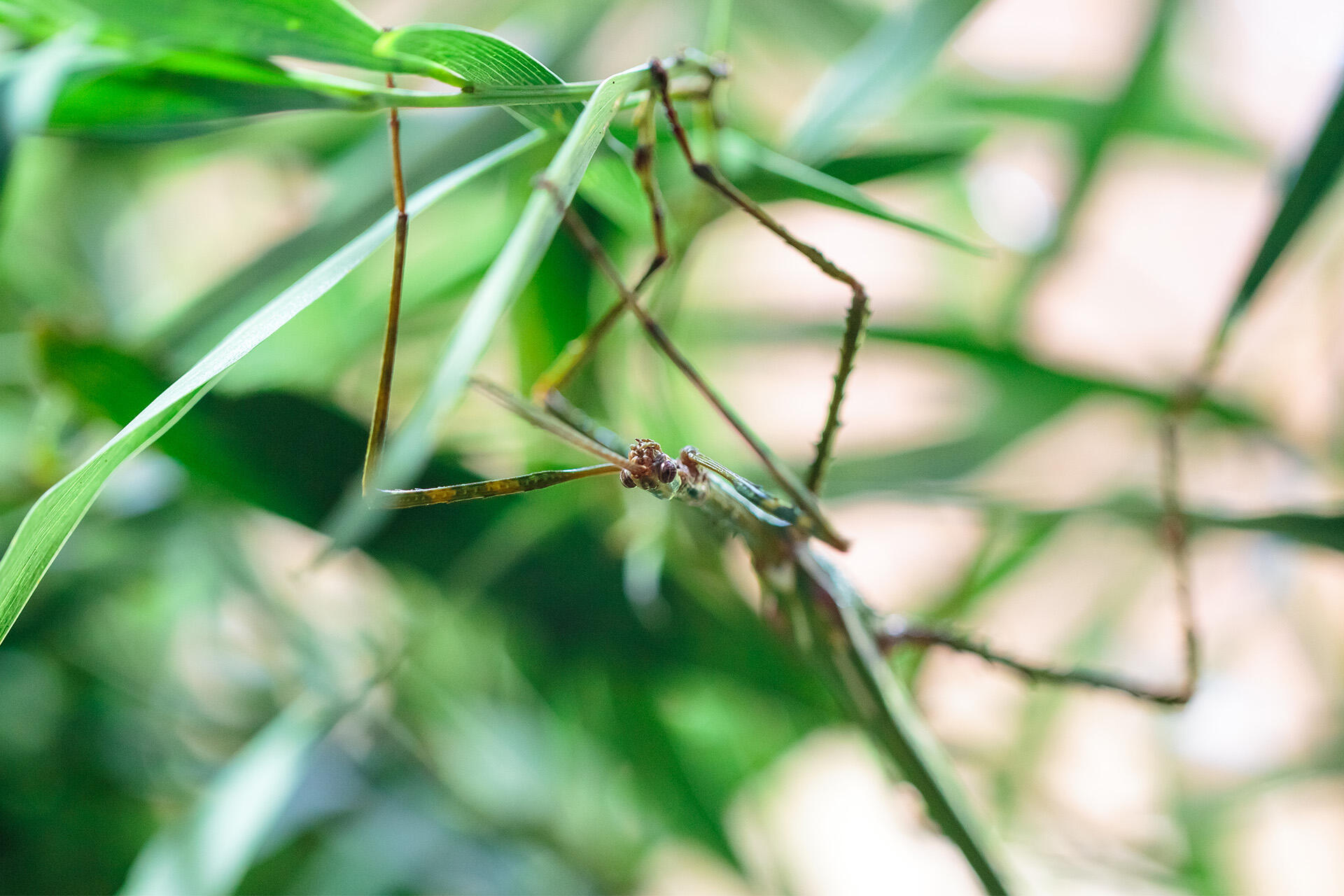
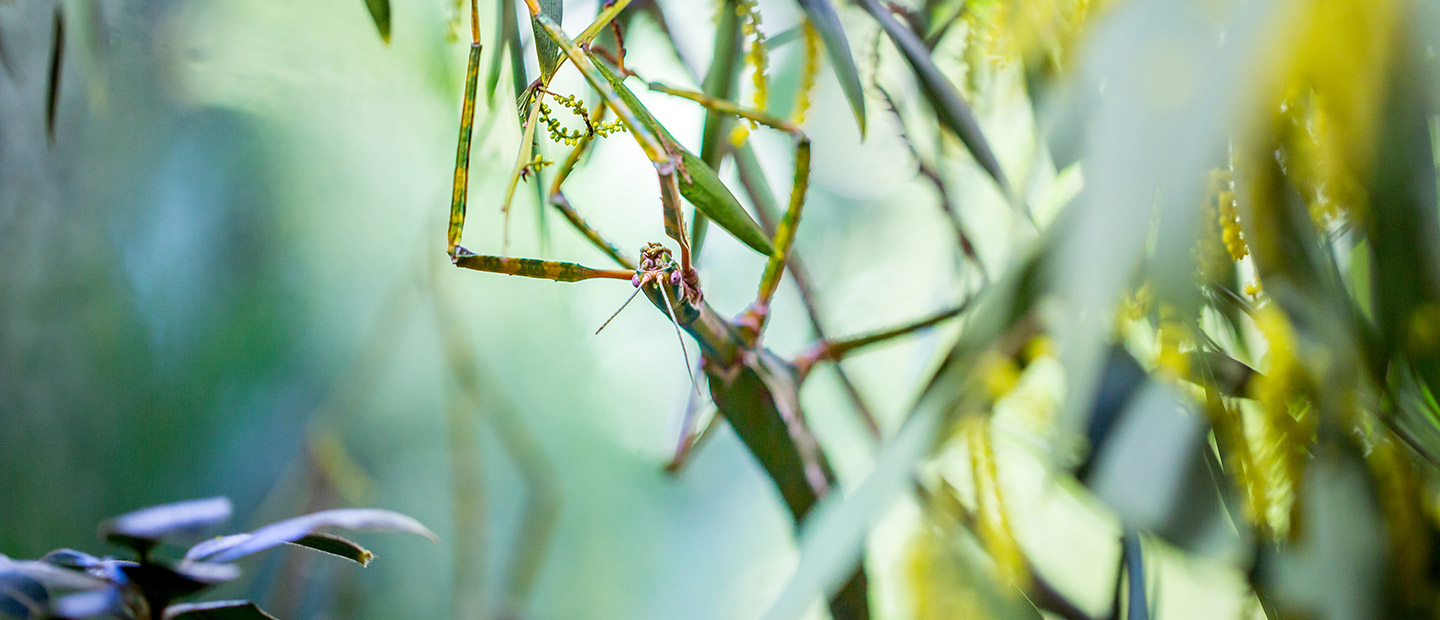
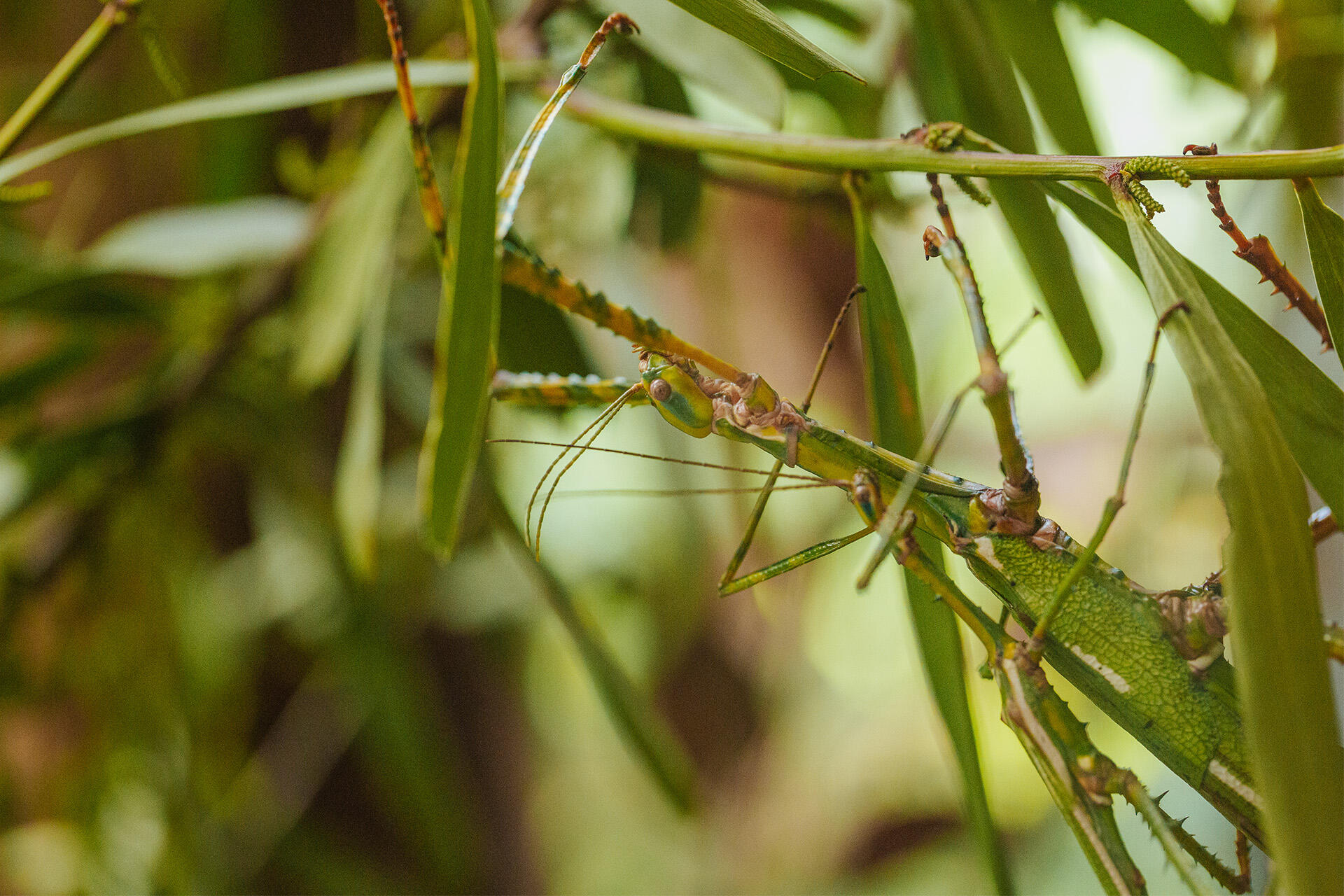
For the goliath stick-insects, camouflage is extremely important for their survival. These incredibly large insects are a much-prized food item for birds due to their size. They have several adaptations for defence, but one of the most important ways they protect themselves is by blending into the foliage around them. They even swing side to side, as if they have been caught by the wind, trying to mimic the surrounding foliage. 

From tic-tac to giant

The eggs of a goliath stick-insect are brown and about half the size as a tic-tac. The eggs drop down from the female and spend around 4-6 months in amongst the leaf litter before they hatch. They start off as little brown stick insects, but after shedding five times they will grow their wings and turn green to match their favourite food source of acacia and eucalyptus. 

Code red

Although they are very good at camouflaging, if they are spotted by a bird, they will flash open their wings to reveal a pinkish-red stripe. In the wild, red and pink is commonly seen as a warning colour and potentially indicative of poison – a clever way to quickly scare away any predators.

No mate? No problem

The female goliath stick-insect can lay eggs even if they haven’t mated with a male. This is a really crafty process called parthenogenesis and is a form of cloning. When utilising this process, the eggs will only hatch into females. It’s possible for them to lay up to 1000 eggs in their lifetime – though 1000 children really does seem like a handful.  
At the Zoo

Meet the goliath stick-insects

You can find the goliath stick-insects sharing a home with the eastern blue-tongued skink on our Australian Bush Track. The stick insects are arboreal (meaning they live in trees), while blue tongued skinks live on ground.

In the Wild

Origin: Australia (Tasmania, Queensland, New South Wales)

Habitat: Terrestrial (Forest, Shrubland)

Conservation status: IUCN – Least Concern

Video

Bizarre and beautiful stick insects

What's green and sticky? A goliath stick insect, of course!

How you can help

As a not-for-profit, we rely on our amazing supporters like you to be able to continue our conservation Wild Work for the world’s most vulnerable and at-risk animal species. Help our wildlife in need by making a donation.

Other Australia Bush Track Species